Oakland Cemetery Guide: Atlanta Art, Architecture and Gardens
Historic Oakland Cemetery in Atlanta
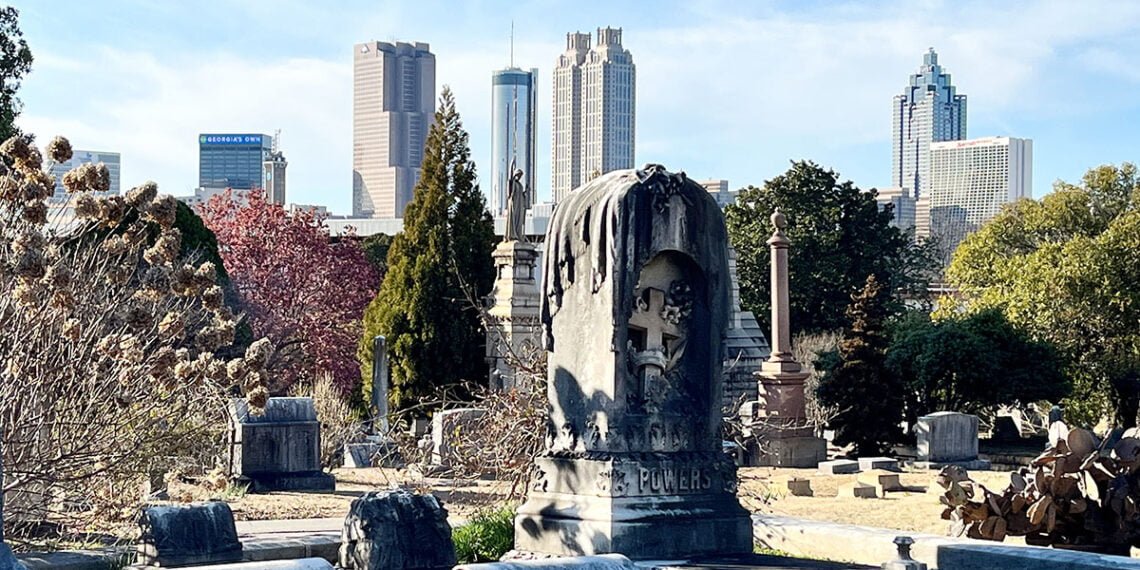
Oakland Cemetery is much more than Atlanta’s most historic resting place. Oakland Cemetery was also Atlanta’s first public park. It is a product of the nineteenth century’s rural cemetery movement. In the 1870s, a mule-drawn trolley ferried Atlanta residents outside of town to Oakland Cemetery where they could spend the day enjoying the public green space and its magnificent art and architecture.
The Historic Oakland Foundation, established in 1976, works tirelessly to “preserve, restore, and interpret” Oakland Cemetery. Oakland Cemetery is a unique place in Atlanta, where modern Atlantans and visitors alike come to enjoy the thoughtfully landscaped gardens, the art, and the architecture. Events throughout the year sponsored by the Historic Oakland Foundation continue to bring visitors to the cemetery – as originally intended. This cemetery is also a spectacular place for photography. Definitely one of the most instagrammable locations in Atlanta!
What’s Happening at Oakland Cemetery during the Year
Oakland Cemetery is free to visit. You can stroll through this public garden and enjoy it at your own pace or you can sign up for a guided tour or come for a special event.
- Year Round: Sights, Symbols, and Stories of Oakland tour
- February: Valentine’s Day tours; Black History Month tours; Daffodil Days
- March: Daffodil Days; Spring Scramble scavenger hunt – just in time for Spring Break!
- April: Illumine is an after dark art installation with music and cocktails that takes place in the cemetery; Spring Plant Sale
- June: Juneteenth
- September: Sunday in the Park and Tunes from the Tombs is Oakland’s annual music festival; Malts and Vaults, where you can sample beers and learn about Atlanta’s brewing history; Fall Plant Sale
- October: Trick or Trot fun run; Pumpkin Patch Festival; Capturing the Spirit of Oakland – after dark Halloween tours; Haunted Hunt scavenger hunt
- November: Dia de Muertos celebration
- December: Ho Ho Holiday Hunt scavenger hunt; Victorian Holiday – Christmas Market and Santa Clause
Inside Oakland Cemetery
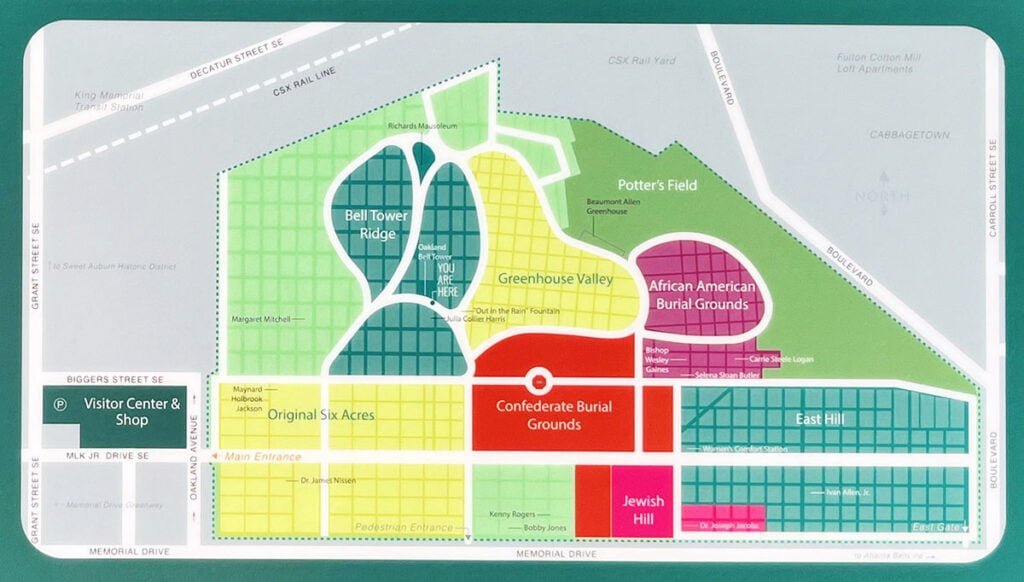
The Main Entrance: Hunter Street Gate
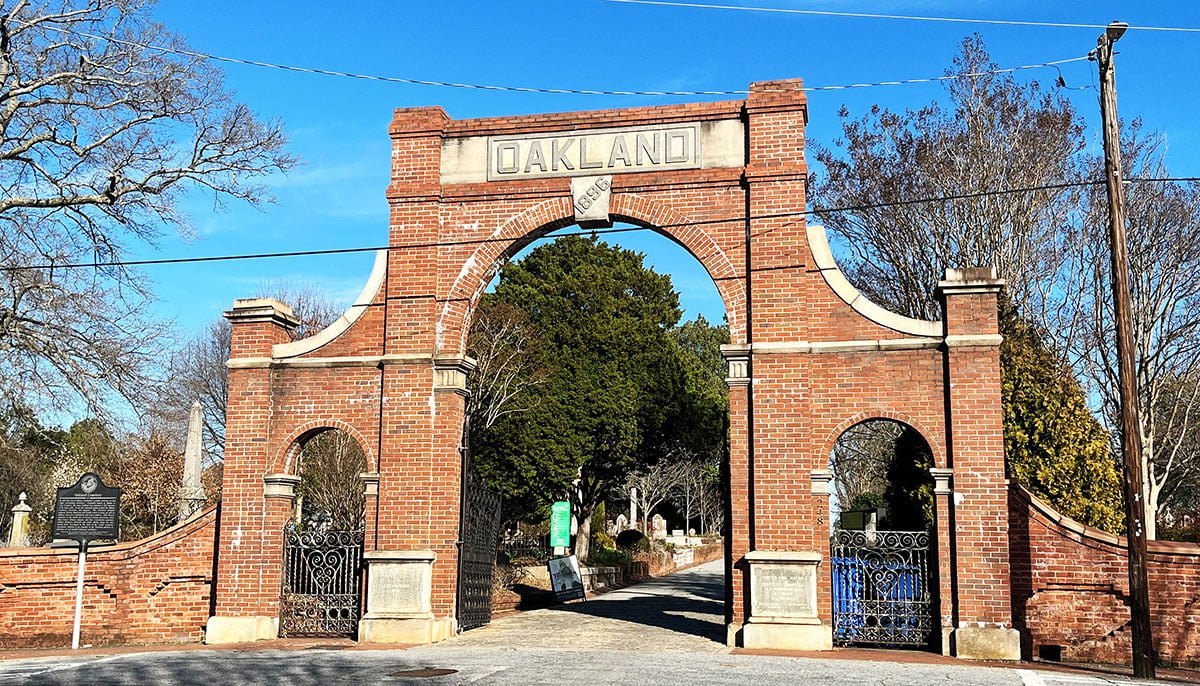
The Hunter Street Gate now serves as the main entrance from MLK Jr. Drive and Oakland Ave. MLK Jr. Drive was originally named Hunter Street. The gate has not changed much over the years. This gate takes you into the to the cemetery’s oldest section: the Original Six Acres. This gate was built in preparation for Atlanta’s 1895 Cotton States and International Exposition.
Original Six Acres & Guard House
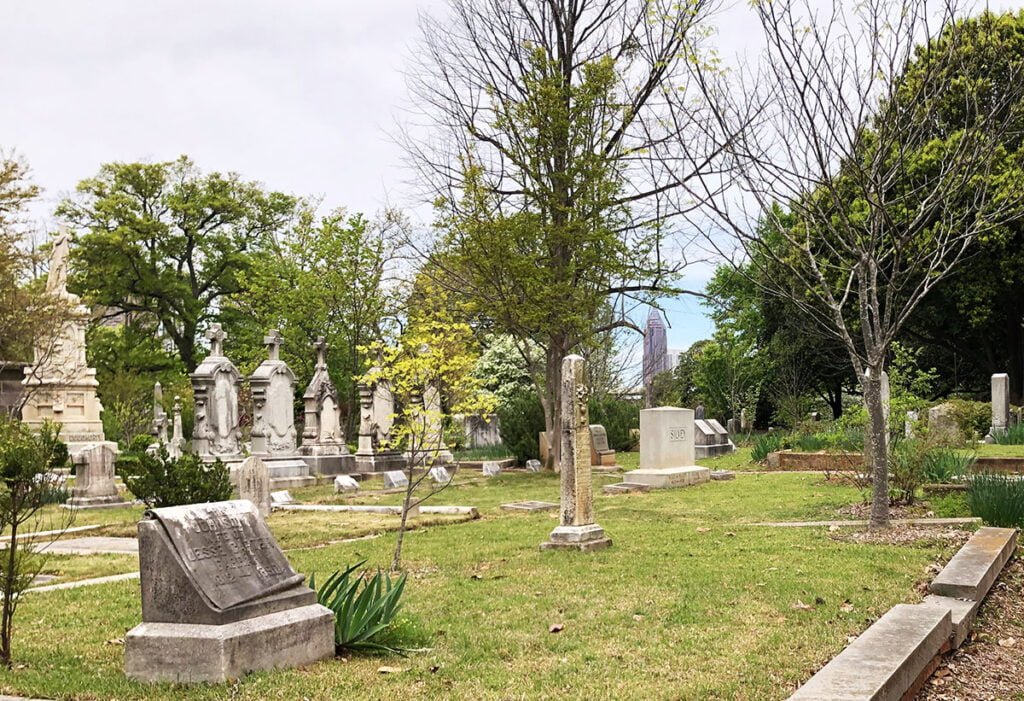
The Original Six Acres
Just inside the Hunter Street Gate, is the Original Six Acres, which is the oldest section at Oakland Cemetery. In 1850, the cemetery was simply called Atlanta Cemetery or City Cemetery. Note the simple square shapes of the landscape plan in this section.
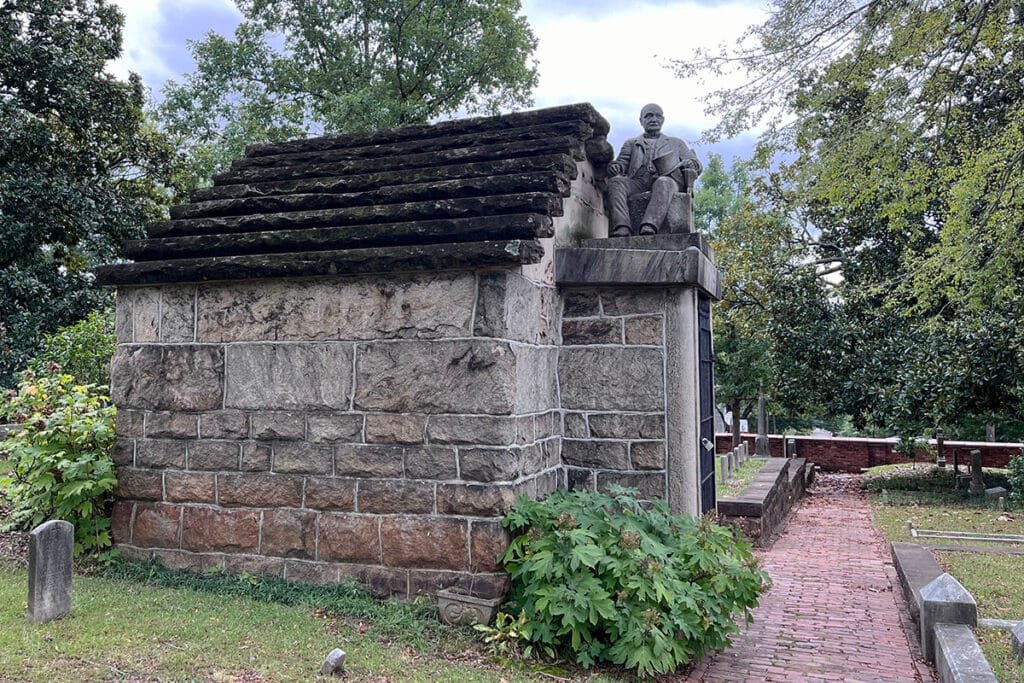
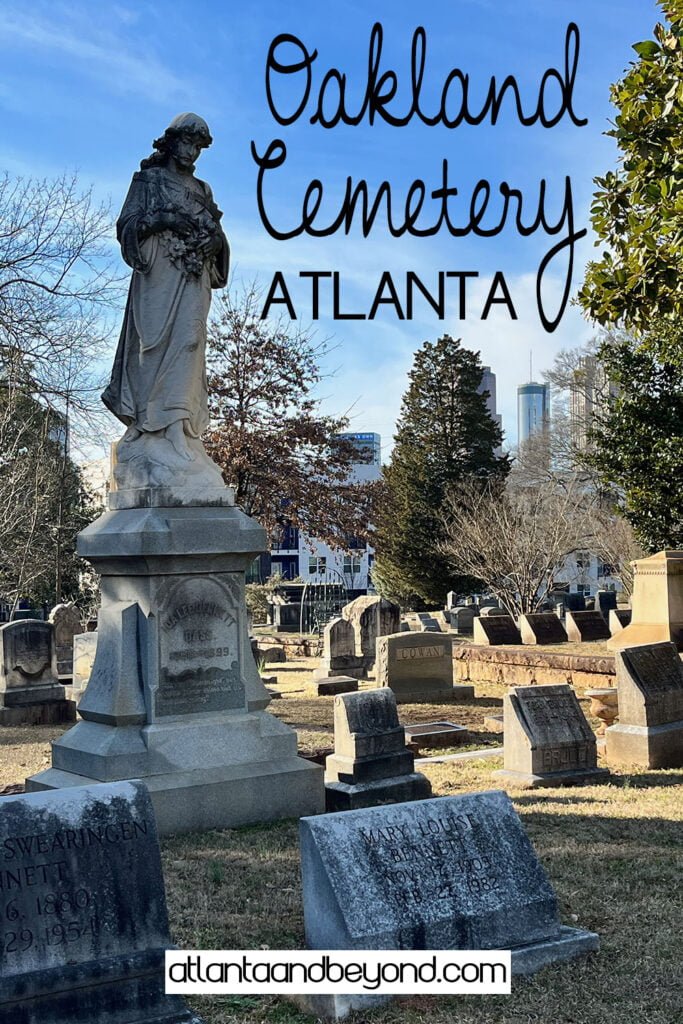
The most notable mausoleum in this section belongs to Jasper Newton Smith. A sculpture of the man himself sits upon the mausoleum. Smith was a contractor and brickworks owner. Surprisingly, he was well-known for his hatred of neckties. Note that his statue does not wear one. Smith is known as the “Mayor of Oakland” because of his prominent position near the main gate.
The Watch House
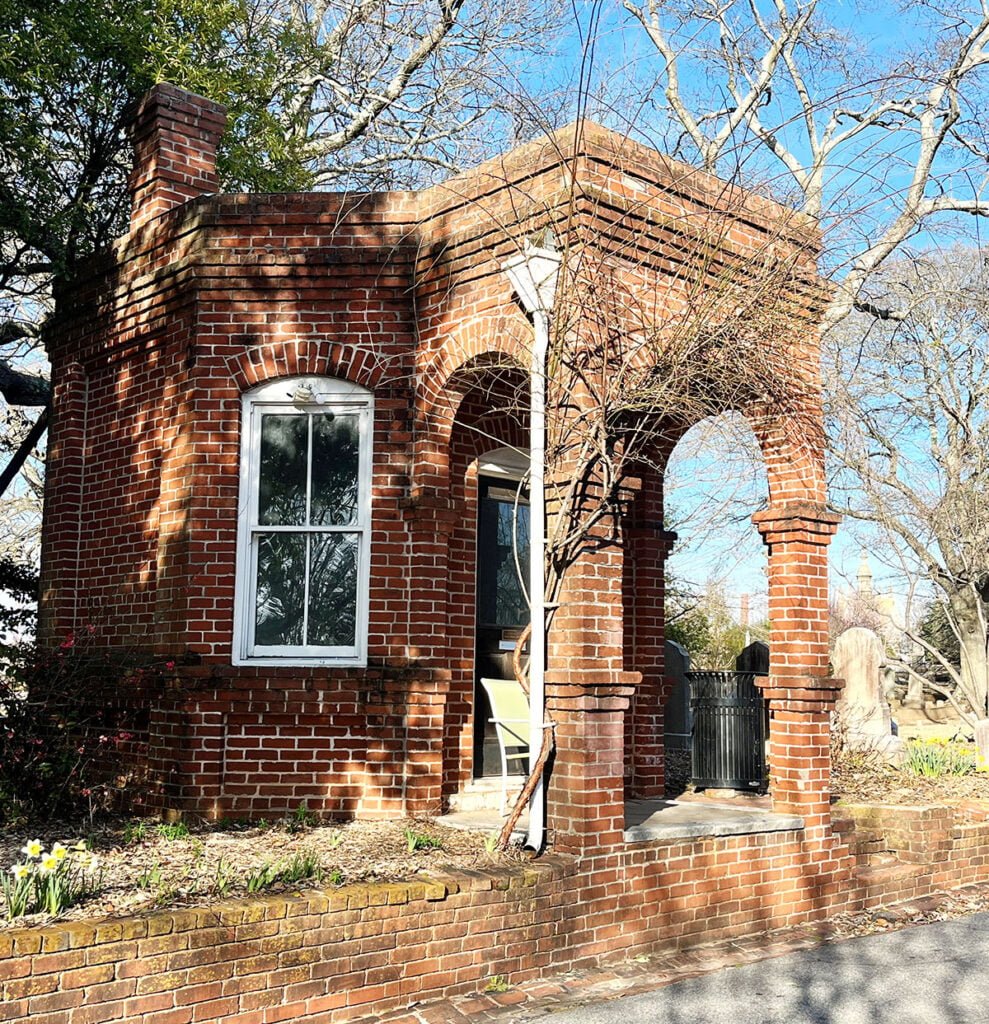
In 1901, the Watch House (also called the Guard House) was added to Oakland Cemetery. It operated as a visitor center as well as a security gate. Its design complemented the Hunter Street Gate. It original white paint coordinated with the Bell Tower.
Maynard Jackson
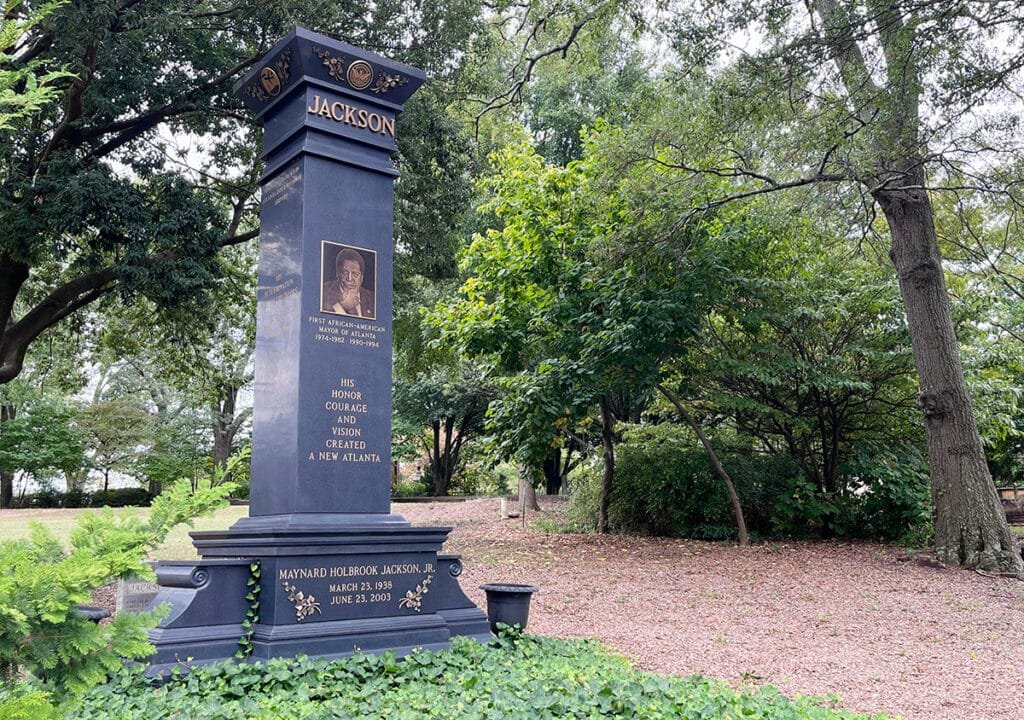
Mayor Maynard Jackson’s Monument is in this section. He served as Atlanta’s first black mayor beginning in 1973. He was the grandson of civil rights pioneer; John Wesley Dobbs. Jackson was also the first African American to break the color lines in Oakland Cemetery.
Old Jewish Burial Grounds
Six lots in the Original Six Acres belonged to the Hebrew Benevolent Association (currently known as The Temple). This section of the Original Six Acres is known as the Old Jewish Burial Grounds and it is one of the oldest Jewish cemetery sites in Georgia.
Notable Monuments
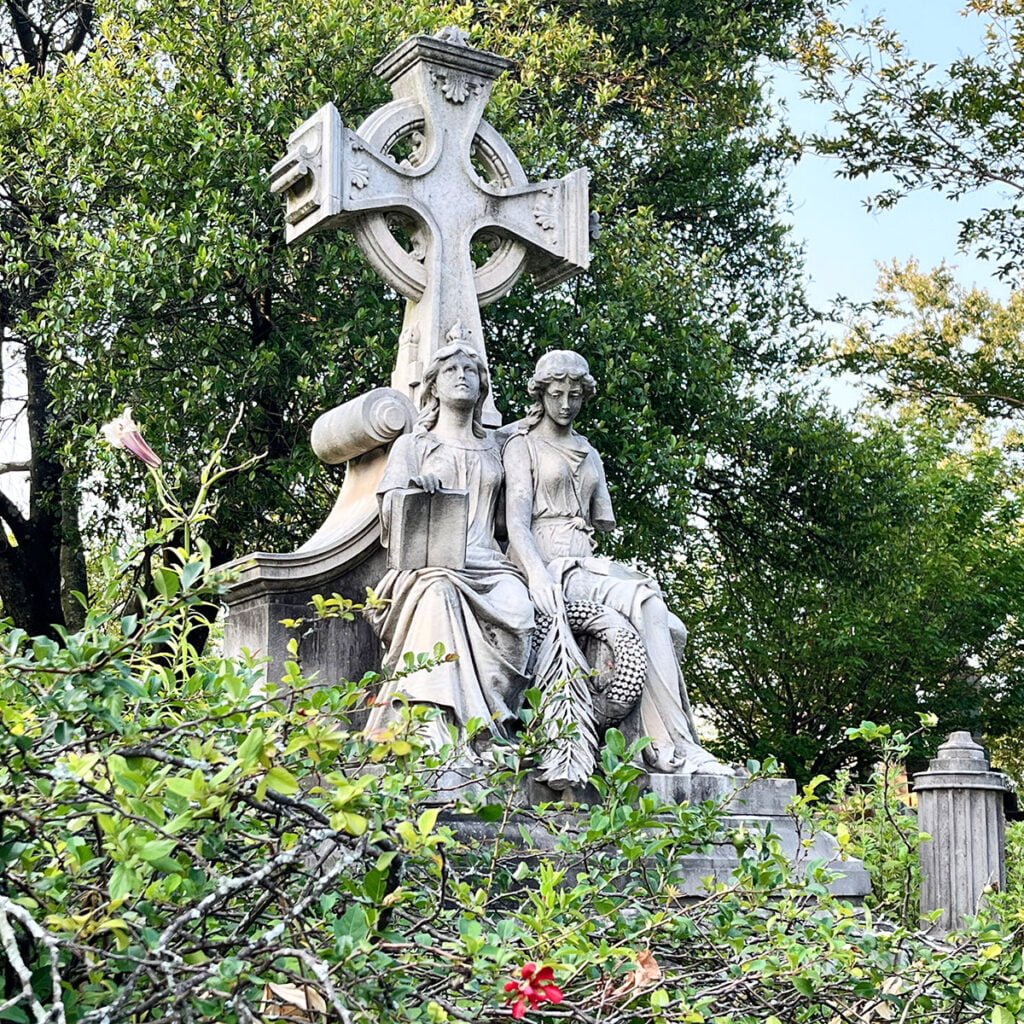
The Thomas Neal Family Monument featuring a beautiful sculpture dedicated to Neal’s wife and daughter is one of my favorites. The Egyptian Revival style monument belonging to Christian Kontz is also notable.
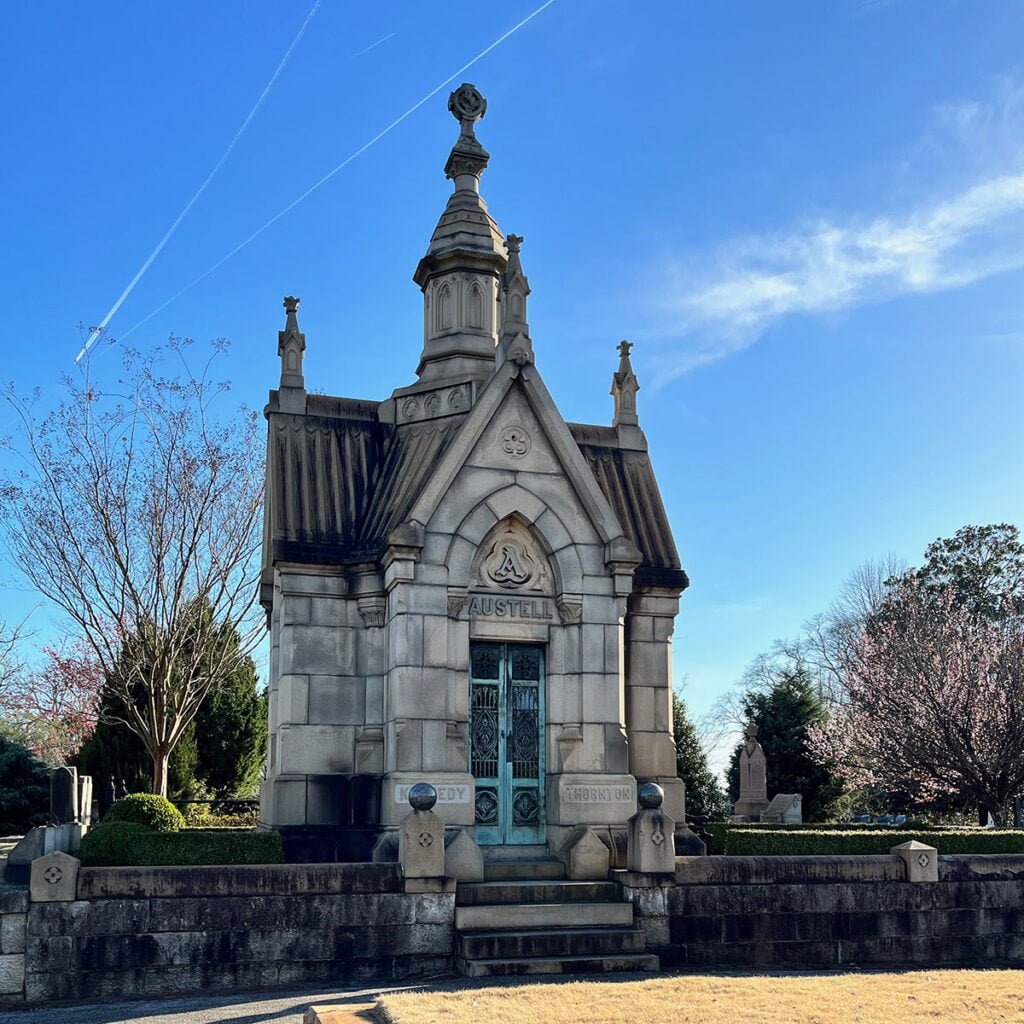
The Gothic Revival Alfred Austell Mausoleum is impressive. This man made his fortune building railroads and served as the president of the Atlanta National Bank, which is part of Wells Fargo today. The town of Austell is named for him. At the time of its construction, this mausoleum was the most expensive structure built in Oakland Cemetery.
Northwest Section
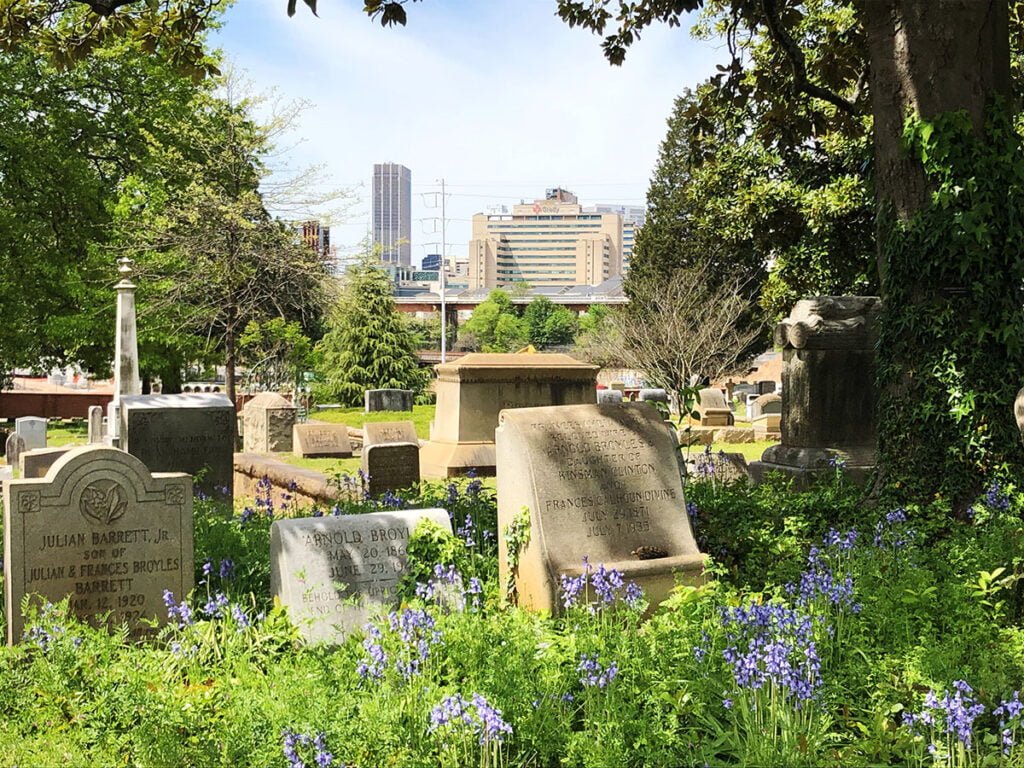
This section of the cemetery is adjacent to the railroad lines. Bustling mills surrounded this area in the 1870s. This section is the final resting place of Margaret Mitchell, author of Gone with the Wind, and Joel Hurt, the developer of Inman Park. An impressive Classical Revival columnar monument marks the Joseph E Brown Family Lot. Brown and his son, Joseph M Brown, each served as the governor of Georgia.
The Bell Tower & Bell Tower Ridge
Bell Tower Ridge
Bell Tower Ridge is the highest point in Oakland Cemetery, and it one of the highest natural points in the city of Atlanta. A farmhouse stood here before the Bell Tower was built. In 1864, during the Battle of Atlanta, Confederate General John B. Hood commandeered this farmhouse to serve as his headquarters. He observed the battle from a second-floor window.
Notable Monuments
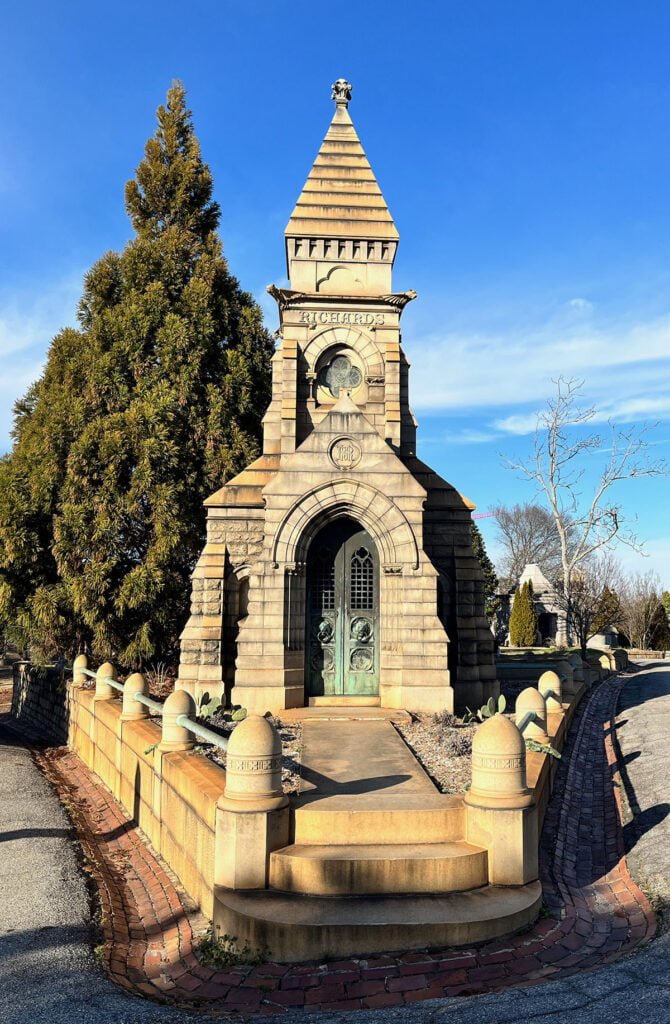
This section of the cemetery contains large family lots and offers sweeping views of the city. You will discover impressive mausoleums and the names of Atlanta’s most prominent families here. The Richards Mausoleum is an impressive example of the Richardson Romanesque style. Born in England, Robert Richards came to Atlanta before the Civil War. Following the war, he became a wealthy businessman working in banking, insurance, and textiles.
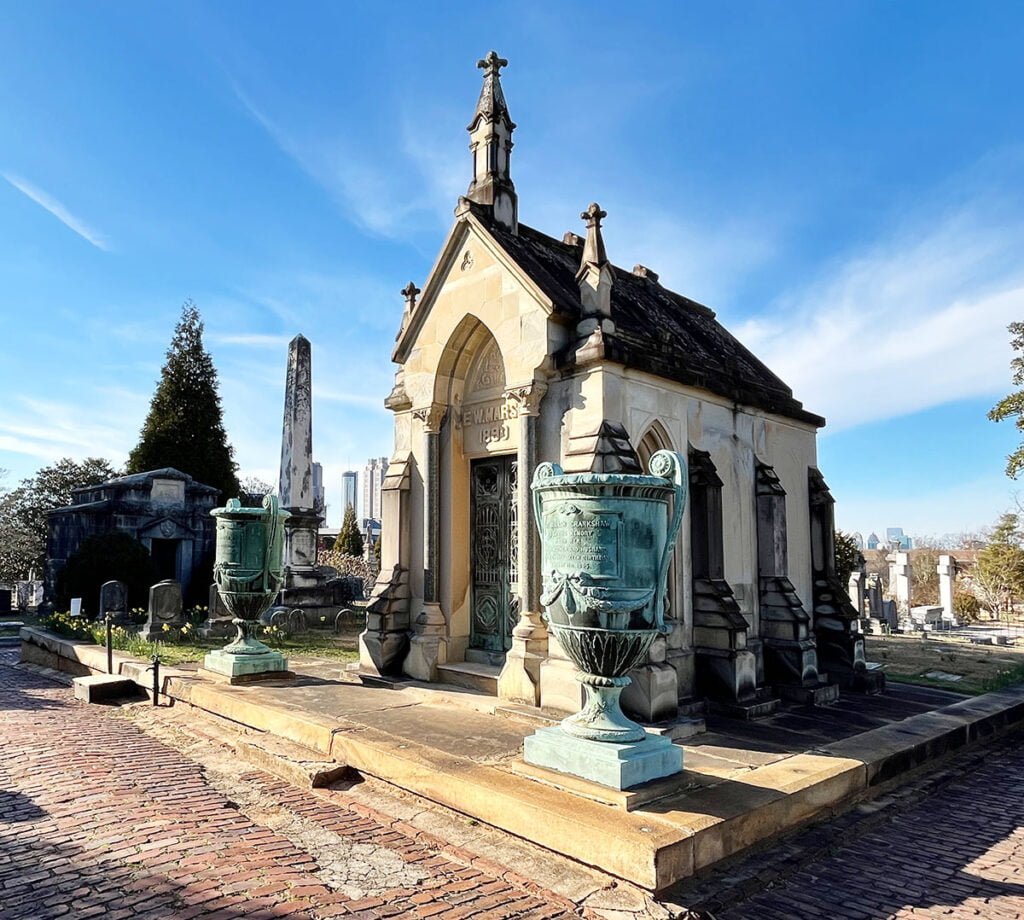
The Gothic Revival Marsh Mausoleum features large bronze urns. The gazebo behind it came from Edwin W. Marsh’s house. He was a successful dry-goods merchant.
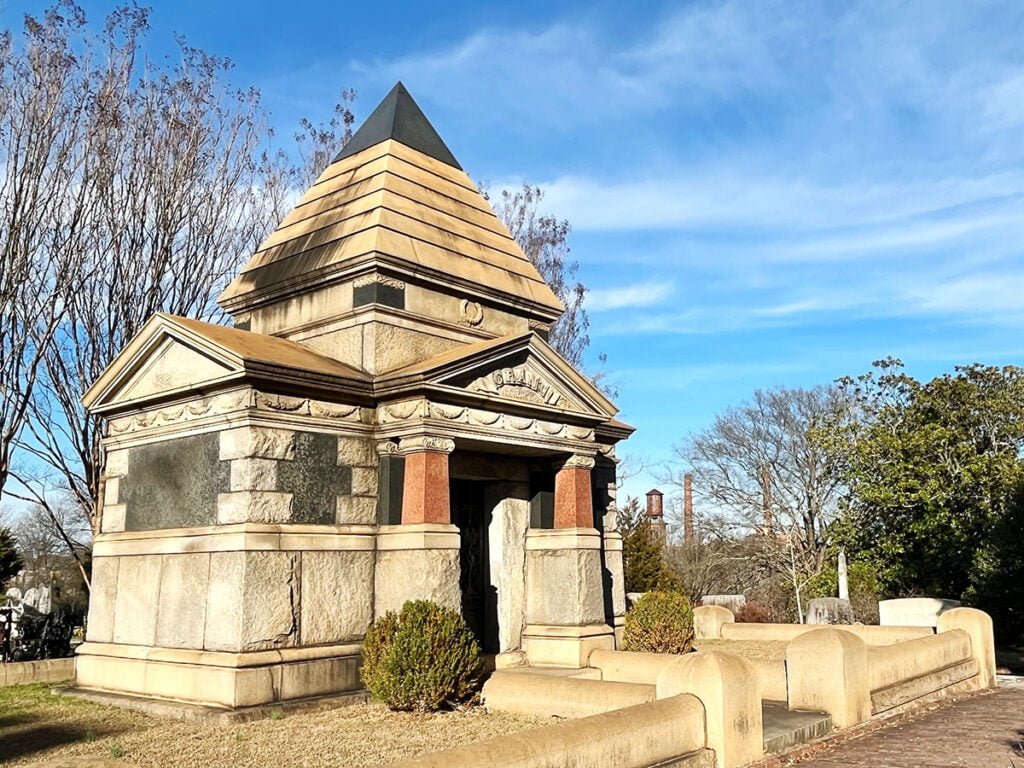
The Grant Mausoleum, which was built in the eclectic style, is the final resting place of John T. Grant. He constructed railroad lines across the south. In memory of his deceased son, John Inman Grant, he donated money to Georgia Tech to build a football stadium. It is now known as Historic Grant Field.
The Mayor’s Monument
You will find the Mayor’s Monument near the Bell Tower. The memorial lists all of Atlanta’s mayors starting with Moses Formwalt, who served starting in 1848. Formwalt’s final resting place is at Oakland.
The Bell Tower
The Bell Tower was built in 1899. It’s castellated Gothic Revival style is reminiscent of Norman and English churches. The 50ft bell tower still has its bell. The bell rang whenever the sexton was notified of an upcoming funeral. The basement included the receiving vaults. The main level was the cemetery office and waiting room. The upper level originally served as an apartment for the sexton’s family.
Oakland renovated the bell tower in 1998 and again in 2022. It now includes 2-floors of private event space with views of the cemetery and the Atlanta skyline. Today Oakland holds more weddings than funerals. I have seen a few of these weddings at the Richards Mausoleum while strolling around myself!
Out in the Rain
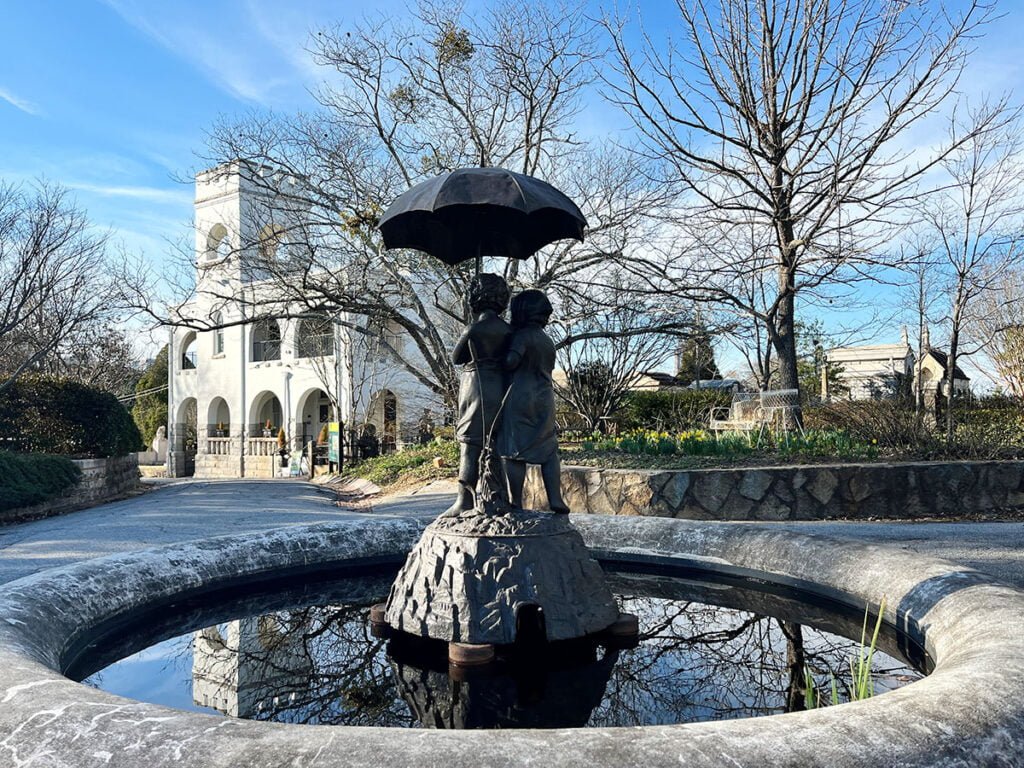
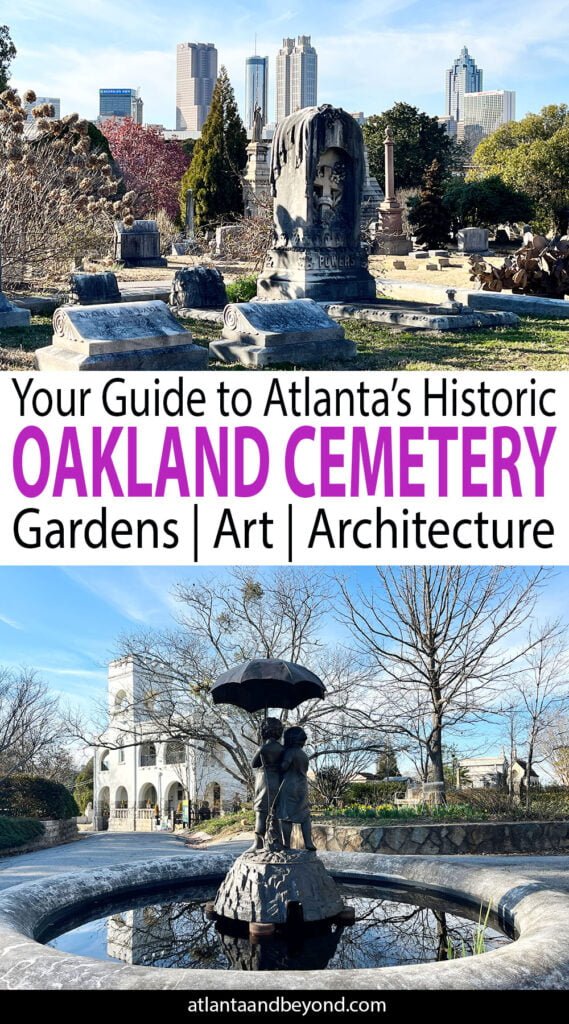
Just outside the Bell Tower, you will find the charming fountain featuring the statue, “Out in the Rain.” JL Mott Ironworks of New York City created the fountain at a cost of $100. It was shipped to Atlanta from Trenton, New Jersey. The fountain is a copy of one on display at the Centennial Exposition in Philadelphia. It was installed at Oakland Cemetery in 1913.
Garrett Gas Lamp
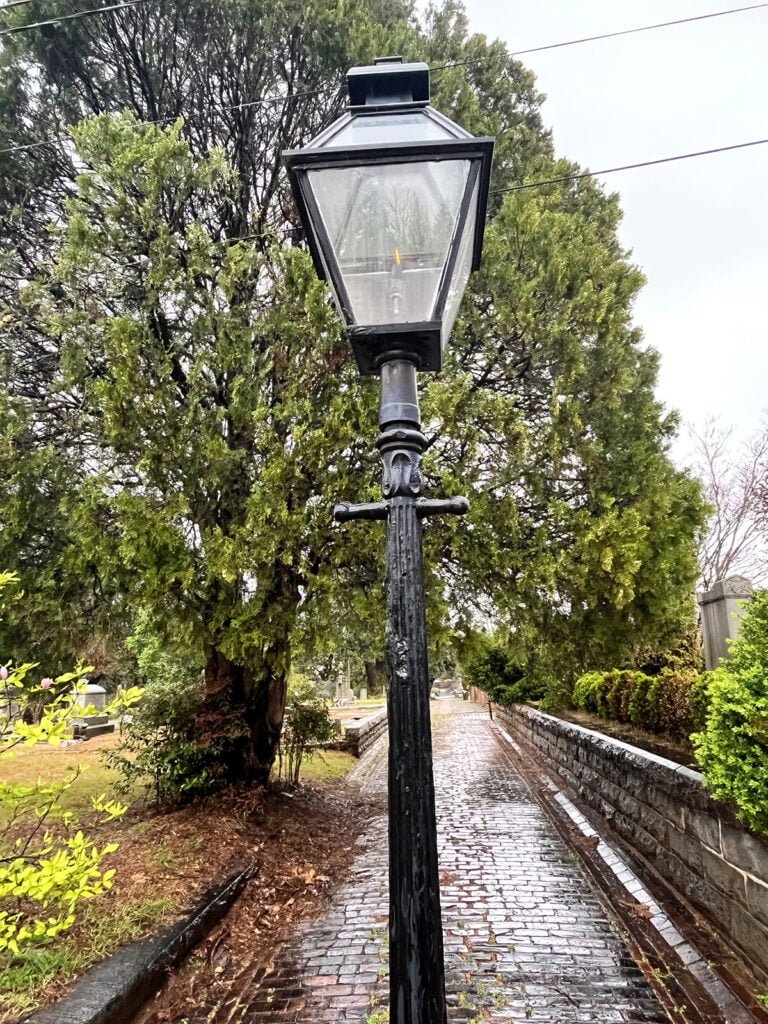
You will find this historic gas lamp in the lane west of the Cotting-Burke vault. It was one of the original gas lamps that lit Atlanta before the civil war. There is a damaged spot on the lamp post. It may have taken a blow during the siege of Atlanta in 1864. This lamp is named after the beloved local Atlanta historian Franklin Garrett.
Greenhouse Valley
The Atlanta Rolling Mill previously occupied the land adjacent to the railroad tracks. The mill was destroyed during the Civil War. This section’s location near the trains made it less desirable than other areas at Oakland, so it does not feature many elaborate memorials.
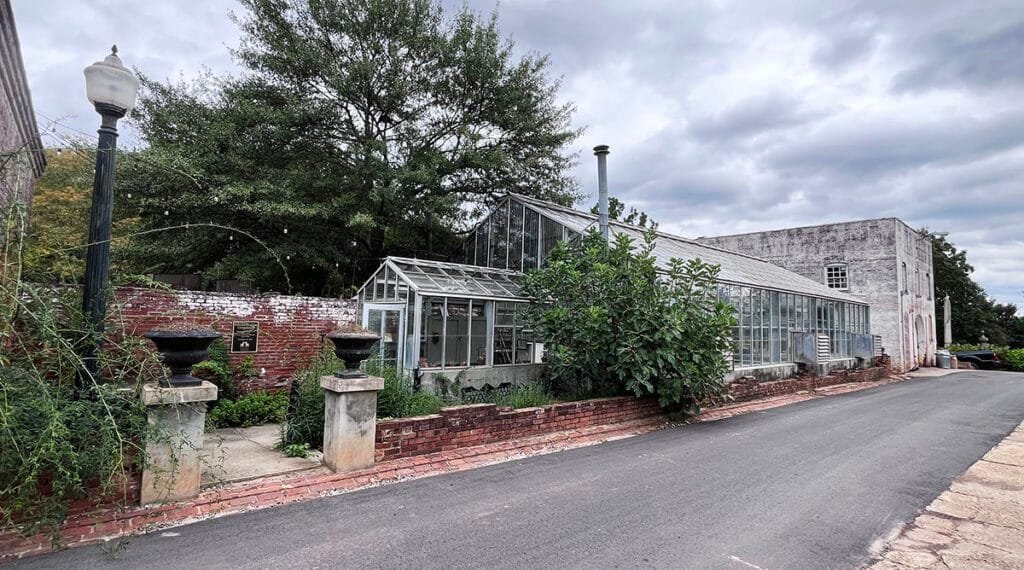
In the 1890s, Oakland Cemetery built its second greenhouse. Today’s greenhouse occupies the footprint of the historic greenhouse. Oakland Cemetery is a horticulturalists destination. Plants and flowers are cultivated here to be planted in the cemetery or sold to the public during Oakland’s Spring and Fall Plant Sales.
Notable Monuments
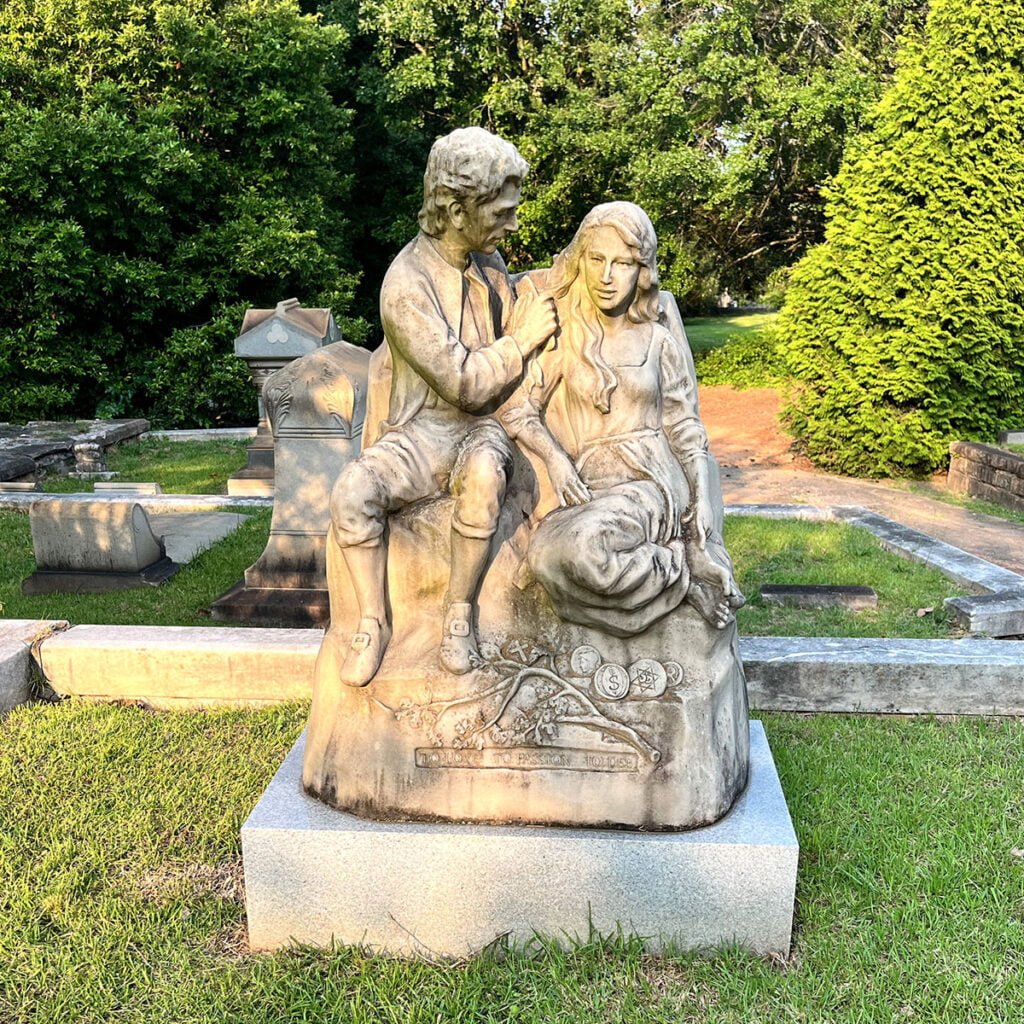
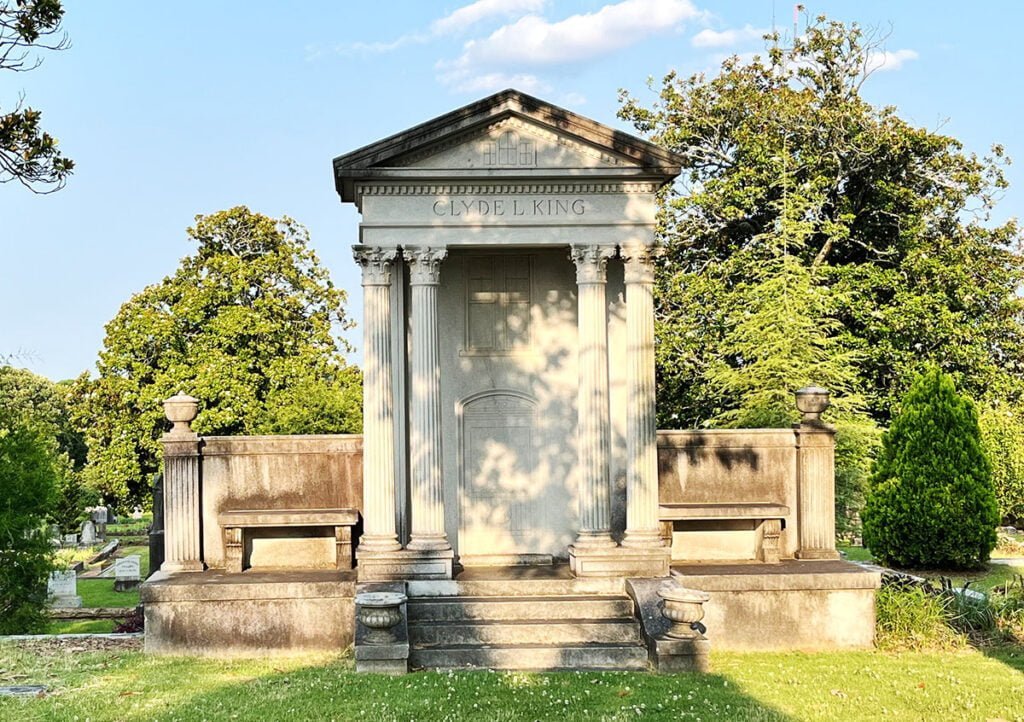
The Fazzari-Landis Family Monument features a beautiful sculpture of a husband brushing his wife’s hair. Clyde King was the owner of the King Plow Company, which is now an award-winning arts center. King built a beautiful mansion on Ponce de Leon Avenue in Druid Hills. He and his wife, Clara, adored their home so much that they incorporated their home in the design of their monument at Oakland Cemetery. The house still stands at 1386 Ponce De Leon Ave NE.
Historic African American Burial Grounds
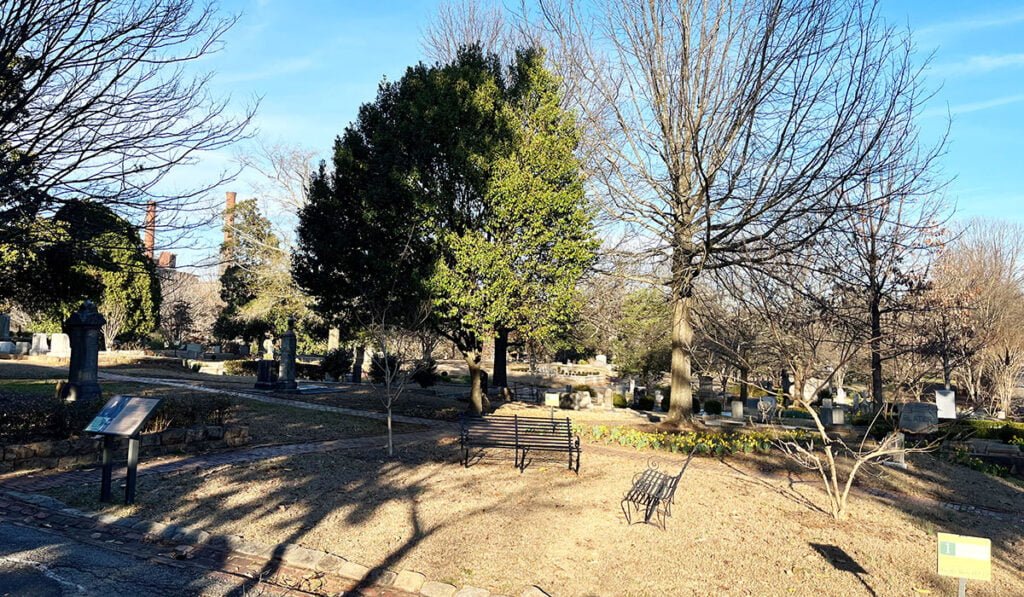
This is the space where African Americans could buy lots to bury their loved ones. Funerals often incorporated African traditions. Typically, families could not afford an inscribed stone headstone, so the markers that they placed deteriorated over time. Approximately 12,000 people are buried here. Although few grave markers exist today.
Black Atlantans could only be buried in the African American section of the cemetery. Mayor Maynard Jackson was Atlanta’s first black mayor. He was also the first African American to break the color lines in Oakland Cemetery. He is buried in the Original Six Acres, in a section previously reserved for whites only.
In 2022, the Historic Oakland Foundation completed a 5-year long restoration of the African American Burial Grounds. Using ground penetrating radar, the team discovered approximately 800 unidentified graves.
Notable African American Women Buried Here
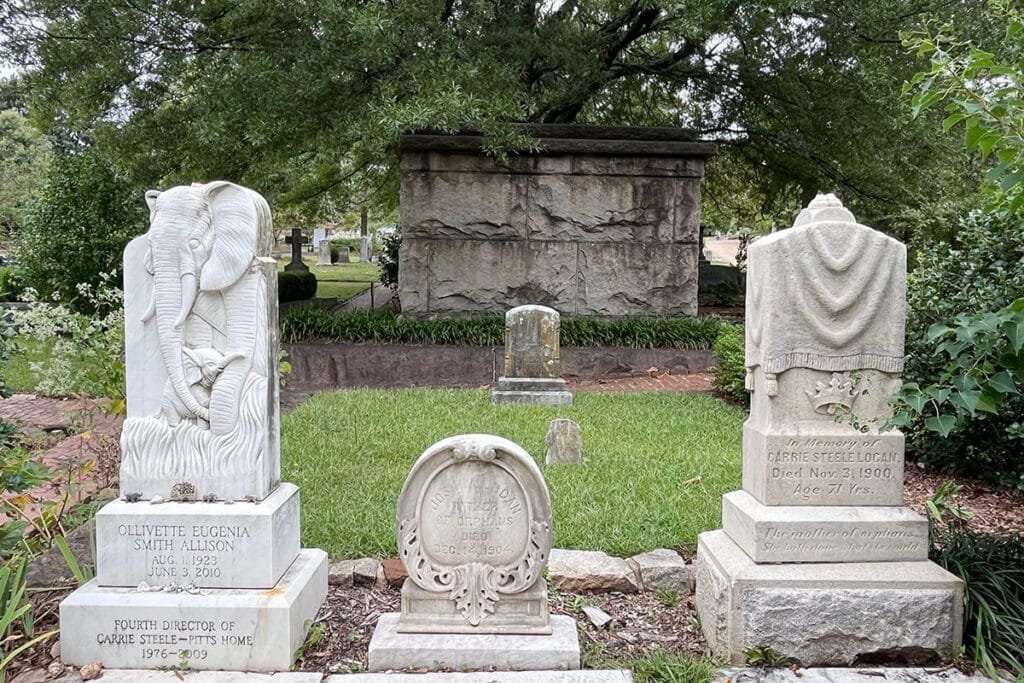
Carrie Steele Logan (d. 1900) founded an orphanage for black children following the Civil War. Although she was born into slavery, she learned how to read and write. When she worked at Atlanta’s Union Station, she brought home homeless black children to care for them at her house on Auburn Ave.
She realized that she needed a larger building. She raised the money by writing and selling a memoir about her life, selling her house, and asking for donations. With the support of her husband, Reverend Josihia Logan, she opened the Carrie Steele Orphan Home in 1888. Carrie ran the home until her death. The Carrie Steele Pitts Home is still in operation today.
Olivetti Allison (d. 2010) grew up in the Carrie Steele Pitts Home. After graduating with a degree in social work from Atlanta University, she returned to work at the Carrie Steele Pitts Home. Eventually she became the executive director. Olivetti’s grave is next to Carrie’s. The sculpture on her burial monument depicts the bond between a mother and baby elephant – honoring both her love for children and fondness for elephants.
Notable African American Men Buried Here
Bishop Wesley John Gaines (d. 1912) was the second pastor of Big Bethel African Methodist Episcopal Church and the founder of Morris Brown College.
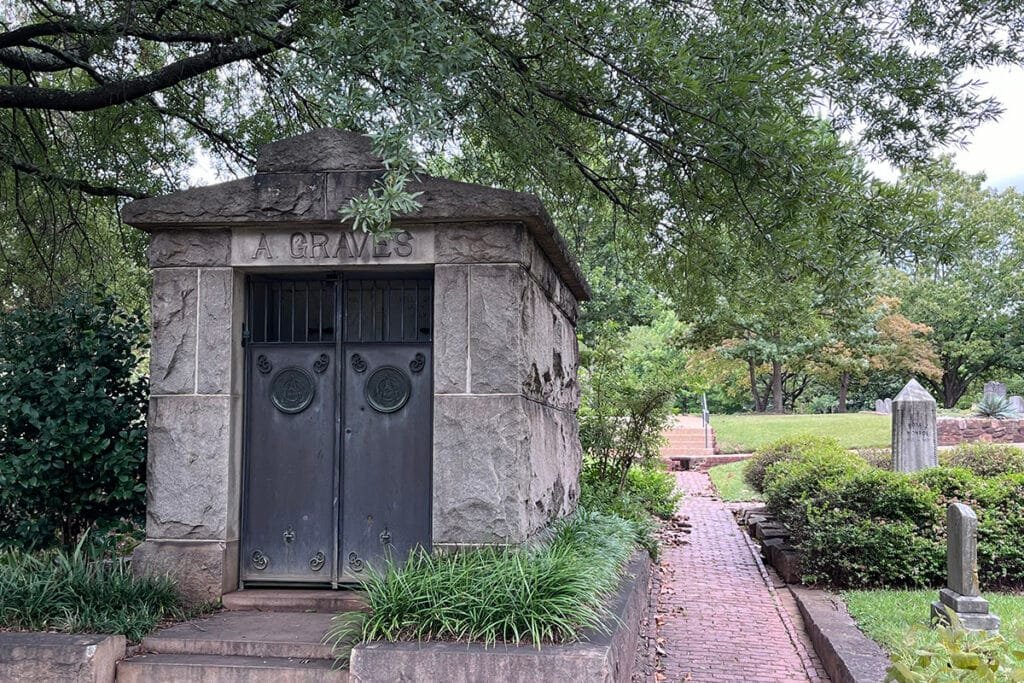
Antoine Graves (d. 1941) was a successful real estate developer who began his career as a teacher and principal at the Gate City school. The Graves Mausoleum is the only mausoleum in the black section of the cemetery.
Oakland offers a free cell phone tour called “African American Voices” (678-365-0232) that details the history of the African American section.
Potter’s Field
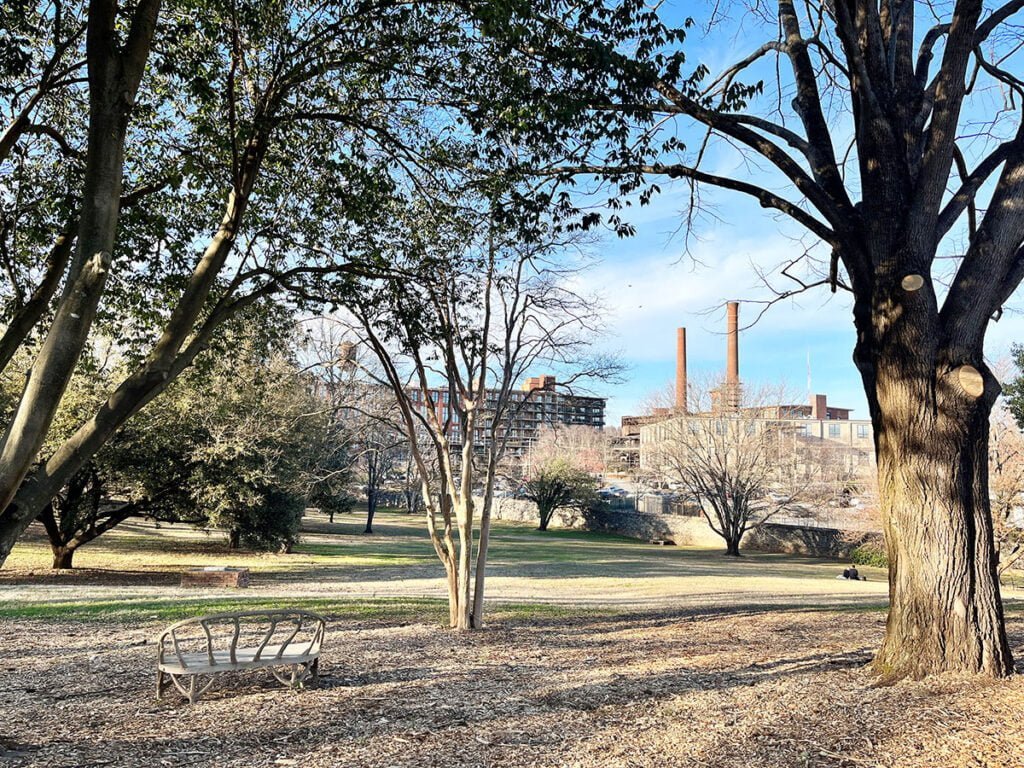
Beyond the African American Burial Grounds, you will find the Potter’s Field. It is the grassy slope adjacent to the cemetery wall that runs along Boulevard near the Fulton Cotton Mill Lofts in Cabbagetown. This section is the final resting place of 7,500 of Atlanta’s poor. People of all races and religions are buried together here. The original wooden grave markers disappeared with the passage of time..
This term “Potters” is taken from the Gospel of Matthew, Chapter 37: “Then Judas, which has betrayed Him, saw that he was condemned, repented himself, and brought again the thirty pieces of silver to the chief priests… and they took counsel, and bought them with them the potters’ field to bury strangers in.” “Potters” and “Paupers” are interchangeable.
Jewish Hill & Flat
Jewish Hill
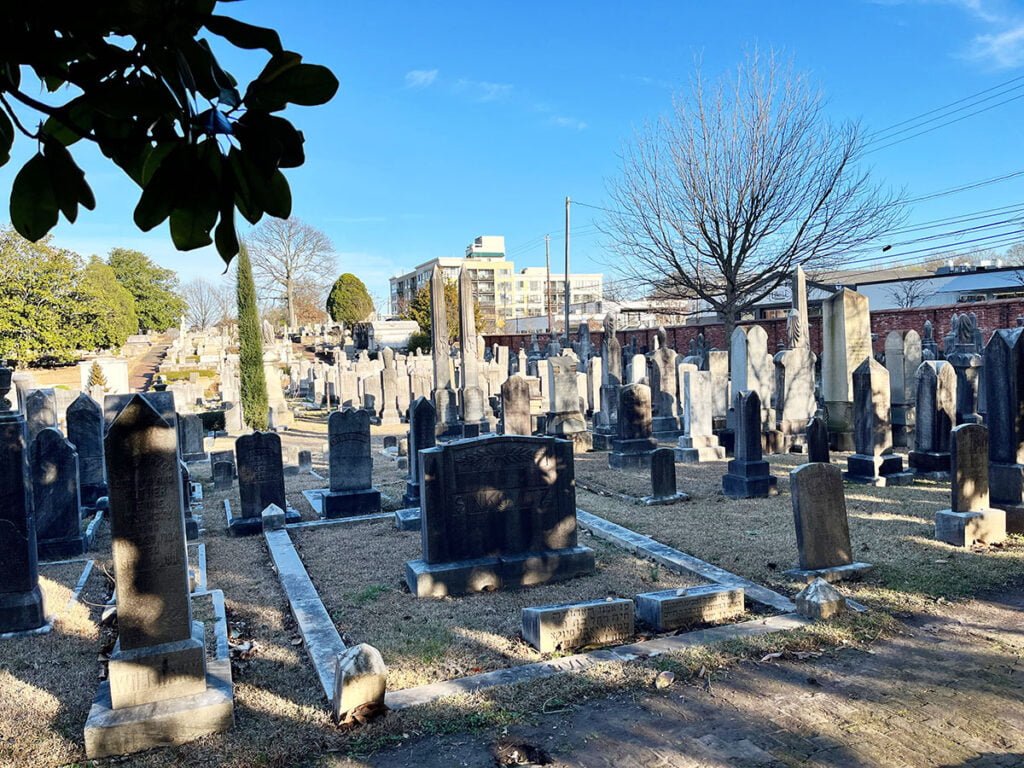
Following the Civil War, the Jewish community in Atlanta expanded. The Hebrew Benevolent Congregation (now known as The Temple) purchased additional lots in the area known as the Jewish Hill. This Congregation was primarily a German-Jewish community. During their time in the US, they culturally assimilated into Victorian Atlanta. This community built elaborate mausoleums and monuments with inscriptions written in English to commemorate their loved ones.
Jewish Flat
In 1895, the new Ahavath Achim Congregation purchased plots in an area known as the Jewish Flat. Its members included many recent immigrants from Eastern Europe and Russia. You will recognize this section by its large and crowded headstones. Limited space in the Jewish Flat required the Congregation to make the most of the space it had. The tall grave markers are in keeping with Russian-Jewish tradition. These headstones display Hebrew inscriptions.
Notable Monuments
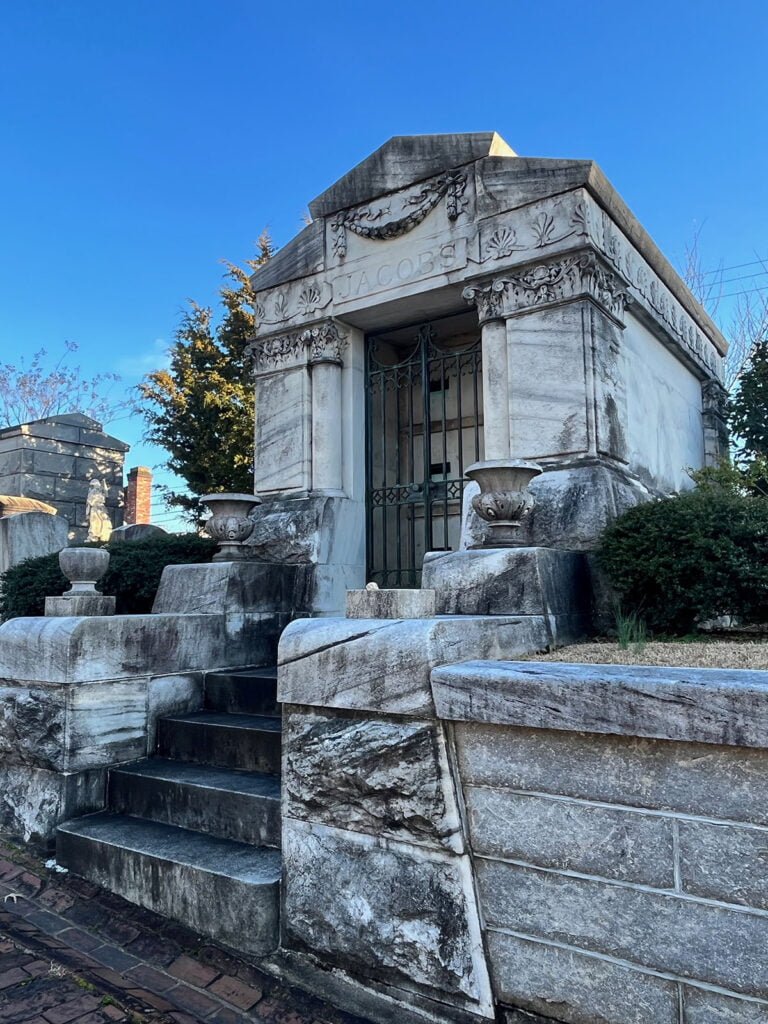
The Beaux-Arts Classical Jacobs Mausoleum is the final resting place of Dr. Joseph Jacobs. He was a second-generation Jewish immigrant from Germany and a pharmacist. He owned a chain of pharmacies called Jacob’s Pharmacy Company. His initial store in Atlanta’s downtown Five Points location sold Coca-Cola by the glass at the soda fountain starting in 1886.
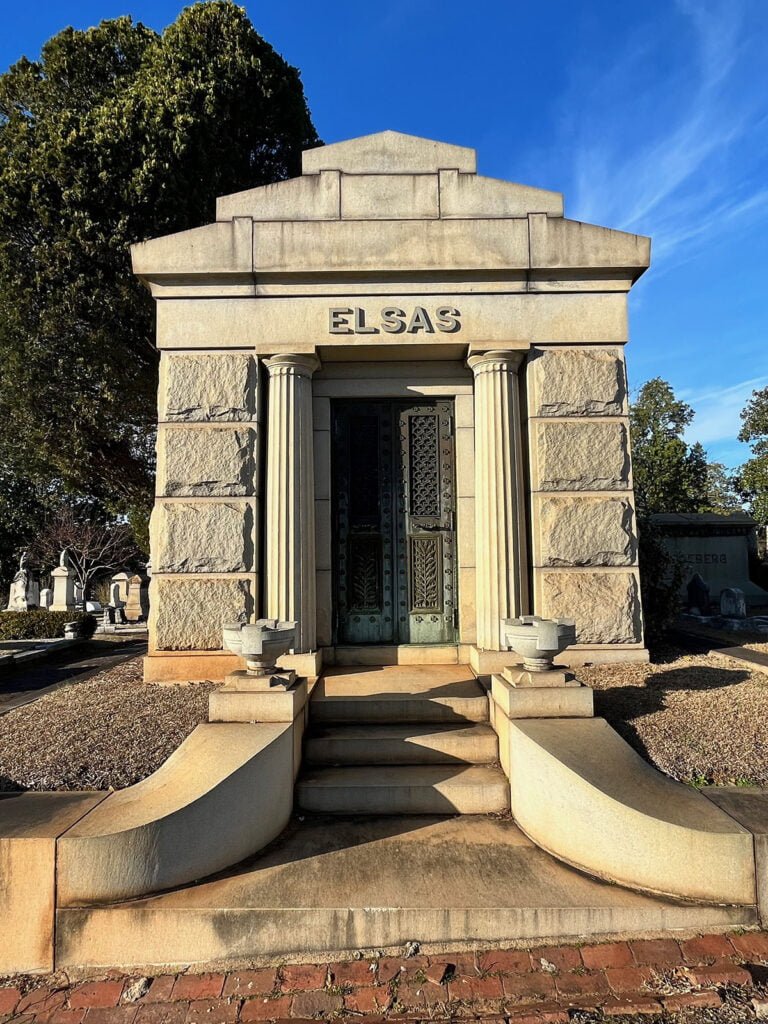
The Eclectic Elsas Family Mausoleum is the final resting place of Jacob Elsas, who immigrated from Germany in the 1850s. He fought for the Union Army and moved to Atlanta following the Civil War. He struggled to find good cloth bags for his dry goods store, so he established the Fulton Bag and Cotton Mill to fill that need. Jacob Elsas was one of the initial founders of Georgia Tech and he made substantial contributions to establish a hospital in honor of his friend, Henry Grady. You can see the Fulton Cotton Mill Lofts beyond in Cabbagetown from this Mausoleum.
South Gateway & Memorial Drive Gate
Memorial Drive Gate
The original main gate to the cemetery was located on Memorial Drive across from Six Feet Under. Fair Street Gate was its original name. Memorial Drive originally went to the Fair, so it was called Fair Street. The gate is located on the southeastern side of the first 6-acres that made up the original cemetery. The gate has changed substantially since that time. It was originally a tall brick structure with three arches including a taller one in the center. In 1920, it featured a deep iron canopy on the cemetery side of the gate.
South Gateway
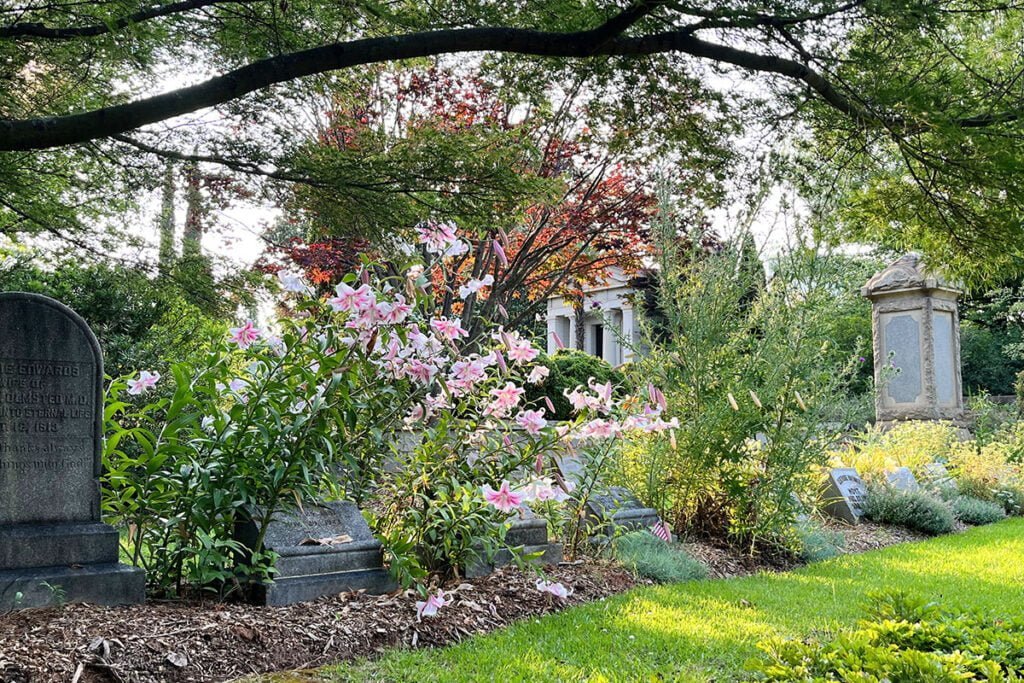
This section of the cemetery was the first expansion beyond the Original Six Acres. It is the final resting place for three of Oakland’s most famous residents: Bobby Jones was a well-known golfer and a founder of Augusta National Golf Club. Golf balls adorn his grave. Kenny Rogers was a famous country singer who lived in Atlanta towards the end of his life. Mayor Sam Massell was Atlanta’s first Jewish mayor in 1969.
This section of Oakland Cemetery pays homage to Augusta National Golf Club and its former use as Fruitlands Nursery. Augusta National Golf Club’s famous 18 horticultural varieties are planted in the South Gateway.
Confederate Burial Grounds
Monument to the Confederate Dead
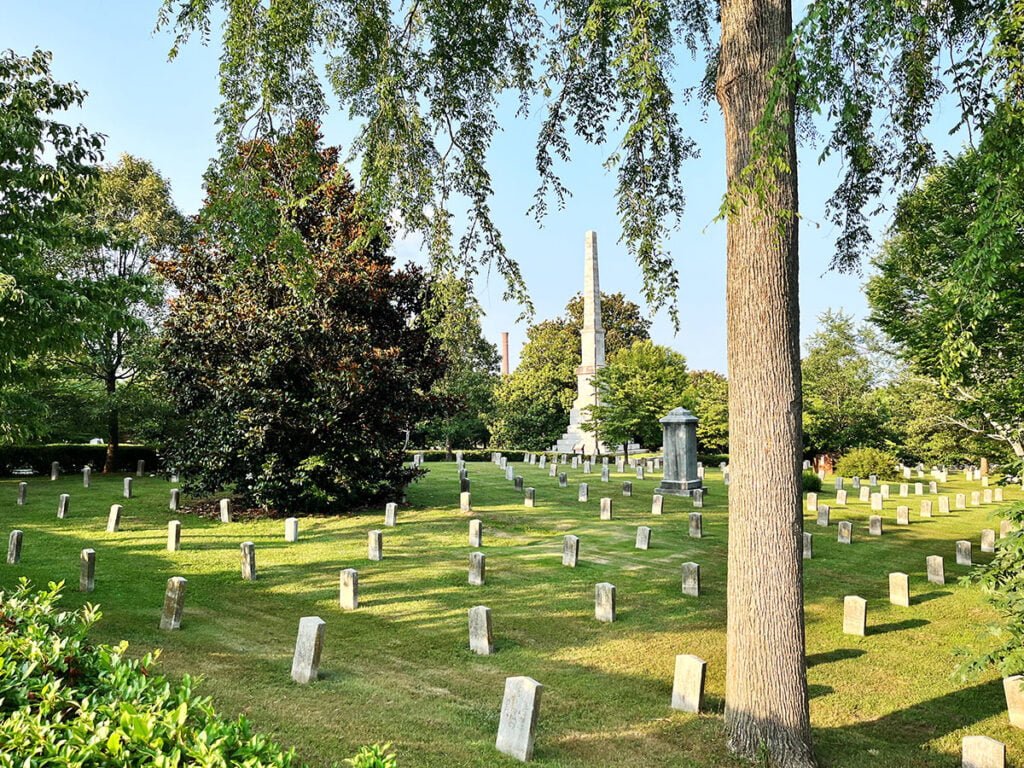
A large obelisk, which is a monument to the Confederate Dead, dominates the center of Oakland Cemetery. Note the white marble headstones that surround the monument. This section is the Confederate Burial Grounds. The Atlanta Ladies Memorial Association funded this section to remember their lost loved ones.
Please note that monuments such as the obelisk have been interpreted differently over time. As Georgia law prohibits the removal of historical monuments, Oakland Cemetery installed interpretive markers to add context. Oakland also offers responses to frequently asked questions about these monuments.
Confederate and Union Soldiers at Oakland Cemetery
Atlanta was a major medical center during the Civil War. Trains filled with wounded soldiers from both sides arrived daily. These soldiers often ended up at hospitals within half a mile of Oakland Cemetery. Confederate and Union soldiers share this section of Oakland Cemetery. Simple wooden markers originally marked soldiers’ graves. Following the Civil War, the US government paid to bury and honor the Union dead, so the bodies of most Union soldiers returned to their home states.
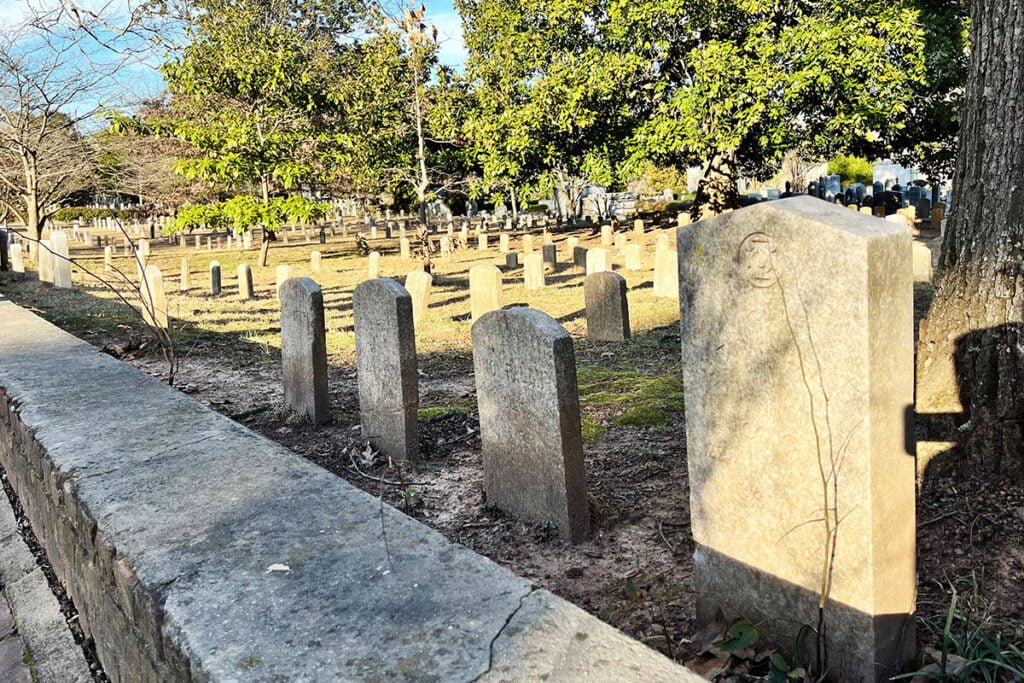
In 1898, President McKinley, who was a Union veteran, recognized that all of the fallen soldiers were Americans. Over the next 10 years US Congress provided funds for headstones for Confederate soldiers. Note the rounded marble headstones among the pointed ones. The rounded headstones belong to Union soldiers who remain at Oakland Cemetery.
Visiting Oakland Cemetery
Oakland Cemetery is a public park and it is open from sunrise to sundown every day of the year. It is free to visit. You may bring your dog on a leash or a picnic. The Visitor Center and Museum Store are just outside the main gate. Please visit the Oakland Cemetery website for hours and the location.
How to get to Oakland Cemetery
Driving
Paid parking is available in the paved lot at 342 Martin Luther King, Jr Drive SE via the ParkMobile app. Nearby free street parking is also available.
Public Transportation
The King Memorial MARTA Station is conveniently located near the main entrance to Oakland Cemetery.
Things to do at Oakland Cemetery
You can spend as much or as little time at Oakland as you would like. You can casually stroll through the monumented gardens, you can study the history of Atlanta, or you can get some meaningful exercise.
Oakland Cemetery offers a Self-Guided Tour that you can take at your own pace. Purchase a digital version online or a paper version at the Museum Store. You can also buy tickets to a Guided Tour of Oakland Cemetery. Check out Oakland’s Special Events page to learn about upcoming events – both free and ticketed.
Restaurants Near Oakland Cemetery
There are plenty of great restaurants just outside the gates of Oakland in the Grant Park neighborhood if you want to make a day of it.
- Das BBQ Grant Park – lunch & dinner – near the visitor’s center
- Ria’s Bluebird – breakfast & lunch
- Little Tart Bakeshop Grant Park – breakfast, lunch, coffee and pastries
- Gather at Grant Park Market – breakfast & lunch primarily
- Bomb Biscuit – breakfast & lunch
- 42 Bar and Grill – lunch & dinner
- Mezcalito’s Cocina & Tequila Bar – lunch & dinner
- Six Feet Under – lunch & dinner
- Firepit Pizza Tavern – lunch & dinner
- Birdcage – lunch & dinner
Nearby Attractions
For in depth information about the cemetery, its history and its monuments, I recommend Atlanta’s Oakland Cemetery: An Illustrated History and Guide by Ren and Helen Davis. Are you planning a visit to Oakland Cemetery? Have you been to the cemetery already? Let me know what you think about it in the comments!


You May Also Like
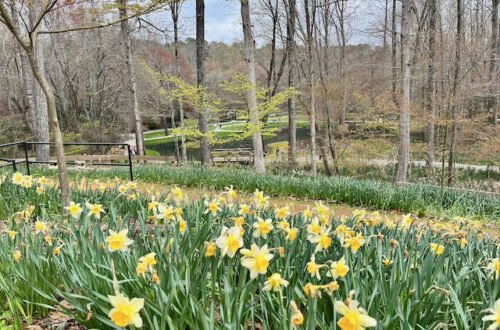
Gibbs Gardens: A Guide to Spring Flowers near Atlanta

More Fun Things to do in Atlanta with Little Kids