Don’t Miss the Stunning Salt Pans of Western Sicily!
Western Sicily’s Salt Pans between Trapani and Marsala
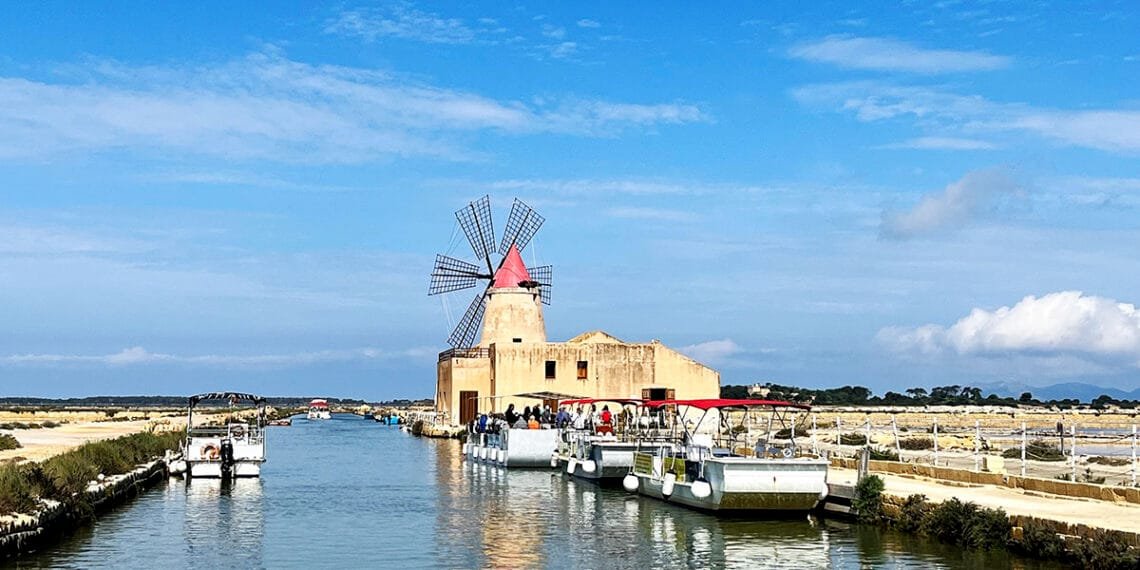
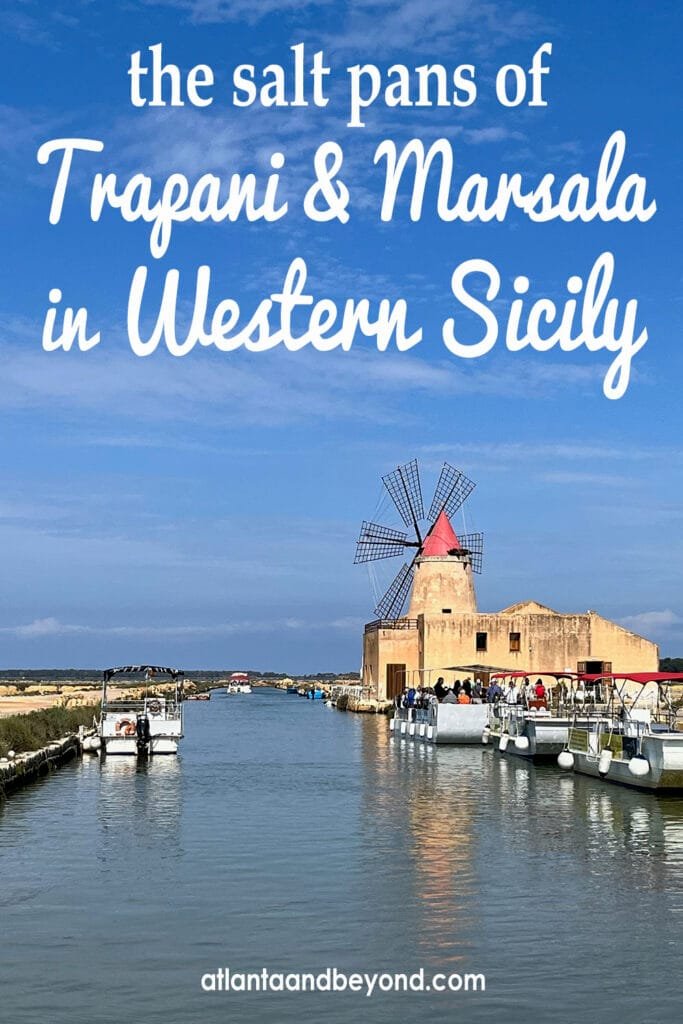
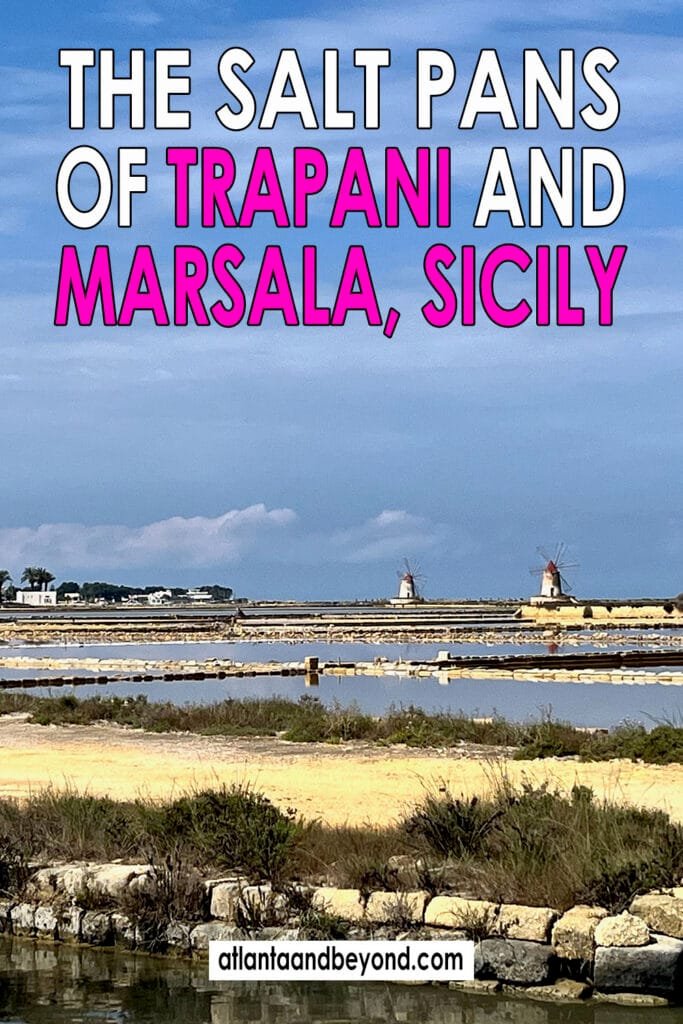
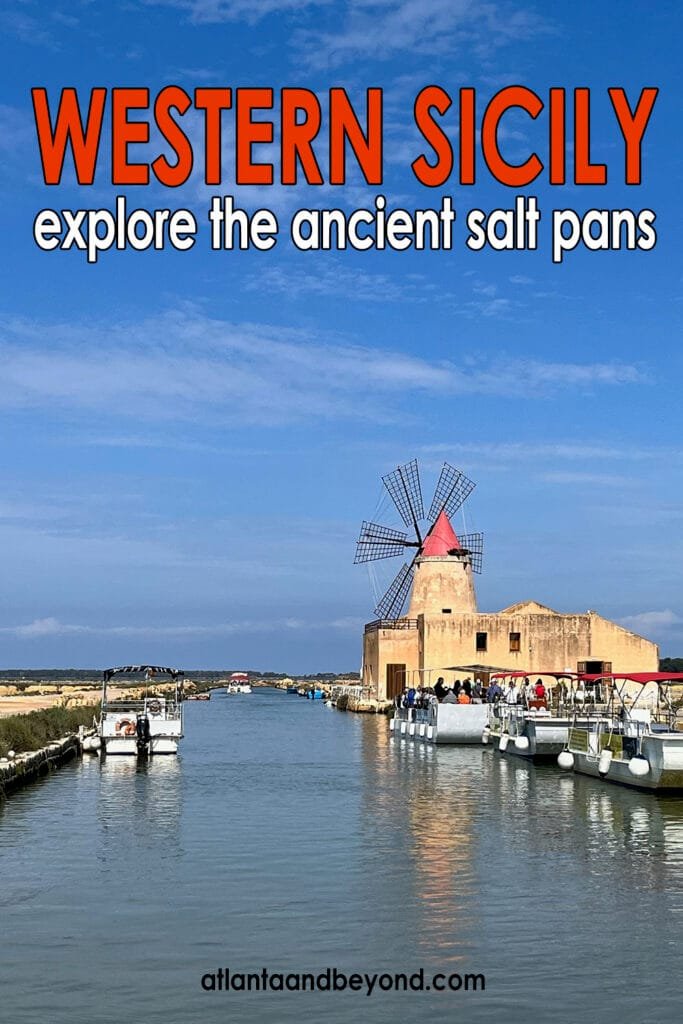
Western Sicily’s coastal salt pans along the Via del Sale between the cities of Trapani and Marsala are stunning salt marshes dotted with historic Dutch-style wind mills. The beauty of the salt pans overwhelmed me when I arrived Saline Ettore e Infersa near Marsala. My trip to Sicily included a tour of the ancient ruins of Mozia, which involved taking a boat through Sicily’s salt pans and the Stagnone Lagoon.
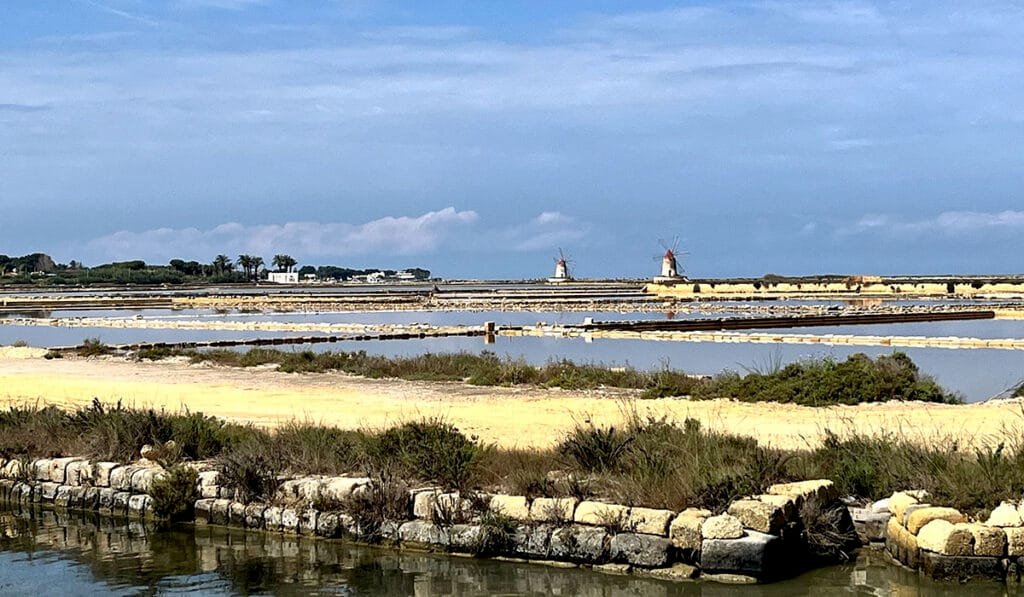
I saw this spectacular landscape in the morning and I cannot even begin to imagine how its beauty is magnified by the sunset on the Sicily’s western coast. Follow along below to learn:
- The history of western Sicily’s salt pans – dating back to ancient times
- The process to harvest natural sea salt
- How you can experience these spectacular salt pans today
The History of Western Sicily’s Salt Pans
Salt in the Ancient World
Salt was exceptionally important for food preservation before refrigeration. The ancient Greeks highly valued salt and used it as currency. The Greeks and Phoenicians traded salt and salted fish. Roman soldiers were paid in salt rations – which developed into the modern word “salary.”
The Phoenicians and Sicily’s Salt Pans
The Phoenicians founded colonies where they could harvest salt. They traded salt or food preserved in salt with civilizations who had less access to salt. Around 800 BC, the Phoenicians founded the colony of Mozia (Mothia) in western Sicily. They located their settlement on San Pantaleo island surrounded by the saltwater Stagnone Lagoon. Mother nature literally made ancient money for the Phoenicians through salt extraction. As many as 40 salt pans once occupied this landscape. Sea salt is known as Sicily’s white gold.
Harvesting Salt in the Salt Pans of Trapani and Marsala
Why is Sea Salt Produced in Western Sicily?
Collecting natural sea salt requires specific conditions, which are all present on Sicily’s west coast.
- Shallow, highly salinized water
- A dry, hot summer
- Sea breezes aid in the evaporative process
How do Sicily’s Salt Pans Work?
Humans created the salt pans to facilitate extracting salt from the sea. The outer beds are deeper and each bed becomes progressively shallower until reaching the pan closest to shore. The historic Dutch-style windmills dotting the salt flats harvest wind energy creating power to assist in processing the salt. The deeper salt pans relied on Archimedes screw and the power provided by the wind mill to pump the salinized water to progressively shallower salt pans.
In each bed the sun and wind evaporate more water creating increasingly higher concentrations of salt. It is important that it does not rain during the summer. The salt pan that is furthest from the shore is approximately 1.2 meters deep. The salt pan closest to the shore is only 0.2 meter deep. The process typically begins in May and by July through September, you will be able to see growing salt piles.
Why are Western Sicily’s Salt Pans Pink?
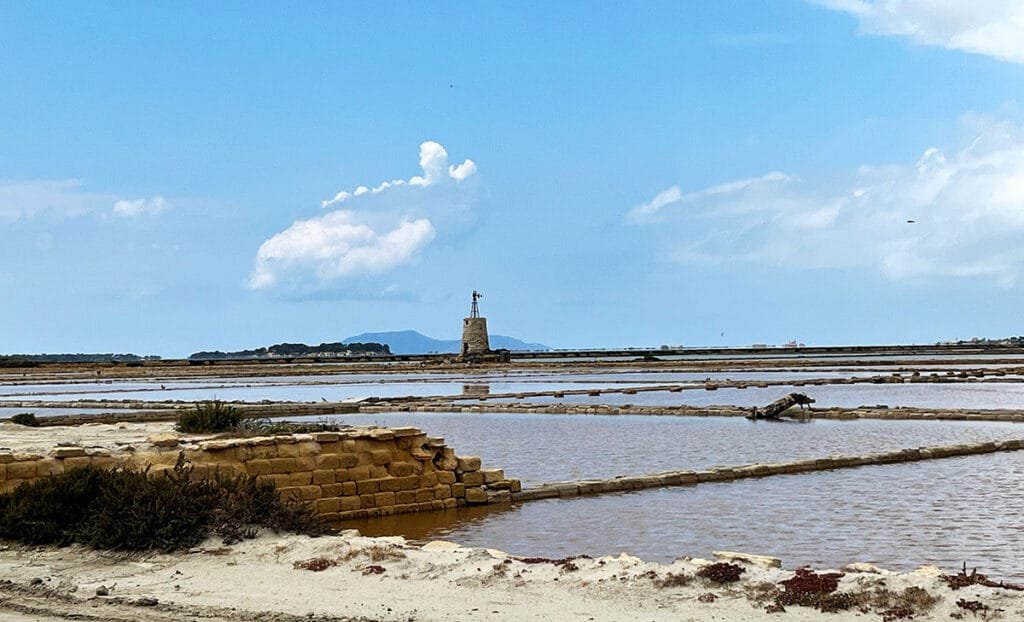
You may notice a slightly pink sheen on the salt pans. This pink color is due to the high concentration of salt that chokes out all life except for a specific alga that produces beta carotene. When shrimp eat the algae, they turn pink and in turn migrating flamingoes eat the pink shrimp and the beta carotene makes them pink too.
How do you Harvest Salt in Trapani and Marsala?
Salt begins piling up in the final basin as the water evaporates. The result is pure, white salt. It does not require cleaning. Machines harvest salt today. However salt workers traditionally harvested it by hand with shovels. The salt is piled up in conical Pyromites to dry. Clay roof tiles cover the piles, so that the salt will be protected from the elements and can dry properly. In the spring, the salt will be dry and ready for harvest. The initial raw salt of the season is called “fiore di sale” in Italian or “fleur de sel” in French. The Dutch-style windmills power grindstones in the mills which create finer grained salt.
Preparing for the Next Salt Harvest
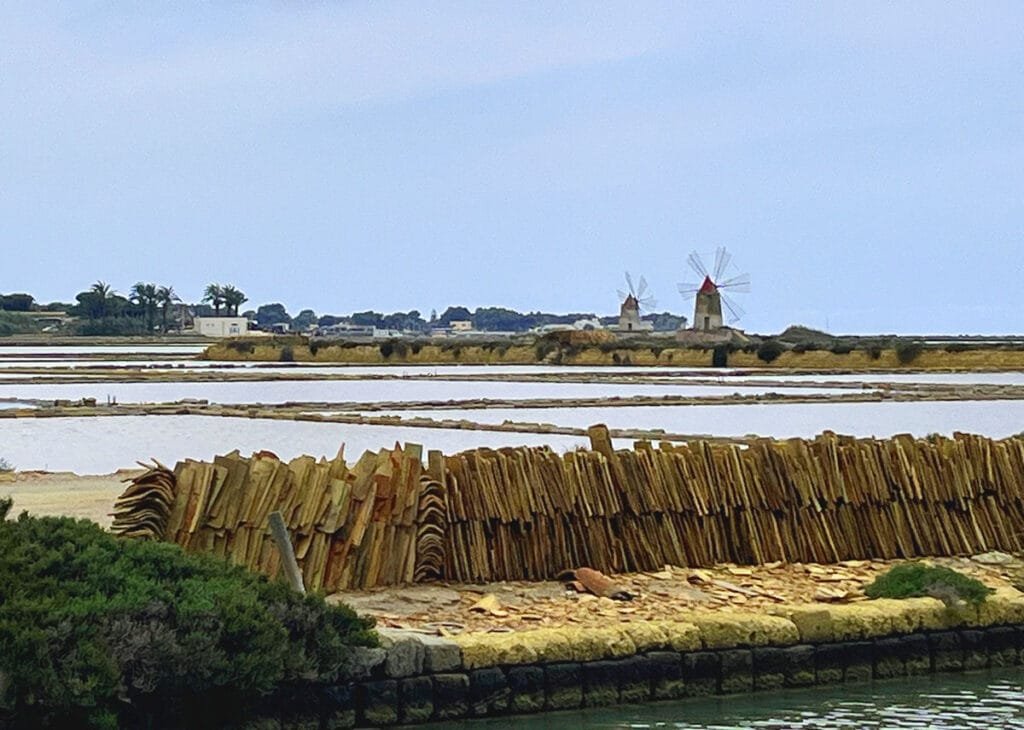
Over winter, the salt pans are cleaned out and the ceramic tiles are stacked in preparation for the next season. In the spring, the tides and pumps fill the initial pools with sea water and the process begins again. 120,000 tons of salt are currently produced in the salt pans in Western Sicily between Trapani and Marsala. In the 15th century – when Spain ruled Sicily – this region produced over 200,000 tons of salt.
Visiting the Salt Pans of Trapani and Marsala in Western Sicily
The Via del Sale or the Salt Road (Strada Provinciale 21 or SP21) connects 27 active salt flats between Trapani and Marsala in Western Sicily.
SEI – Saline Ettore e Infersa near Marsala
The historic grinding mill contains a museum and gift shop. It is adjacent to the SEI docks where the ferry service departs for the Island of Mozia/Mothia. Visiting SEI is a convenient way to see the salt pans and the picturesque wind mills with red roofs if you are visiting the ancient Phoenician settlement on the island.
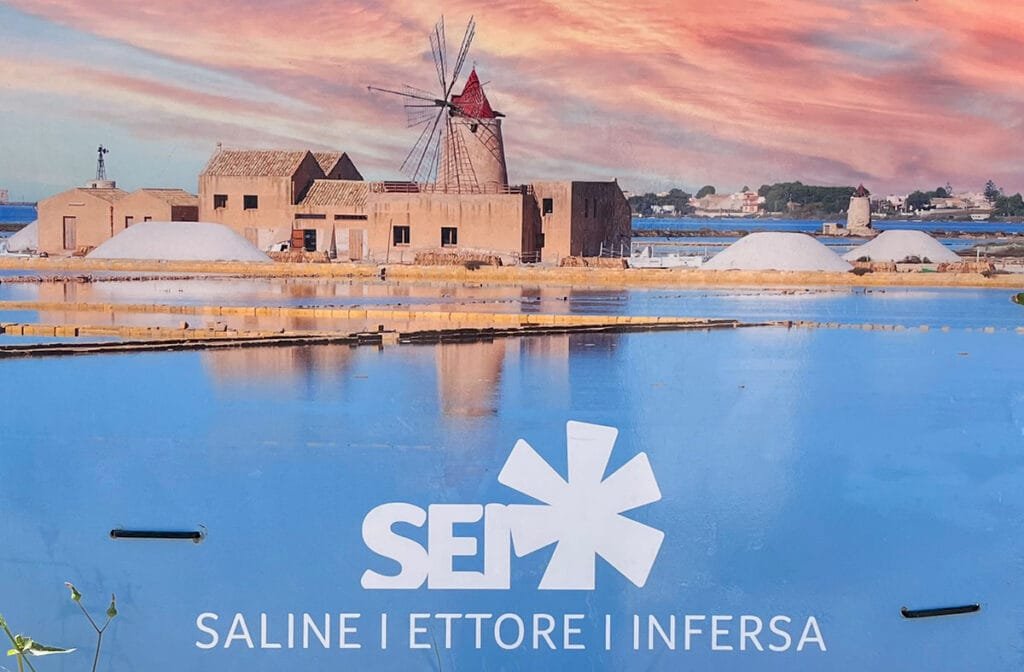
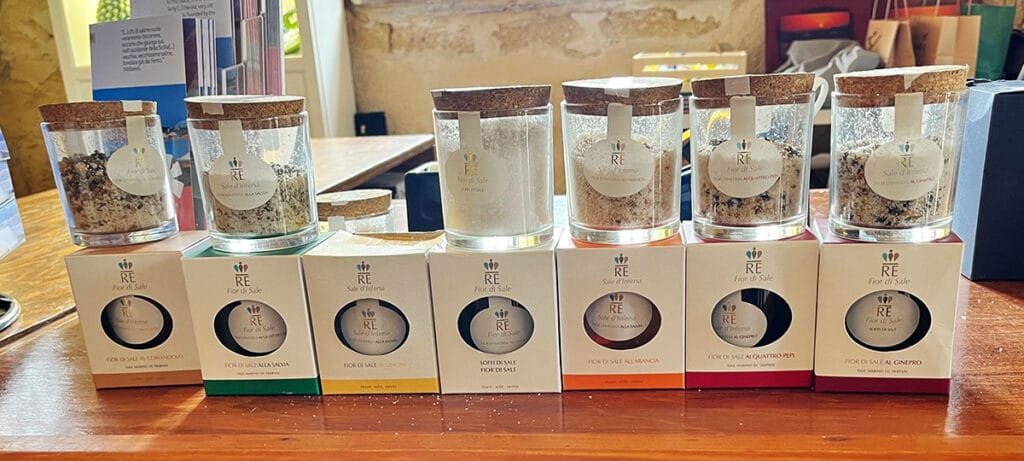
The Salt Museum, which is inside the historic Dutch-style windmill, includes a short film and a few exhibits that feature traditional salt harvesting tools. They may also offer tours of the salt flats. The tour ends in the Bottega del Sale where you will have the opportunity to purchase salt and salt products made in these salt flats. We visited the Bottega del Sale follow our visit to Mozia.
There are several restaurants near this spot. The sunset over the salt pans would make for a spectacular dinner! Make a reservation at Restaurant Mamma Caura to enjoy a sunset meal. You can take a boat tour of the Stagnone Lagoon or to take it up a notch during the summer and enjoy a sunset (tramonto) boat tour of the lagoon. Purchase tickets at the kiosk or purchase online.
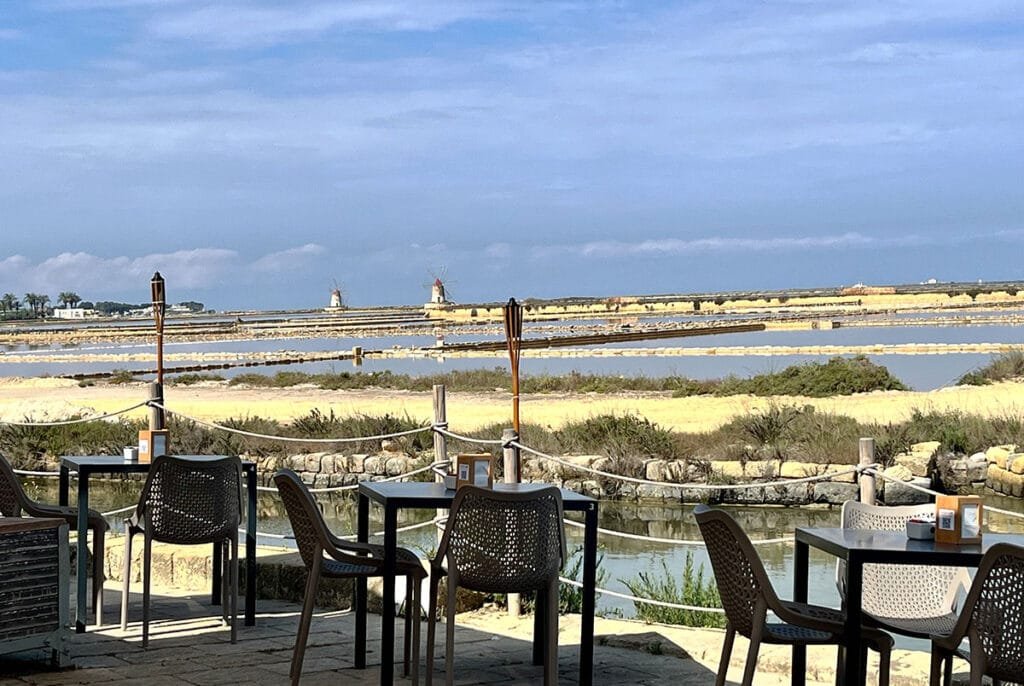
Arini e Pulgliese Imbarcadero Storico near Marsala
Ride the Aquabus with Arini e Pulgliese Imbarcadero Storico. They offer a ferry to Mozia, a tour of the Stagnone Lagoon and a Sunset Lagoon Tour from July through September. You can see the timetables and purchase tickets online. Enjoy a meal at nearby Sireno Mozia.
Museum of Salt – Museo del Sale, Nubia near Trapani
This Salt Museum (Museo del Sale) is run by a family who has collected salt here for generations. The museum is housed in a windmill that was built in 1488. Inside, you will find traditional tools used to harvest salt. Some tools include wooden shovels and an Archimedes’ screw that pumps the water.
Members of the family provide guided tours based on demand. The first part of the tour focuses on the salt museum. During the second half of the tour, you will walk around the perimeter of the salt pans. From the top of the windmill, you can look out over the salt pans to see Trapani and Erice beyond on the mountain top. The Trattoria del Sale is an on-site restaurant.
The Saliculture Museum of Salina Calcara of Trapani and Paceco
The Salina Calcara is part of the Riserva Naturale Orientata delle Saline di Trapani e Paceco. The land in this Nature Preserve is protected by the WWF. The Saliculture Museum of Salina Calcara offers a museum and and a series of tours to experience the historic salt pans including the 15th century Dutch-style windmill.
You can take a guided tour of the salt pans and visit the museum. A birdwatching tour explores the migratory birds that spend time in the nature preserve. During the months of July through September, you can participate in the Salt Worker’s Experience. An expert salt worker will guide you through harvesting salt using traditional tools. Be sure to book this experience in advance!
The Salt Pans of Western Sicily between Trapani and Marsala
There are so many ways to explore Western Sicily’s salt pans. Visit a museum or take a guided tour. Take a boat tour through the Stagnone Lagoon. Or simply enjoy the view from a restaurant overlooking the picturesque salt pans. For the ultimate effect, enjoy your boat cruise or your meal at sunset (tramonto)! Have you visited Western Sicily’s salt pans or are you planning a trip? Let me know in the comments!
Pin for Later!


You May Also Like