Apalachicola Estuarine Nature Center
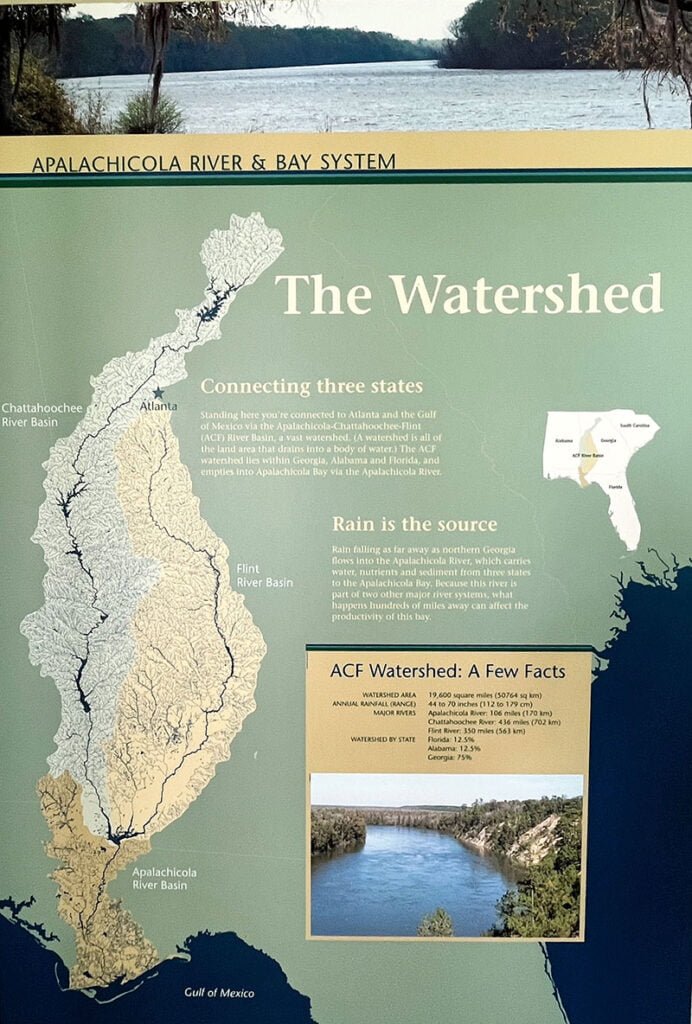
My family agreed that our visit to the Apalachicola National Estuarine Research Reserve Nature Center in Eastpoint, Florida was one of the highlights of our trip to Florida’s Forgotten Coast. The nature center is free to visit. The reserve dedicated itself to the Apalachicola River and Bay System, which begins in the Blue Ridge Mountains and flows down the Chattahoochee River through Atlanta and Columbus, joining up with the Flint River and the Apalachicola River in the Apalachicola Bay. The Research Reserve includes 246,766 acres of public lands and waters. Consequently, this special place includes biodiversity unlike any other place in the world. It was named a Biosphere Region in 1983 by UNESCO.
4 Locations of the Apalachicola National Estuarine Research Reserve
- The Nature Center in Eastpoint, Florida – this is the location my family visited
- Unit 4 on St. George Island, Florida
- Nick’s Hole on St. George Island
- Little St. George Island
Apalachicola Estuarine Nature Center: Nature Walk
Flora and Fauna
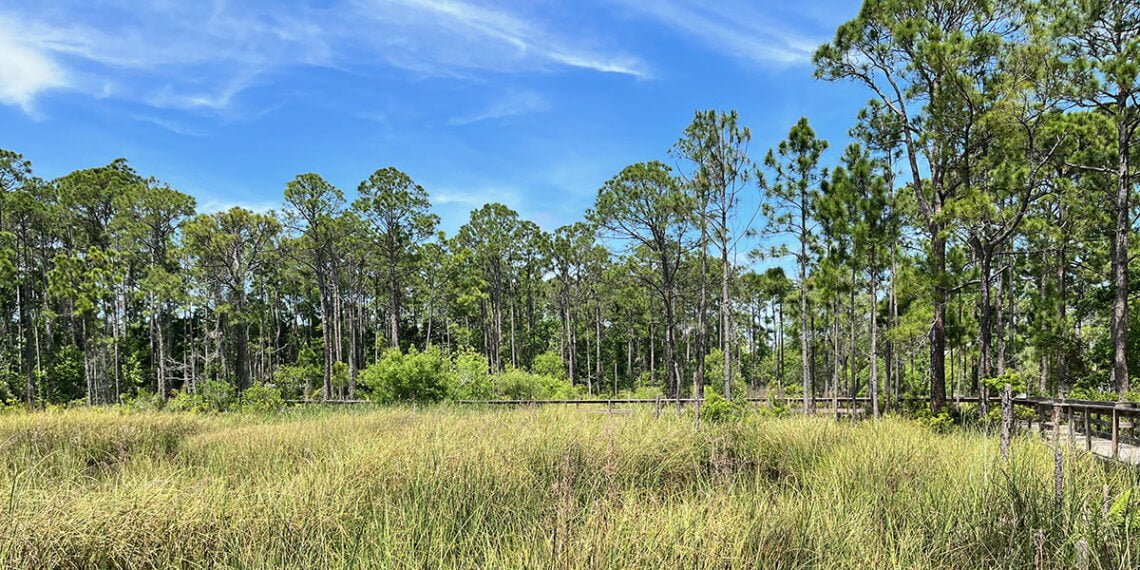
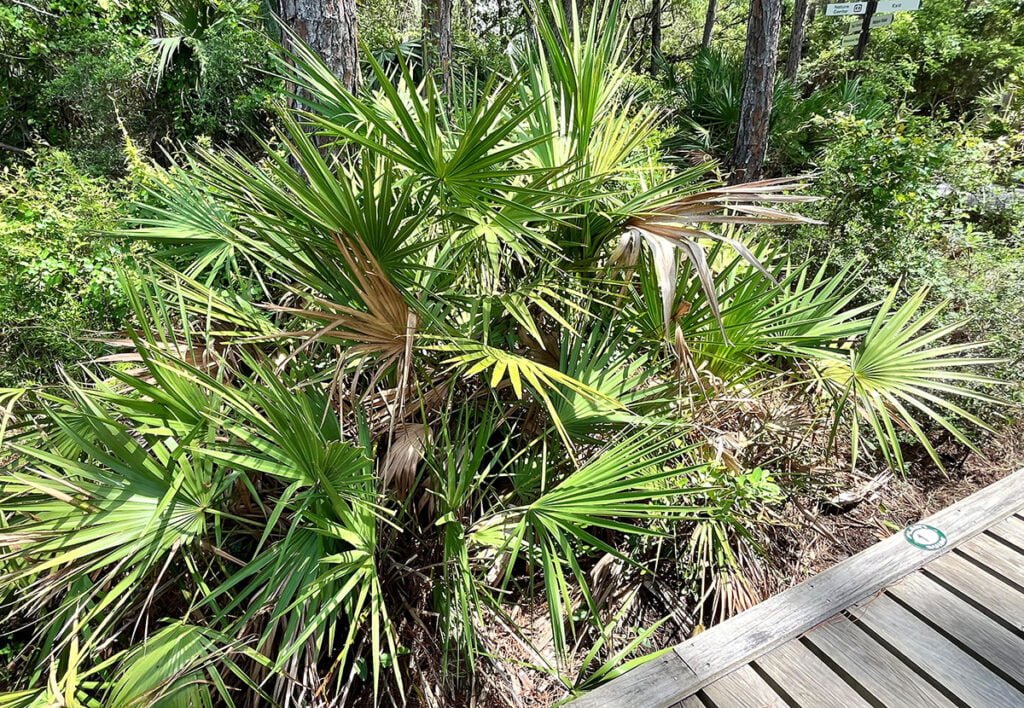
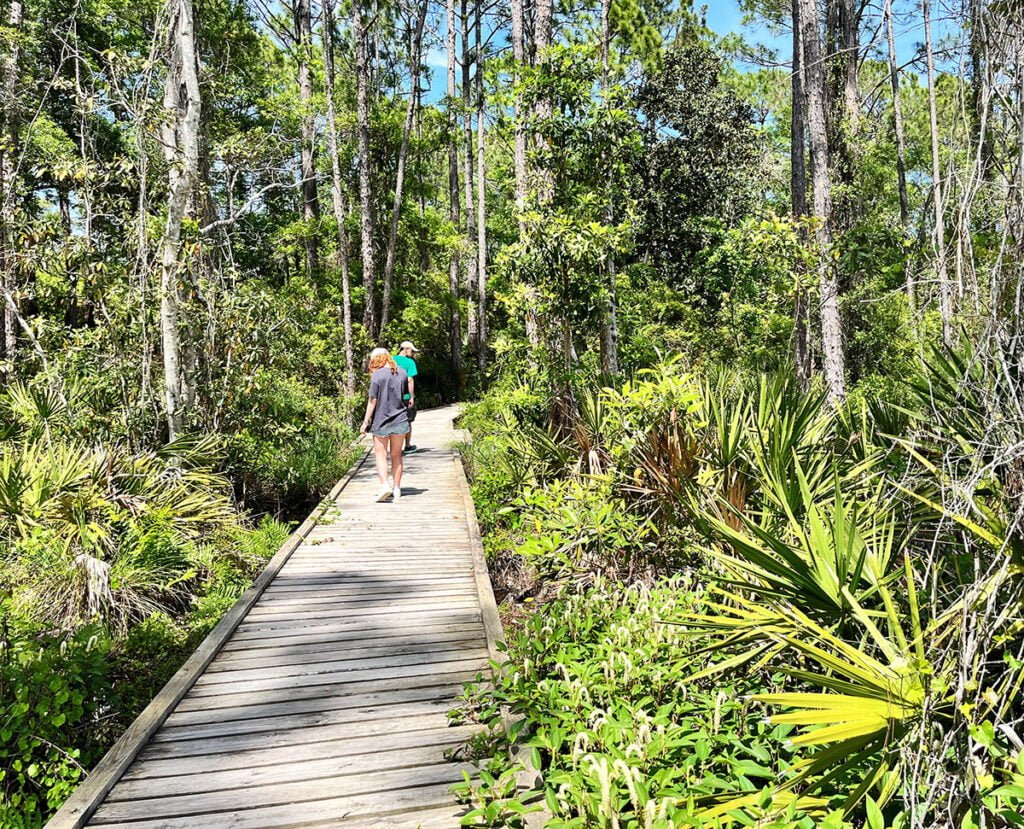
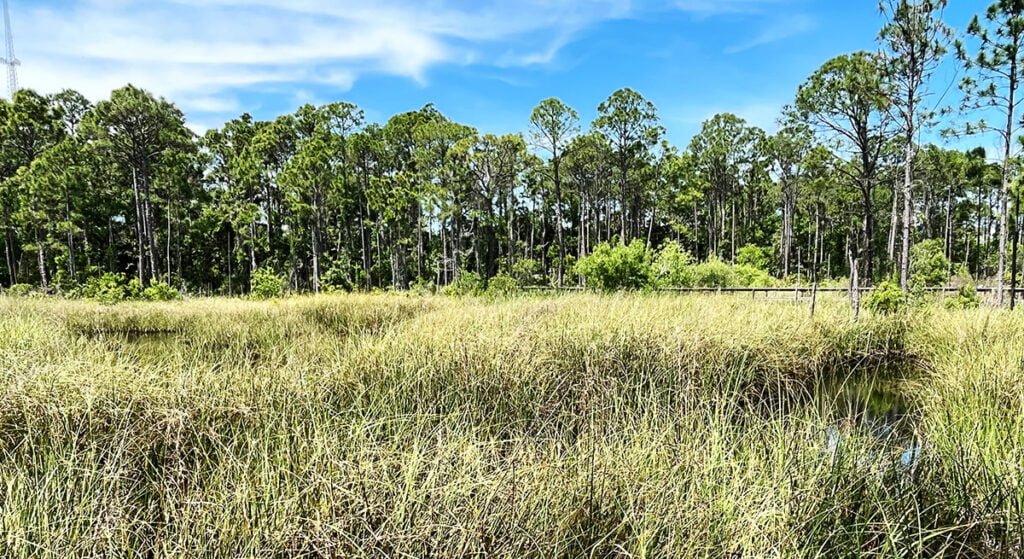
We visited the Apalachicola Estuarine Nature Center after lunch following our visit to the town of Apalachicola. The spring break weather was perfect for being outdoors! There was shade from the trees and a nice breeze. We began our visit with a Nature Walk along the boardwalk. My family picked up a laminated plant guide to learn about the labeled flora along the boardwalk. We saw plenty of saw palmettos, which cover the coastal ground in drier patches of land. In fact, these plants can live as long as 500-700 years! Previously, we saw these palmettos in Congaree National Park and in St. Marks Wildlife Refuge. Sawgrass covered the wet areas, as it grows in shallow freshwater marshes.
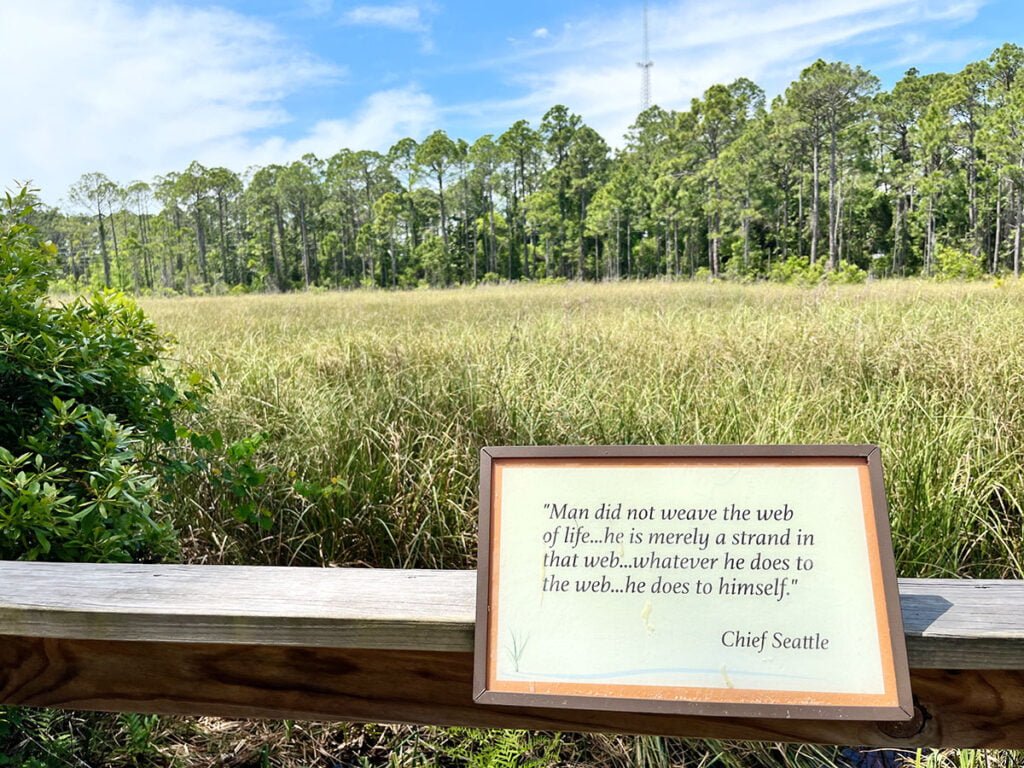
Inspirational quotes about nature line the walk. Whoever installed them clearly had a sense of humor as one of the quotes was by Homer Simpson! We saw some fauna as well including birds and a small water snake. It may have been a brown water snake or a midland water snake. If you know about snakes, let me know what you think it was in the comments! If you enjoy birds, look for species of migrating birds in the spring and fall.
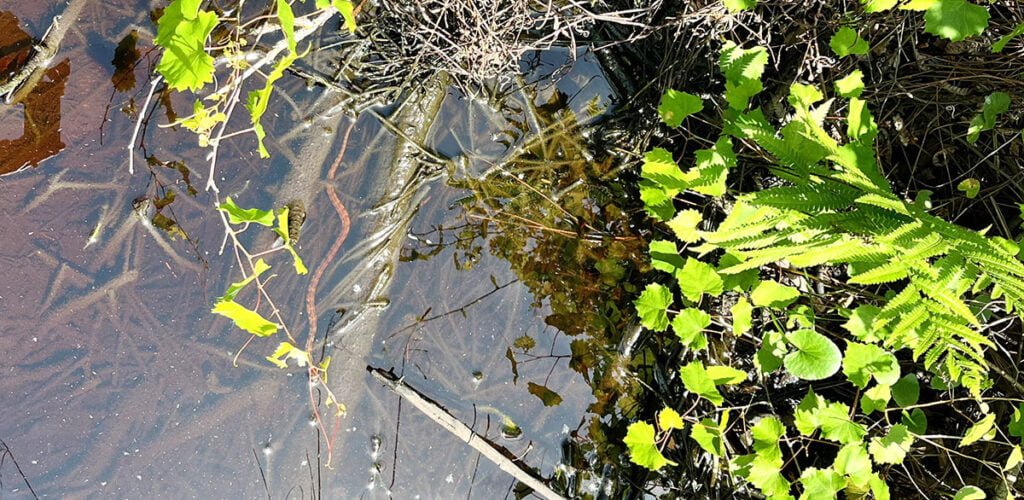
Native Florida Landscapes: Flatwoods, Hammocks & Swamps
Flatwoods are a forest dominated by pine trees. Typically, the slash pine. The slash pine is a hardy pine tree that is fire-tolerant. Other plans found in flatwoods include the saw palmetto and gallberry. If given enough time, the Flatwood will develop into a Hammock.
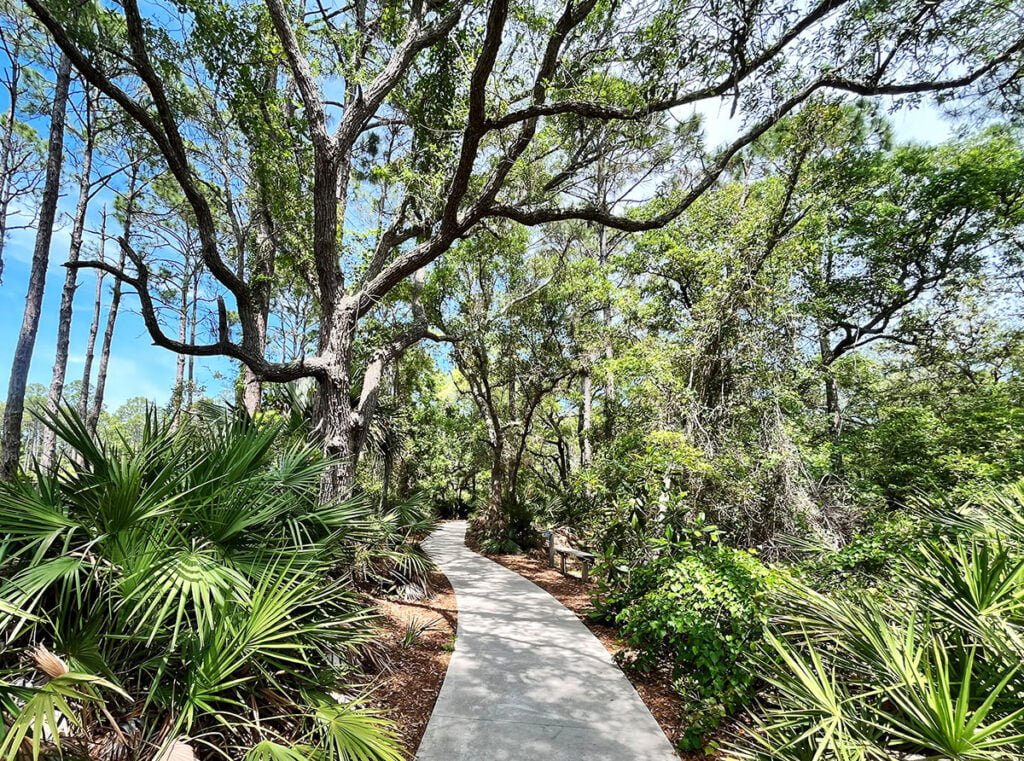
A Hammock is a dense hardwood forest typically found in Florida. Its flora may include oak trees, other hardwood trees such as magnolias, and saw palmettos. It is located higher and typically dryer areas adjacent to coasts or higher locations within a marsh. The soils offer improved drainage. Oak hammocks are dominated by live oaks.
Swamps are forested areas contained in standing water. The water may be seasonal or year-round. Cypress and Tupelo trees are often found in swampy areas. On the other hand, Water Oaks grow both in swampy areas and they can thrive in well-drained soil also. In addition, Sweetbay or Swamp Magolias can also thrive in these wet conditions. Sawgrass thrives in freshwater marshes.
Learn more about Native Florida Landscapes.
Apalachicola Estuarine Nature Center: the Documentary
After completing the Nature Walk, we headed over to the Apalachicola Estuarine Nature Center building. We climbed the steps to the raised building and followed the signs to the auditorium on the left to watch the introductory film. We learned that the watersheds from Atlanta’s Chattahoochee River along with the Flint River and the Apalachicola River all ultimately feed into the Apalachicola Bay. They are among the largest watersheds on the east coast.
The growing population and increased water demand on the Rivers upstream pose a threat to the ecology of the Apalachicola Bay. The Apalachicola River basin is home to the most diverse snake and reptile population north of Mexico. Many different types of snakes, turtles, and alligators live here.

Fresh and saltwater mix in the Estuary. Oysters thrive in these brackish waters. Oyster beds or reefs are the name for groups of oysters. As a matter of fact, oysters can only survive in healthy waters. Therefore, the health of the oyster beds is an indicator of overall bay health. Oysters themselves clean the water. A single oyster filters over 50 gallons of water per day.
Oyster beds are home to a number of other aquatic creatures. At one time 90% of oysters harvested in Florida came from Apalachicola Bay. Changes to the salinity of the water, increased pollution, and stronger storms paired with unstainable harvesting prompted officials to put a stop to wild oyster harvesting in Apalachicola Bay in 2020. The oyster beds are going through a restoration process. The goal is to reinstate the local oyster trade by the end of 2025.
Apalachicola Estuarine Nature Center: Oyster Boat
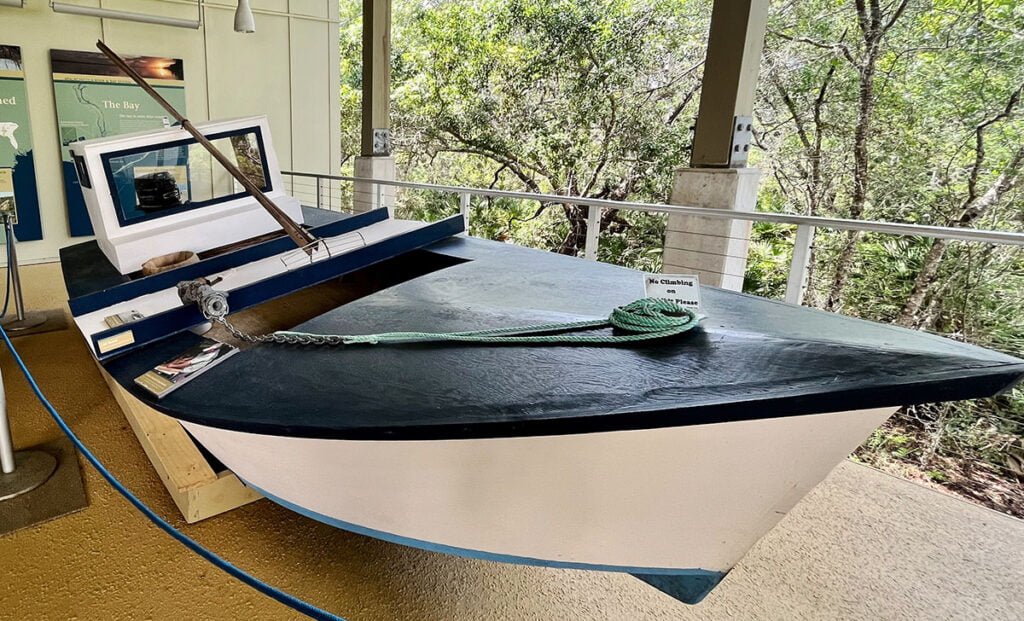
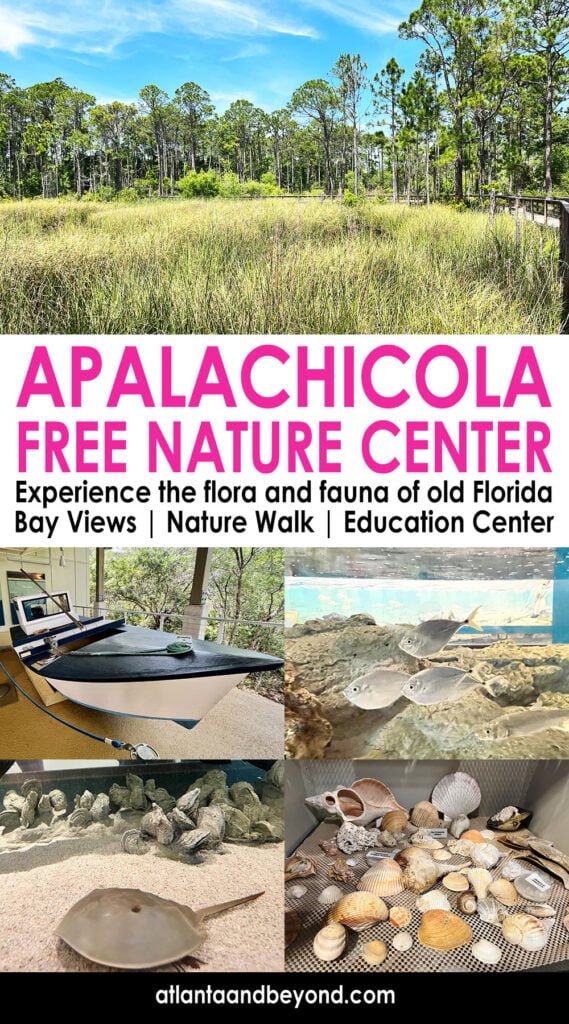
On our way into the Nature Center itself, we stopped to check out the oyster boat replica on the porch. The boat is outfitted with all the equipment required to harvest wild oysters.
Apalachicola Estuarine Nature Center: Education Center
Aquariums: River, Bay & Gulf
The interior aquariums and displays walk through the various habitats that make up the watershed: river, bay & gulf. Keep in mind that the watershed is a continuum of habitat. Here these ecosystems are displayed in different aquariums, but in nature, they blend from one to another.
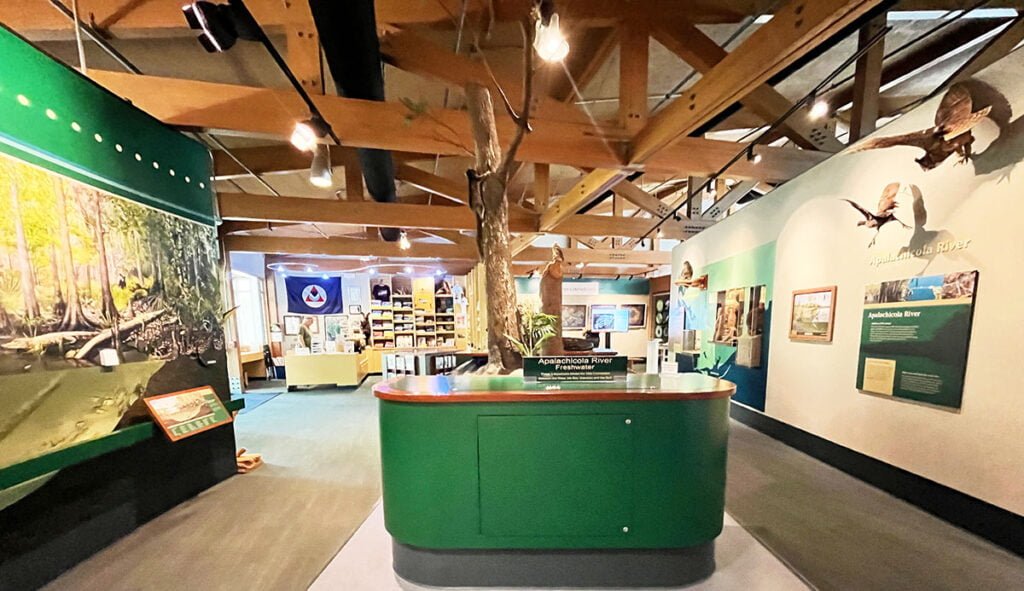
- The River Aquarium displays fish that are typically found in freshwater rivers. We saw catfish and other freshwater fish in this tank
- The Bay Aquarium displayed marine live that thrives in the brackish water of the estuary. Meanwhile, many marine creatures such as shrimp and crabs are born in the estuary. These creatures return to the bay annually for spawning season. Oysters thrive in the bay. We saw a horseshoe crab here.
- The Gulf Aquarium exhibited saltwater creatures typically found in the ocean. The Gulf of Mexico and its tides support the estuary by washing salt water in and out. The tides deliver nutrients and flush away waste. We saw grouper, snapper, and sting rays in this aquarium.
Oysters
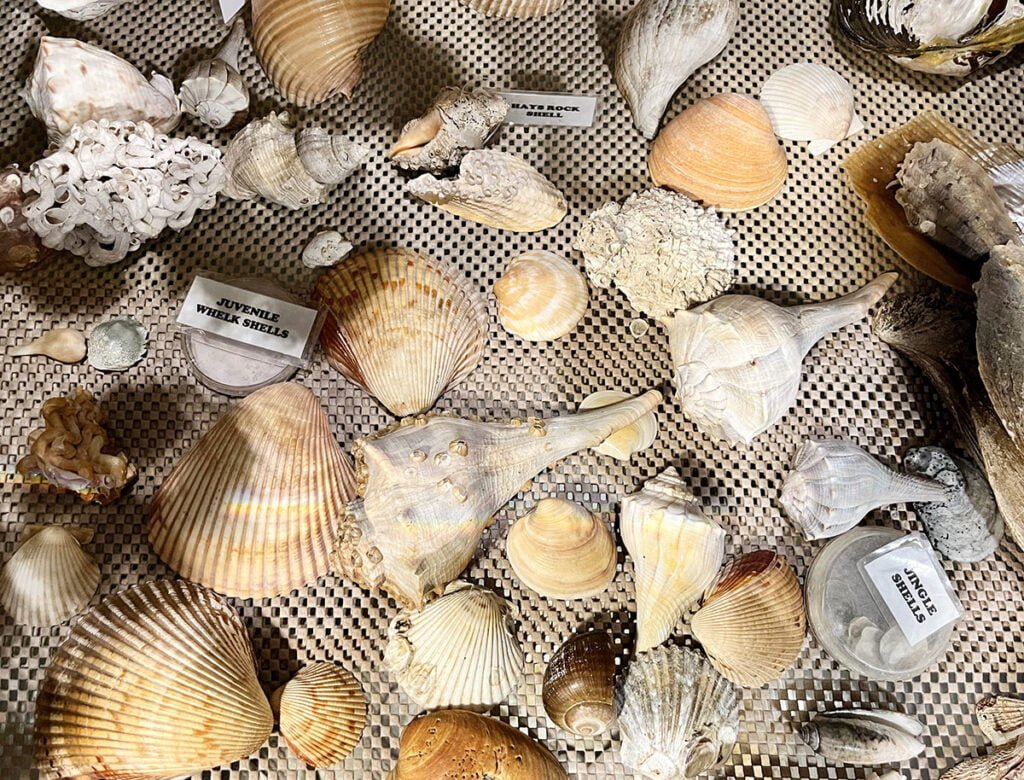
In a lab area, you can view oysters under a microscope. A screen broadcast pre-recorded oysters for all to see. I was literally able to see the Oyster processing water. It appeared as if it were breathing. This room contained an impressive display of local shells. It was fun to identify some of the shells that we found on the beach that week.

Apalachicola Estuarine Nature Center: Watershed Walk & Bay Overlook
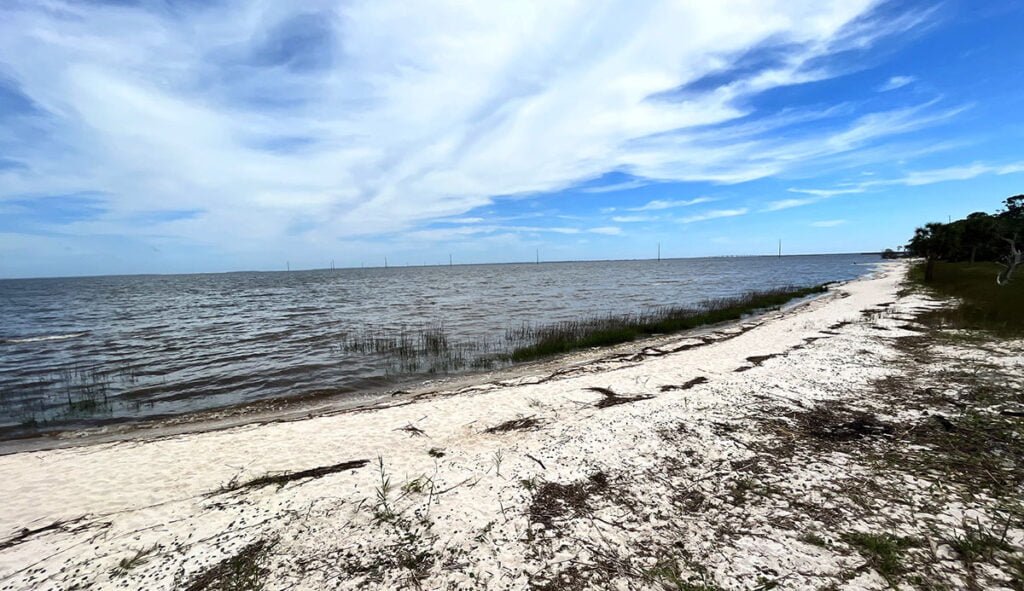
At the end of our visit, we followed the relatively short boardwalk out to see the bay. Signage telling the story of the watershed lines the boardwalk. We found an observation platform with benches at the end of the boardwalk from where we could view the bay and the shoreline. A free telescope on the viewing platform allowed everyone to take a more detailed peak into the distance.
Planning Your Visit to Apalachicola Estuarine Nature Center
My family departed this destination in a good mood. Later, they told me it was one of the things that they liked the best about our visit to Florida’s Forgotten Coast. I recommend this free Nature Center to families with children of all ages and anyone else who enjoys nature and being outside. It was fun to see what Florida looked like when the first settlers arrived.
We spent an hour and a half exploring the Apalachicola Estuarine Nature Center. Visit the website for opening hours and directions to the Nature Center. Let me know in the comments if you visit or if you have visited the Nature Center or the other three parcels that make up the Apalachicola National Estuarine Research Reserve!
The next time we go to this area, I would l would like to visit the Ralph G Kendrick Dwarf Cypress Boardwalk in Tate’s Hell State Forest. If you visit, let me know what you thought in the comments!


You May Also Like
Savannah, Georgia: Perfect 3-Day Itinerary
Fun Family Things to do in Gulf Shores, Alabama