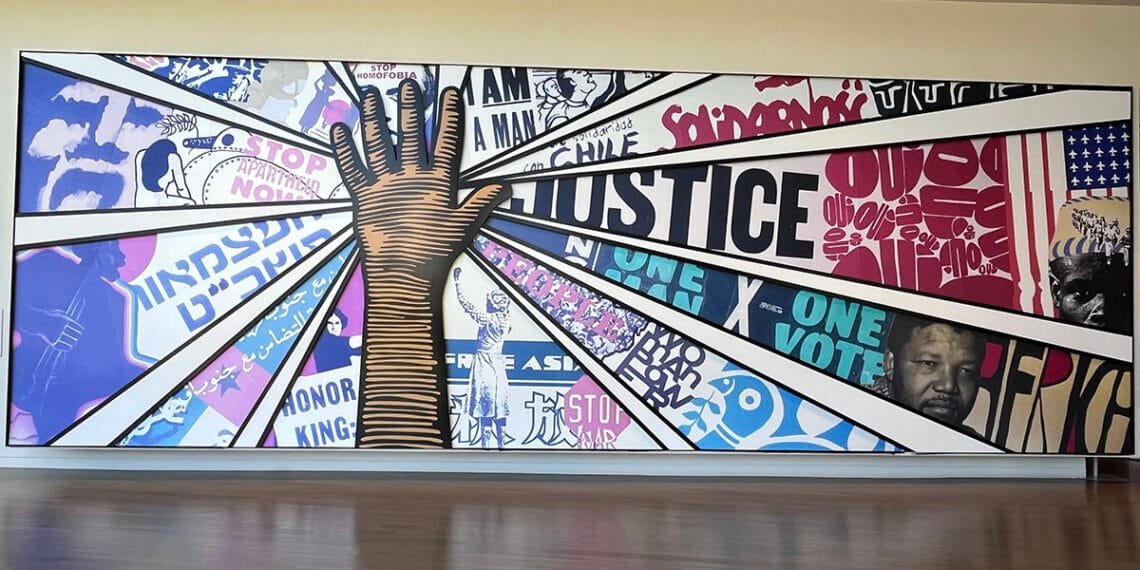
What to Expect at the National Center for Civil and Human Rights in Atlanta
Are you wondering what to expect at the newly renovated National Center for Civil and Human Rights in Atlanta? The Center memorializes the US Civil Rights movement, local activism in Atlanta, and the importance of Human Rights around the world. Atlanta was a center for US Civil Rights Activism during the 1950s and 1960s, which makes it an ideal location for this one-of-a-kind social justice museum. Expect your visit to the Center to be impactful and emotional. It is more than a museum. It is an experience. While young children can visit this museum, I think it will be the most meaningful for teens 13 years old and up.
I visited the National Center for Civil and Human Rights before the addition and I recently revisited the Center over Martin Luther King Jr. weekend to explore the new and expanded exhibitions. Are you wondering what there is to see inside? Follow along for my take-aways on the major exhibits and to learn why visiting this museum is worth your time. I think that the most powerful stand out exhibit is “Rolls Down like Water,” which tells the story of the US Civil Rights movement, so much of which took place in Atlanta.
National Center for Civil and Human Rights: Civil Rights on Level 1
Rolls Down Like Water: The American Civil Rights Movement
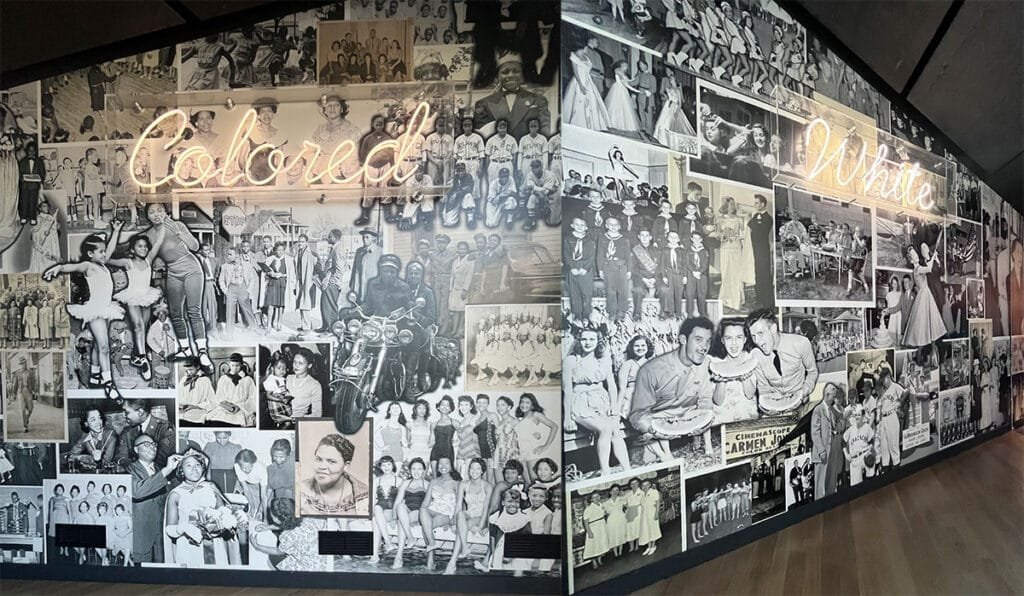
Civil Rights are the rights that belong to a citizen of a specific country. Rolls Down Like Water tells the story of the US Civil Rights movement.
Jim Crow Laws
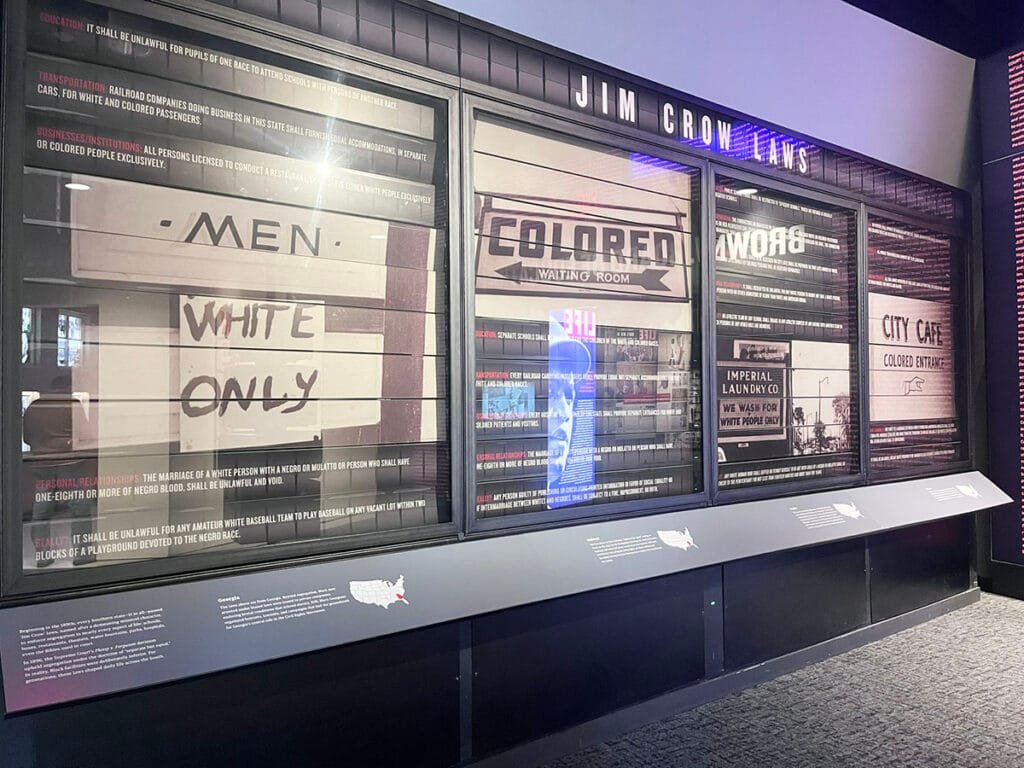
The entrance to the exhibit draws attention to the Jim Crow Laws that that once divided the American south. One wall is dedicated to whites on the left and while the wall on the right is dedicated to blacks. The exhibit immerses you in signage demarcating “White Only” and “Colored Waiting Room.” The signs are interspersed with written Jim Crow Laws that dominated the southern United States. One law stated, “Separate schools shall be maintained for the children of white and colored races.”
Rosa Parks
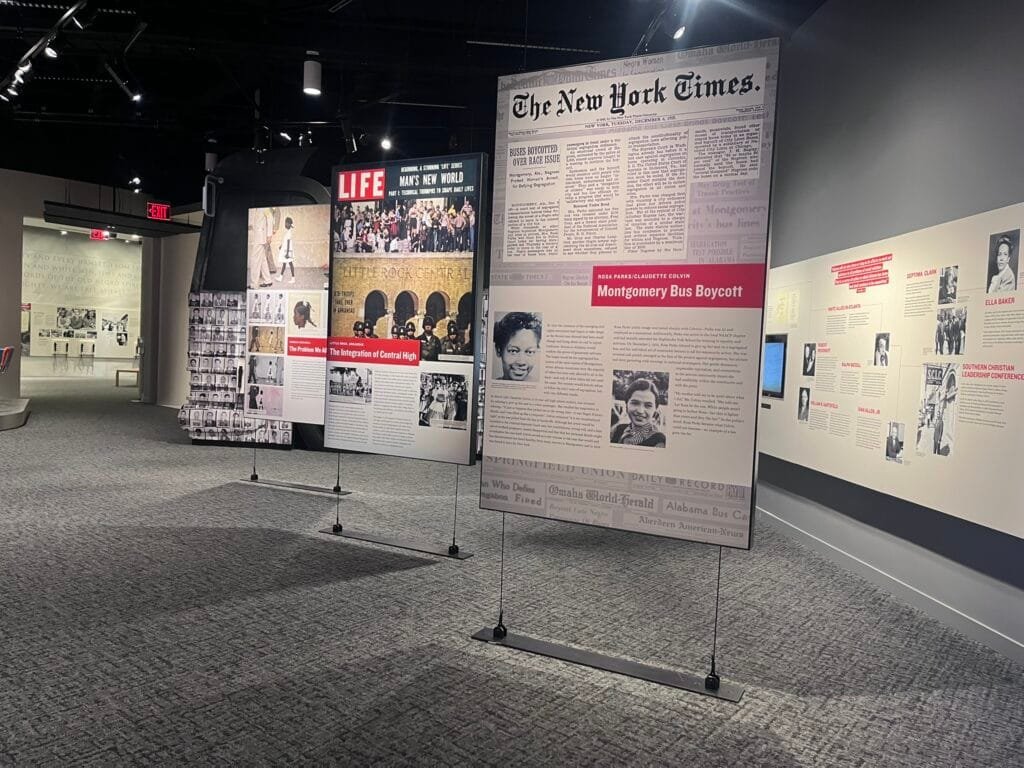
The next room tells many stories of those who bravely fought against unjust and racist Jim Crow laws. The story of Rosa Parks is particularly well-known. She brought the attention of the world on Montgomery, Alabama when she was arrested for refusing to give up her seat on the bus for a white patron in 1955.
Rosa Parks, the Activist
Parks worked at Maxwell Air Force Base, which was a fully integrated facility. While on-base, she rode public transit together with her white colleagues. She was an early African American voter. She registered to vote in 1945 on her third attempt. Rosa Parks worked as a seamstress and she and her husband Raymond Parks were respected members of the local black community.
Rosa Parks Disrespected and Arrested
On December 1, 1955 Parks boarded a bus and sat in a seat at the center of the bus along with other black passengers. When the white-only seats were all taken, the bus driver demanded that black passengers in the center of the bus give up their seats. Rosa Parks declined to do so. She did not approve of the way that the bus driver treated her. The bus driver threatened her with arrest. When she did not stand up, he called the police from a nearby pay phone, who arrived on the scene to arrest Parks for violating the Montogomery municipal code.
Prior to December 1955 many black people had been arrested on Montgomery buses for refusing to give up their seats for white patrons. Civil Rights activists recognized that Rosa Parks was the perfect person from a public relations perspective. The black community rallied around her and organized a boycott of Montgomery buses – the majority of bus riders were black.
Rosa Parks arrest brought national attention to the racist Jim Crow laws. In 1960 the United States Supreme Court determined that segregated public buses were unconstitutional.
Ruby Bridges
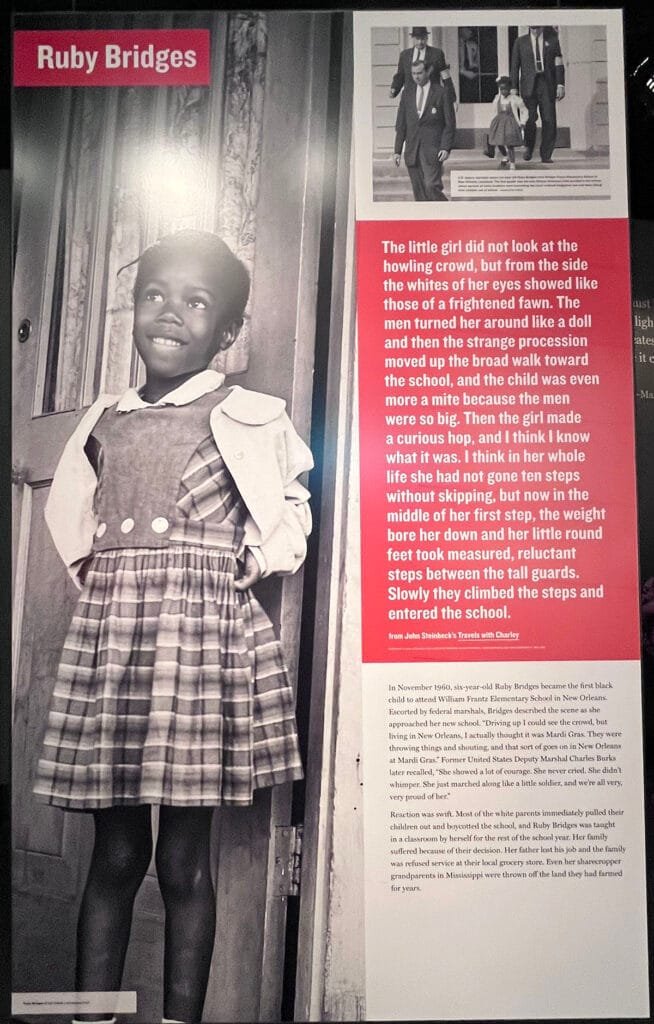
Another exhibit tells the story of little Ruby Bridges. In November 1960, her parents volunteered 6-year-old Ruby to be the first black child to attend the previously all white William Frantz Elementary School in New Orleans, Louisiana. Although a national law was passed to desegregate schools in 1954, southern schools resisted. Federal marshals escorted Ruby to and from the school on her first day and continued to accompany her for the rest of the year.
The Bridges family was punished by the white community for their choice to send their daughter to William Frantz Elementary School, however many people in the black and white community supported the family and helped them through the hardships that they endured.
The Lunch Counter Experience
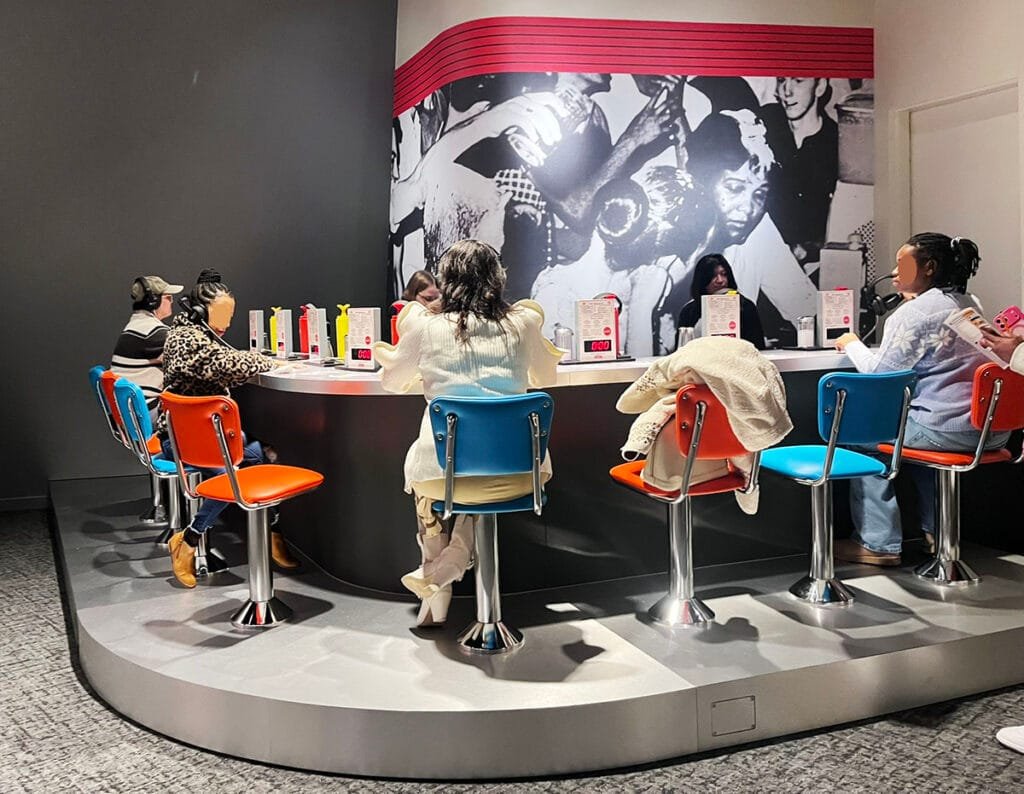
If there is a line, the Lunch Counter Experience is worth the wait. My teenage son visited the Center with his school and he told me that that this was the most impactful experience in the museum. Sit down at the counter, put on the headphones, place your hands on the counter, and close your eyes. You will hear the sounds of a diner and experience the verbal abuse that activists endured during non-violent sit ins.
It is one thing to read about these experiences in a textbook; however, it is another level to experience them. As you hear the threatening voices behind you, you can remind yourself that this experience is only a simulation. But remember that for the brave people who attended the real sit ins, this verbal and potentially physical violence was a real threat.
Freedom Riders
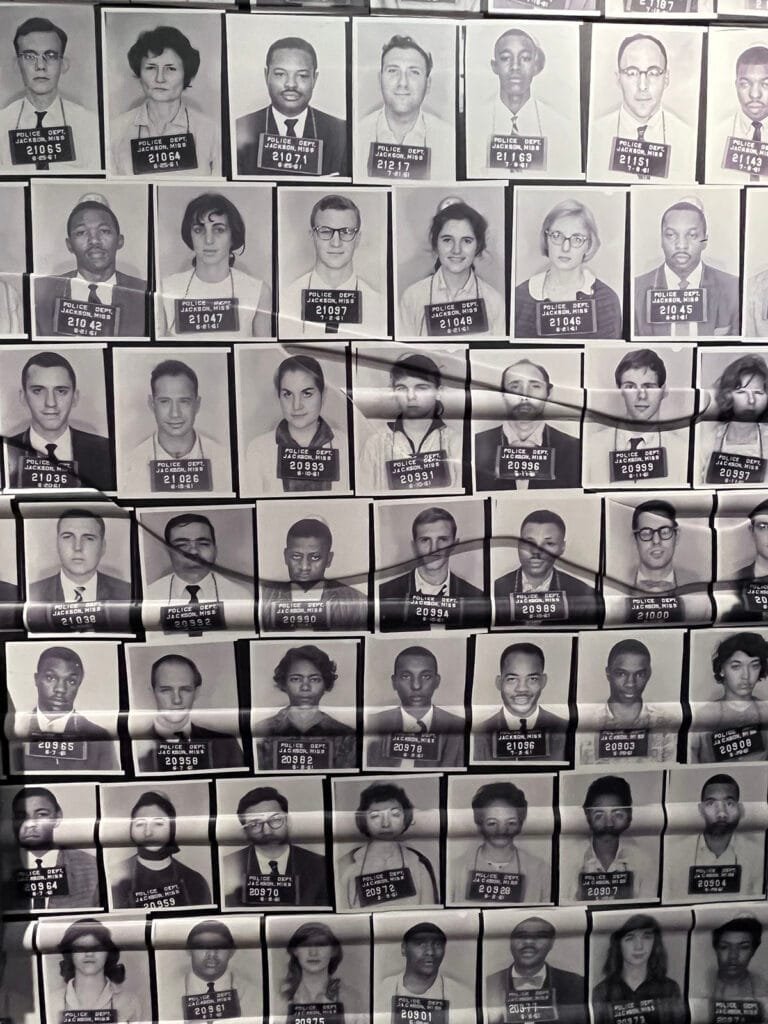
A film room near the Lunch Counter Experience shares the story of the Freedom Riders. In 1961, a group of black and white civil rights activists rode long distance buses into the segregated south.
The mixed-race group of Freedom Riders attempted to ride public buses from Washington DC to New Orleans. White mobs attacked the Freedom Riders. Local police arrested them on a variety of charges including violating Jim Crow laws. The Ku Klux Klan attempted to end the Freedom Ride in Alabama. New Freedom Riders took the place of those who were injured or arrested and could not continue the journey. President Kennedy sent an escort. Unfortunately, due to many factors including the refusal of the bus drivers to work, the riders realized that they would not be able to take a bus from Birmingham to New Orleans. They flew from Birmingham to New Orleans to finish their journey.
A student group from Nashville picked up the torch to prove that that Freedom Riders could ride the bus through Alabama. They suffered from similar violence and were also arrested. They kept sending in new riders who picked up the torch for those who had fallen.
1963 March on Washington
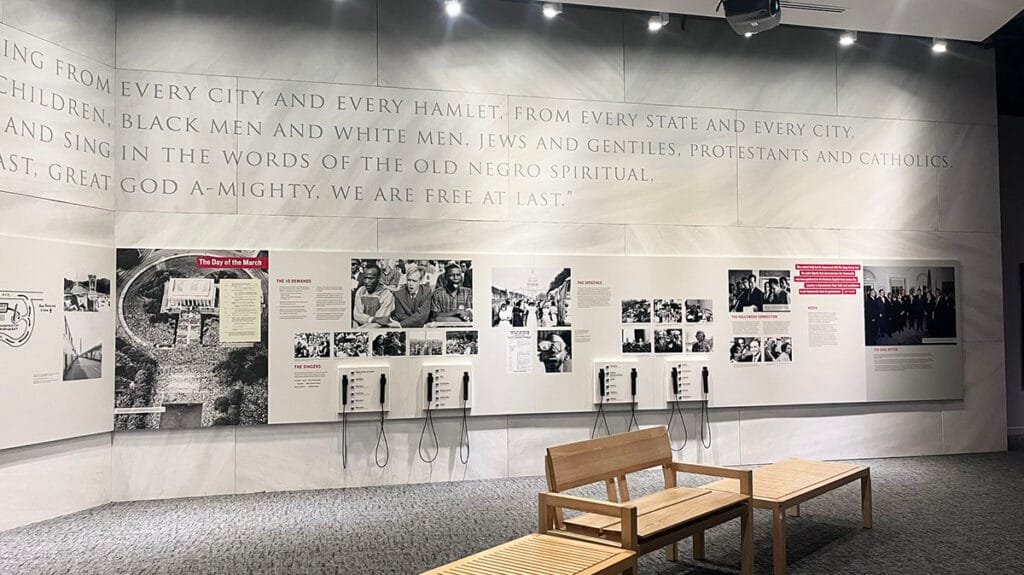
Follow the exhibit through the 1963 March on Washington to President Kennedy’s assassination. The exhibit walked through the major organizers of the August 1963 March on Washington. The goal of the march was to champion civil and economic rights of black Americans. As a woman, I was dismayed to learn that US Civil Rights did not necessarily include women’s rights within the movement.
The March was one of the culminating factors that eventually led to the Civil Rights Act of 1964 and the Voting Rights Act of 1965. President John F. Kennedy did not attend the March; however, he watched the speeches from the White House. Sadly, women were excluded from the group of speakers. Following the March, the speakers met the President at the White House. President Kennedy was assassinated in Dallas, Texas in November 1963.
President Lyndon B. Johnson picked up the torch after Kennedy was assassinated. After growing up in the south, Johnson’s personal views changed over his lifetime. Before his assassination, President Kennedy requested a Civil Rights bill from congress. President Johnson picked up the baton and successfully shepherded the passage of the Civil Rights Act of 1964 followed by the Voting Rights Act of 1965.
Being Young, Black, and Talented in the 1960s
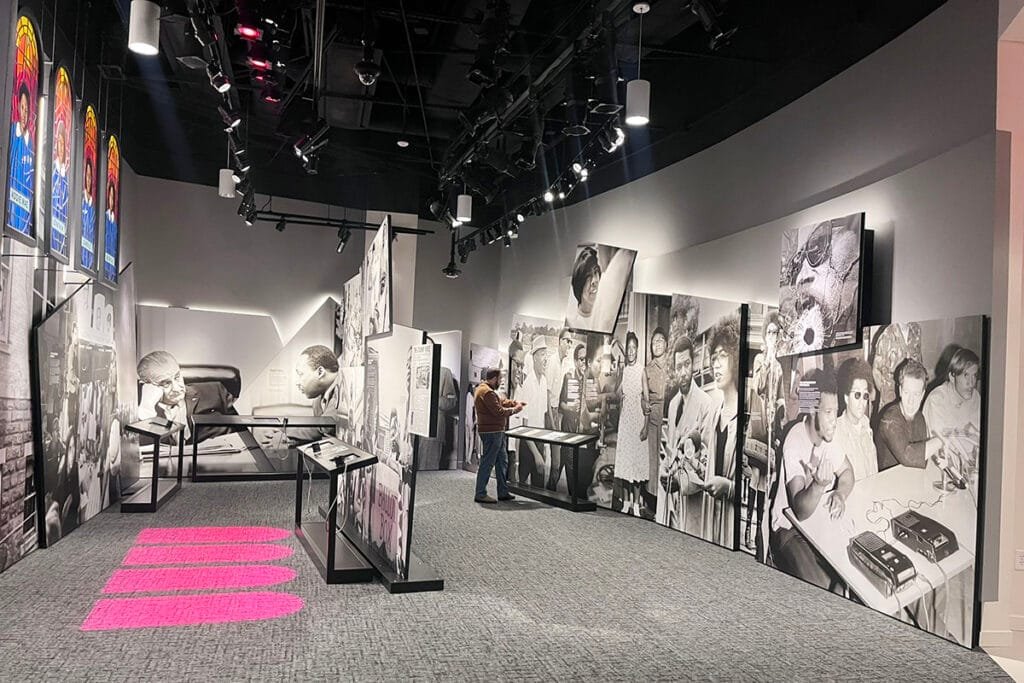
The exhibit includes a display about the 4 little girls who were murdered in Birmingham, Alabama in the 16th Street Baptist Church bombing of 1963. It went on to outline the Black Power Movement and highlight black music. The exhibit asks what did it mean to be young, black, and talented tin the 1960s?
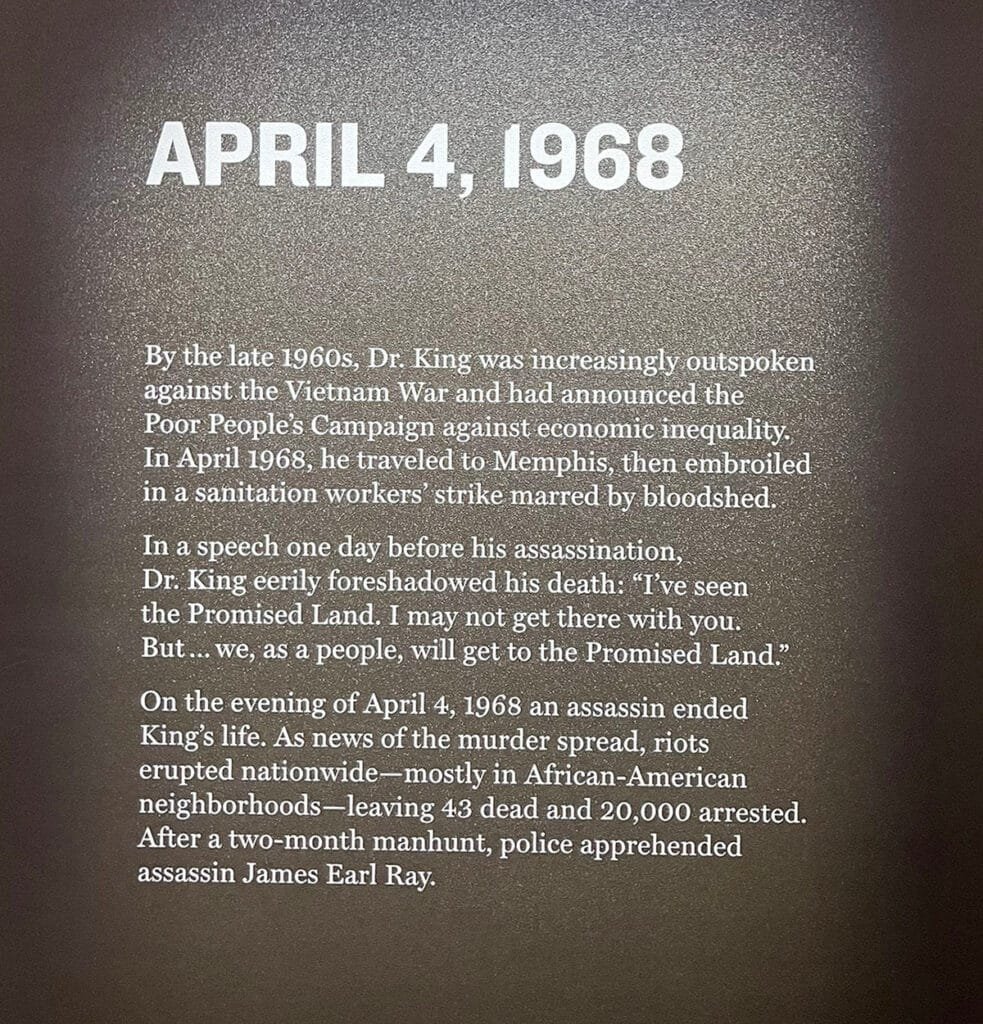
The exhibit closes with the assassination death of Martin Luther King, Jr in Memphis, Tennessee and his funeral in Atlanta. City of Atlanta and the local black community embraced King as a local and national hero.
A Committed Life: the Morehouse College Dr. Martin Lither King Jr. Collection
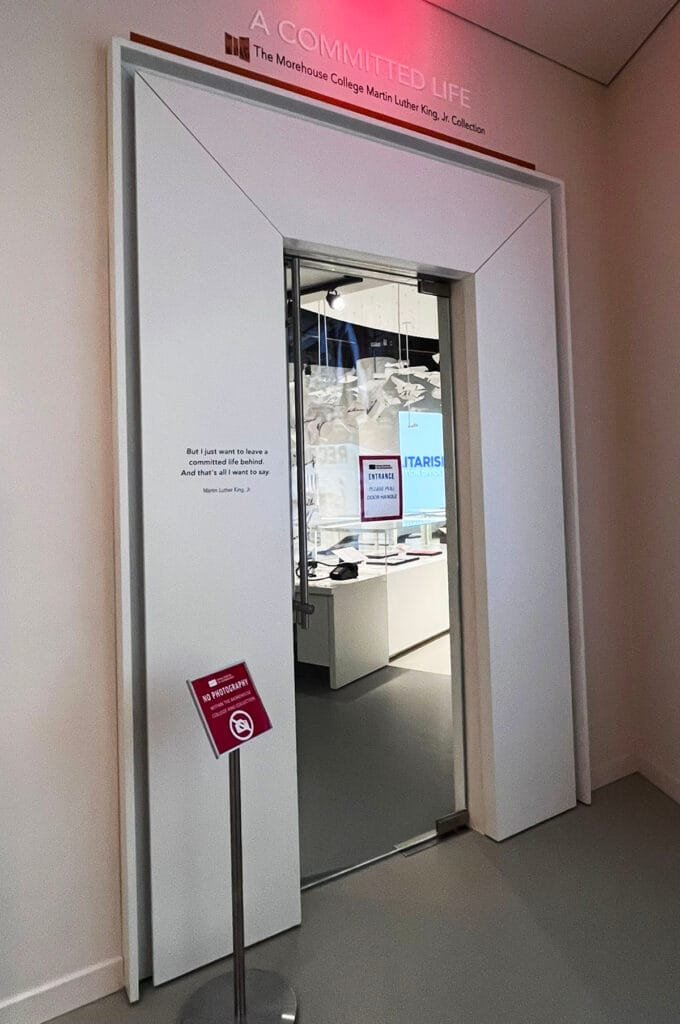
This exhibit called A Committed Life displays selected personal letters to and from Dr. Martin Luther King, Jr. It includes many of King’s photographs too. You can see King’s handwritten Nobel Peace Prize acceptance speech. I enjoyed seeing the photos of King in his personal office. He worked in a busy and chaotic space crammed with books and papers. No photography is permitted in this gallery.
National Center for Civil and Human Rights: Human Rights on Level 2
Everyone, Everywhere: The Global Human Rights Movement
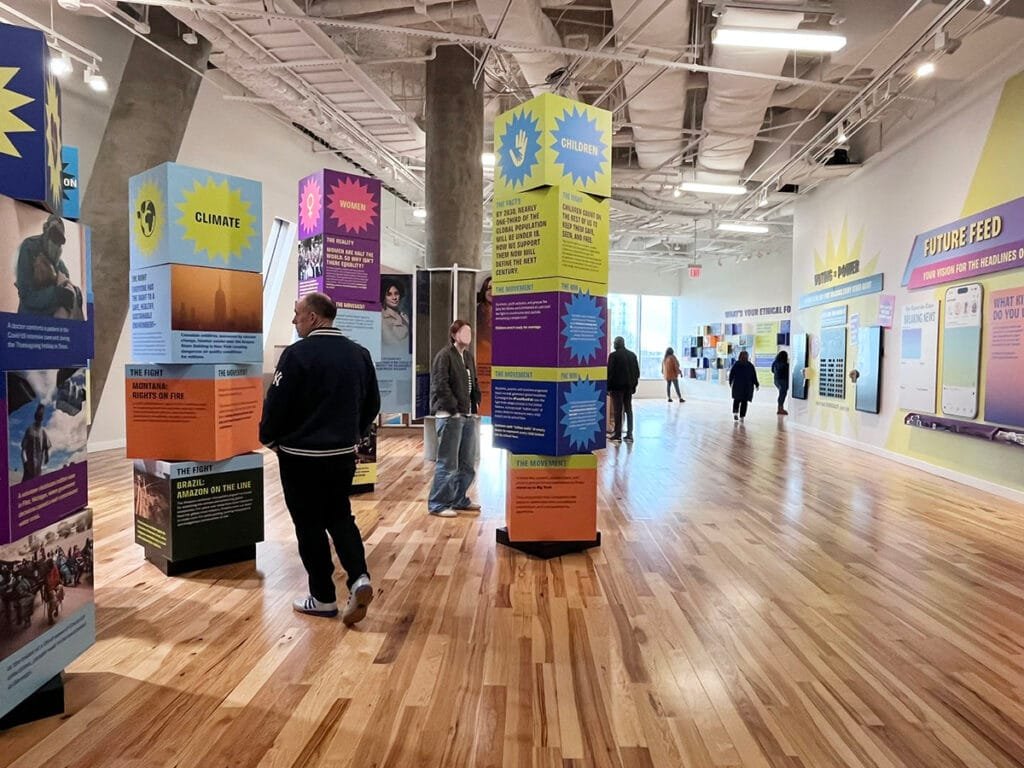
Human Rights are the rights that belong to all people across the world. The Universal Declaration of Human Rights was adopted by the United Nations in 1948 following the Holocaust. On the upper floor, in the exhibit, Everyone, Everywhere, the Center highlights that the struggle for civil and human rights is not limited to the United States. Sadly, this issue is present across the entire world.
This exhibit features many different types of rights including Women’s Rights, Disability Rights, and Worker’s Rights. Global Human Rights Spotlights and Stories of Courage highlights individuals across the world who’ve fought for justice and it reminds us that we can fight for justice ourselves. Ethical Footprint reveals the human rights stories behind consumer products.
Rotating Exhibit: A Mile in My Shoes
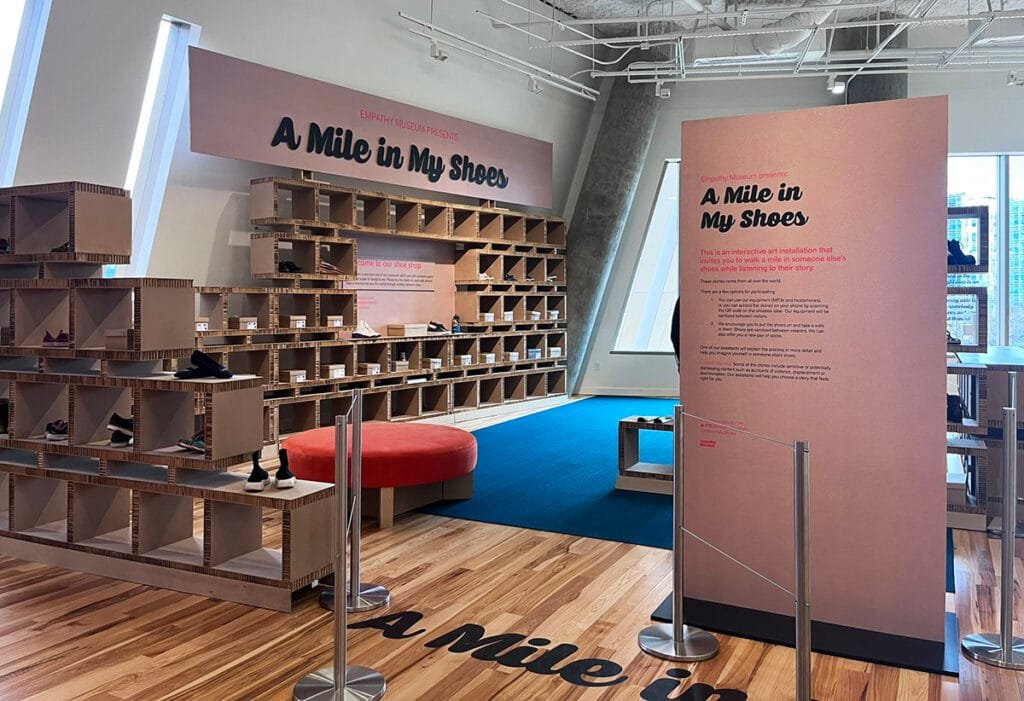
This immersive traveling exhibit pairs a personal story with a pair of the subject’s shoes. Audio recordings are available on the Sound Cloud app. It is best to download this app before visiting the museum and to bring headphones with you to listen to the stories. The A Mile in My Shoes exhibit is an exercise in empathy.
Action Lab
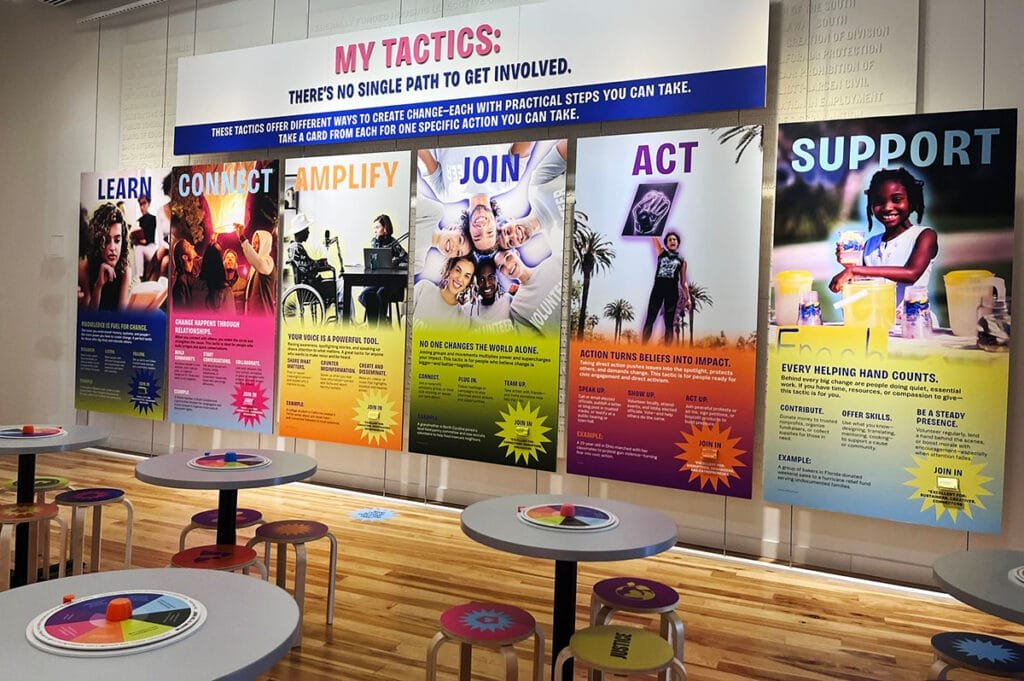
This reflective space is ideal for groups. The Action Lab invites museum visitors to identify personal passions and determine which role they are best suited to take on to improve the world.
Broken Promises: The Legacy of the Reconstruction Era
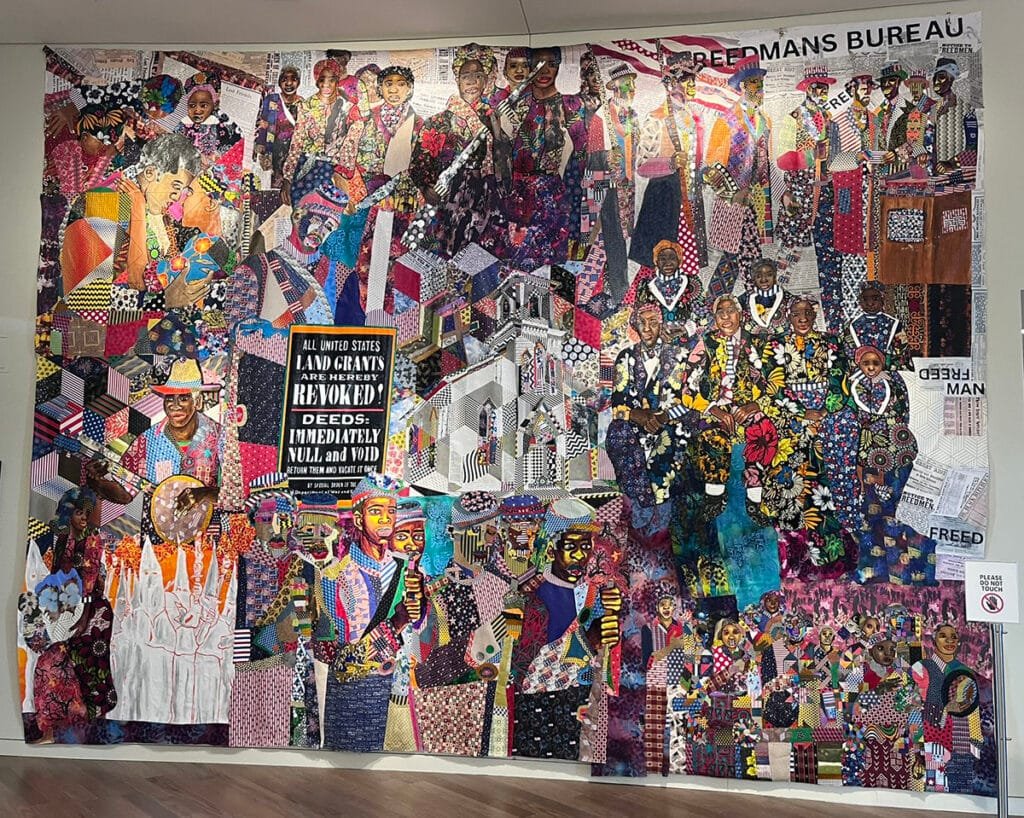
This new exhibit tells the story of the period of Reconstruction following the US Civil War. Although life was still incredibly difficult, many freed black Americans flourished in the years following the Civil War and built economically independent black communities. Black people flocked to Atlanta – partly because it felt safe due to the presence of federal troops. They built a dynamic black middle class which ultimately was one of the back bones of the US Civil Rights Movement.
In 1877, federal troops departed the southern states to allow them to manage on their own. Once federal oversight was no longer in place, white supremacists came into power. They were threatened by black people’s rights and the strong communities that they built during the Reconstruction period. Southern state lawmakers rolled out new laws limiting black rights and freedoms, which came to be known as Jim Crow Laws.
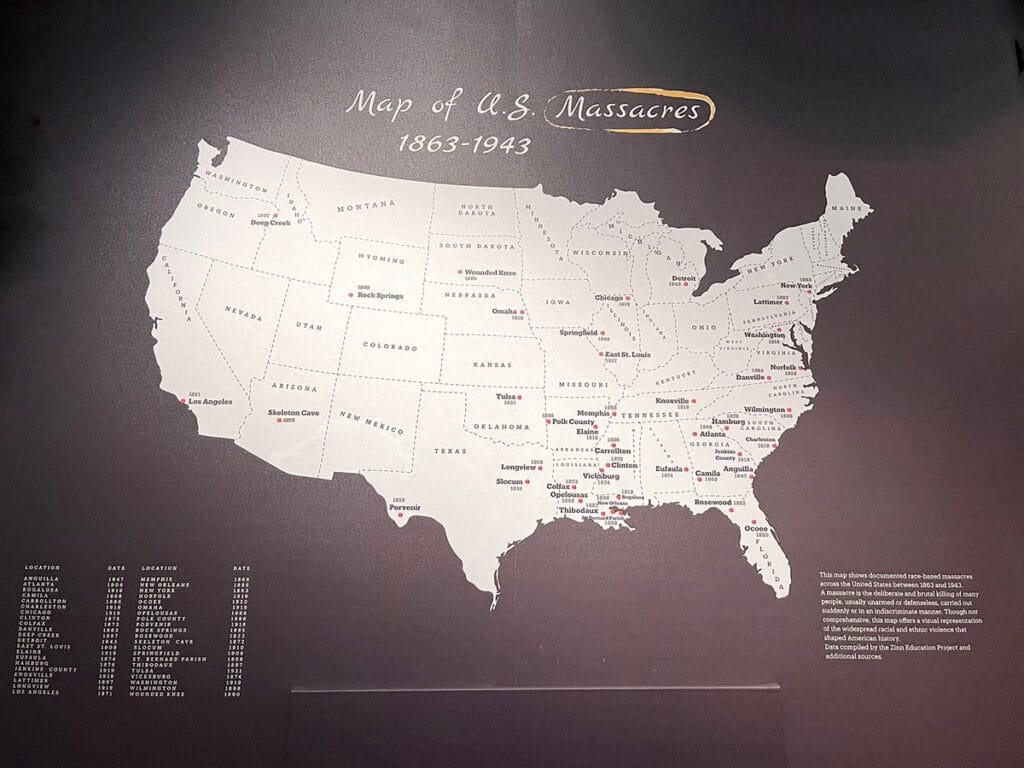
This exhibit highlighted that race issues were not only a problem in the Southern United States. Race Riots and Massacres occurred in Tulsa, Oklahoma, Wilmington, North Carolina, and Atlanta, Georgia. A map highlighted where these sad events occurred across the US.
Rotating Exhibit: Reclaiming History: Selections from the Tinwood Foundation Collection
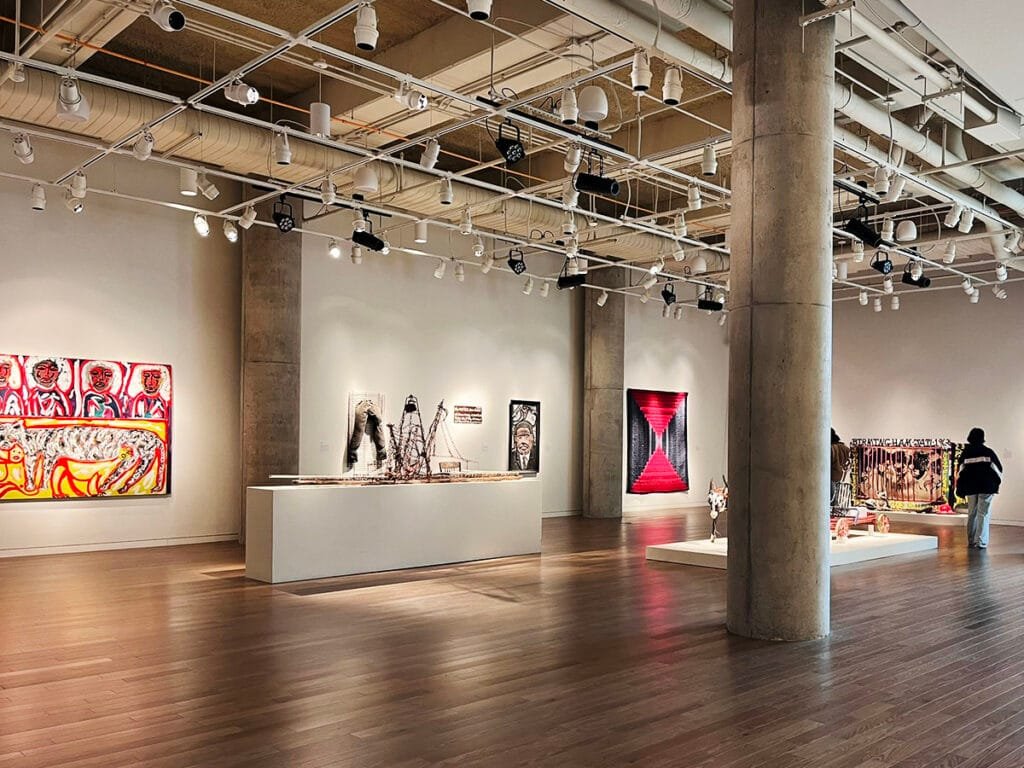
During my visit, this rotating exhibit space showed off works dating from the 1980s by black southern artists. Their work illustrates the cultural past of the US Civil Rights struggle including the haunting imagery of Jim Crow laws.
Additional Spaces at the National Center for Civil and Human Rights
Center Café and Museum Gift Shop
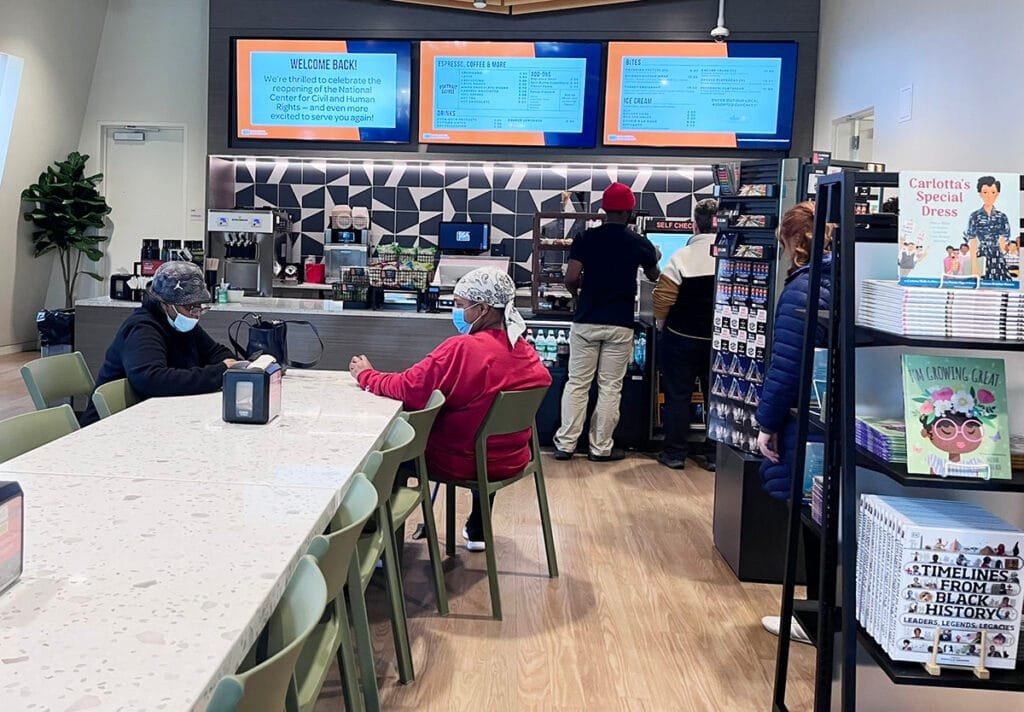
On the main level, you will find the museum gift shop paired with a café. Inspirational books about racial justice, activism and civil rights leaders are available for sale. Plus, you will find apparel and gifts that are sure to educate, inspire and empower. I was especially impressed with the selection of children’s books.
The café and its tables invite you to order a coffee and a bite to eat. You can sit down and soak in the powerful ambiance of the center. In addition to indoor tables there is a patio outside that overlooks Pemberton Place.
For Families
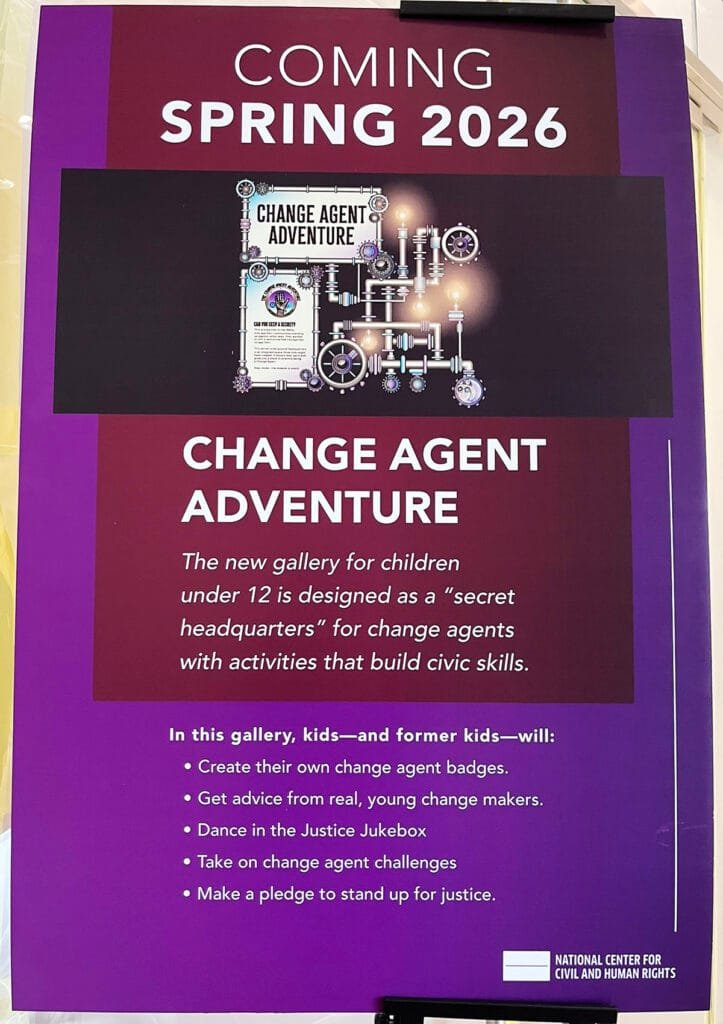
Historically, the National Center for Civil and Human Rights has been best suited to teenagers 13 years old and up due to the heavy topics of the exhibitions. The museum is building a new gallery for families with children who are 12 years old and under. The Change Agent Adventure will open in spring/summer 2026.
Planning for your Visit to the Center
Where is the National Center for Civil and Human Rights in Atlanta?
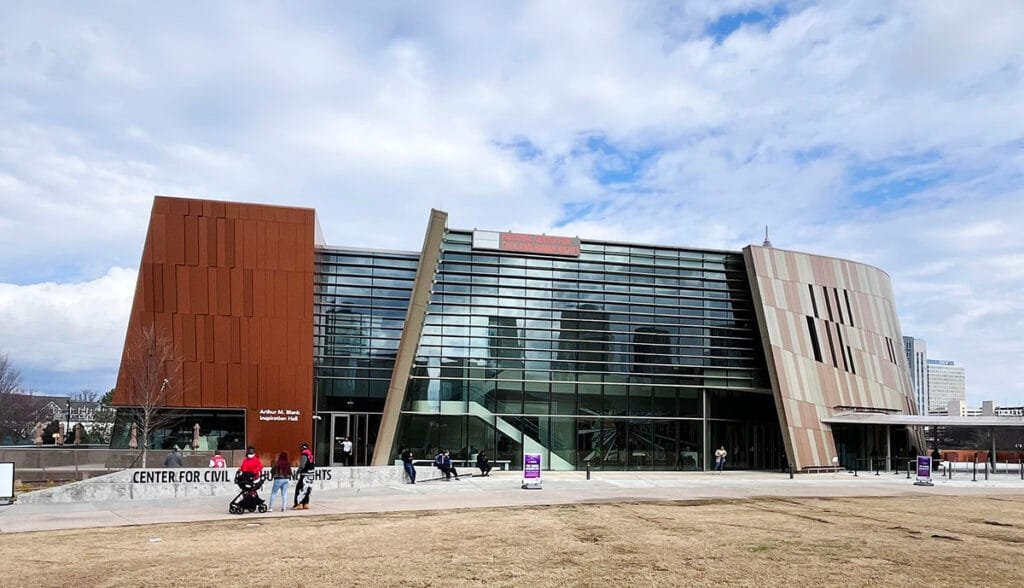
The Center is located on Pemberton Place, which is an open greenspace in downtown Atlanta adjacent to Centennial Olympic Park. The Georgia Aquarium and the World of Coca-Cola also call Pemberton Place home.
How much time you should plan for your visit?
Plan to spend 90 minutes to 2 hours at the Center. The museum is organized on two levels.
When is the Center open and should I Purchase Tickets in Advance?
The Center is open daily except for Thanksgiving and Christmas Day. Check the website for more information. You can purchase tickets at the door; however, I recommend that you buy them on-line and in advance for busy days.
When you enter the Center, you will go through security and your bags will be searched. They do not offer bag storage, so you must keep your bags with you at all times. For more information on the Center’s policies, visit the FAQ page.
Can I visit the National Center for Civil and Human Rights for Free?
The Center sometimes offers free admission on Martin Luther King Jr. weekend and at other times. Sign up for their emails or follow their social media for up-to-date information. Typically, you need to secure your free ticket on-line and they often “sell out” quickly.
The Center offers free admission to Bank of America cardholders the first Saturday and Sunday of each month.
There is a standard discount for Seniors (65+), students, and active-duty military and veterans. You must show identification to receive these discounts.
How to Get to the National Center for Civil and Human Rights
Driving and Parking
It is easy to drive to downtown Atlanta. There are many parking options, but the most affordable parking garages belong to the Georgia Aquarium and the World of Coca-Cola. You do not have to visit these attractions specifically to park in their decks.
I visited the newly renovated National Center for Civil and Human Rights recently and I parked at the World of Coke parking deck at 126 Ivan Allen Jr Blvd NW, Atlanta – which is conveniently next door to the National Center for Civil and Human Rights. It offers a reasonably priced flat fee to park for the entire day. I did not reserve parking in advance. Plus, electric vehicle charging stations are available.
I recommend arriving early to ensure that there is a parking space available. I arrived around 10am and when I left at 3pm after having lunch at Der Biergarten, the deck appeared to be full. The Georgia Aquarium also offers flat rate parking for a reasonable price at 357 Luckie St NW, Atlanta. You may want to reserve parking at the Aquarium deck in advance online.
Public Transportation: MARTA
Take the North/South Red or Gold Line to Peachtree Center Station or Civic Center Station to get to downtown Atlanta.
You can also take the East/West Blue or Green Line to the or SEC District Station FKA Georgia World Congress Center Station.
Ride the Atlanta Streetcar to the Centennial Olympic Park stop.
Please reference the Georgia Aquarium map for directions from each MARTA station and the approximate walk times.
The Emotional Impact of Experiencing the Center
The National Center for Civil and Human Rights is a powerful museum dedicated to social justice for all. As an American who grew up in the southern United States, the US Civil Rights movement exhibits moved me the most. While the world we live in today is far from perfect, we’ve come such a long way since the 1960s. It is shocking to me how different the world was a couple of generations ago. Martin Luther King Jr. was of my grandparent’s generation. Ruby Bridges is the same age as my mother.
I grew up in a different world where I attended a mixed-race school and thought nothing of it. My children attended a beautiful little school just south of Atlanta where African-American, Asian, Latino, and White children played and studied side-by-side. The United States has come a long way, but we still face civil and human rights challenges today. Now is not the time to rest on our laurels. The Center and its powerful stories remind us that we must continue to do our part as individuals to push for social justice for all at home and across the world.
Have you visited the National Center for Civil and Human Rights in Atlanta or are you planning a trip? Let me know which exhibit you thought was the most impactful to you in the comments.


You May Also Like

How to Use Your Fantasy in Lights Day Pass to Callaway Gardens
Center for Puppetry Arts in Atlanta: a Guide