Michael C. Carlos Museum at Emory: Architecture & Visitor Guide
Tucked away on the beautiful campus of Emory University, the Michael C. Carlos Museum is one of Atlanta’s most fascinating, and often overlooked, cultural treasures. While most visitors head straight for the city’s larger attractions, local Atlantans know that this museum is a true hidden gem. It is filled with incredible authentic artifacts from ancient Egypt, Greece and Rome, Africa, Asia, and the Americas.
Better yet, the building itself is part of the experience. Designed by celebrated architect Michael Graves, the museum’s architecture subtly reflects the ancient civilizations represented inside. After recently taking an architectural tour of the museum with the Atlanta Preservation Center, I discovered just how many stories – both architectural and historical – are tucked inside this remarkable Atlanta museum. If you’re planning a visit, here’s what you can expect to see and everything you need to know before you go.
The Architecture of the Michael C. Carlos Museum
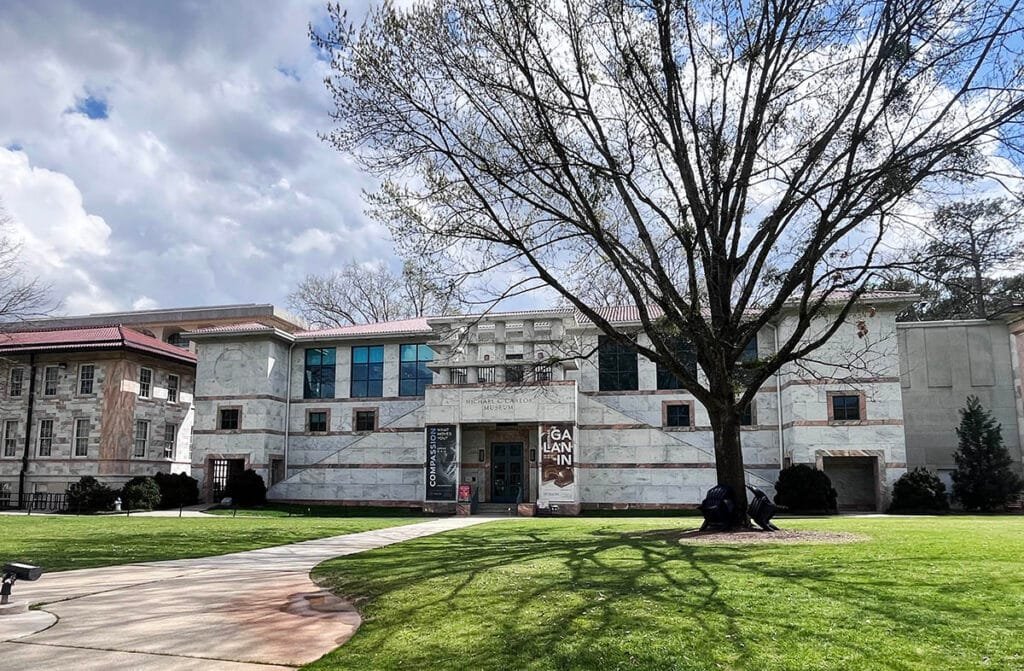
One of the most fascinating things about the Michael C. Carlos Museum at Emory is that the architecture was intentionally designed to connect with the cultures represented inside.
Designed by Architect Michael Graves
Emory University hired internationally known architect Michael Graves to design the museum, which opened in 1993.
Before Emory constructed the current building, the university housed the museum’s growing collections in several different locations on campus. Eventually, it became clear that the university needed a purpose-built museum space.
Fundraising efforts helped make the project possible, including a major gift of $20 million from philanthropist Michael C. Carlos, for whom the museum is named.
Graves was known for his postmodern architectural style and for the line of housewares he designed for Target – I had his toaster and I LOVED it. He designed a museum building that was more than a neutral container for art. He designed it to pay homage to the ancient civilizations represented in the collections.
Architecture Inspired by Ancient Civilizations
Take a moment to look closely at the exterior of the Michael C. Carlos Museum, you’ll notice interesting forms. Facing the main Quad at Emory, the upper part of the front façade is inspired by the Mesopotamian ziggurat, which is a stepped temple structures found in ancient cities like Babylon.
If you enter from the parking decks, note that the triangular entrance at the rear of the building. This form evokes the shape of Egyptian pyramids. Graves created a connection to the ancient world before you even step inside the building.
Gallery Designed Like an Egyptian Tomb
Inside the museum, the central gallery space on the left side of the building was designed to resemble the interior of an Egyptian tomb. However, while the building was under construction, Emory received a massive donation of artifacts from the Ancient Americas. Because of the size of that collection, the Michael C. Carlos Musuem installed this collection in the gallery originally designed for Egyptian art.
So today, you’ll find artifacts from ancient American civilizations displayed in a space designed to evoke an Egyptian tomb. As you walk through this gallery, note how spaces with large volumes are connected by tunnel-like spaces. This fun architectural twist shows how museums sometimes have to adapt to unexpected opportunities.
A Short History of Emory’s Museum’s Collections
The Michael C. Carlos Museum may feel like a modern museum, but Emory has been developing its collections for more than a century. Everything on display in this museum is authentic. Emory’s museum is home to original artifacts – not copies.
From Oxford, Georgia to Atlanta
The museum’s earliest collections actually began at Emory’s original campus in Oxford, Georgia. As the university expanded and eventually moved its main campus to Atlanta, the collections moved too. Over time they were housed in several different buildings before Emory University committed to constructing a dedicated museum. By the late 20th century, Emory had assembled an impressive collection of ancient art from across the world making a permanent museum building the natural next step.
Emory’s Archaeological Work in Egypt
Emory’s Michael C. Carlos Museum has such an incredible Ancient Egyptian collection because Emory sponsored archaeological digs in Egypt in the early 1900s. Artifacts from those excavations became the foundation of the museum’s Egyptian and Nubian collections. I think these collections are the main highlights of the museum today.
Highlights of the Permanent Galleries
The Michael C. Carlos Museum at Emory organizes its permanent collections by region and civilization. Walking through the galleries feels a little bit like journeying across ancient history.
Art of the Ancient Americas
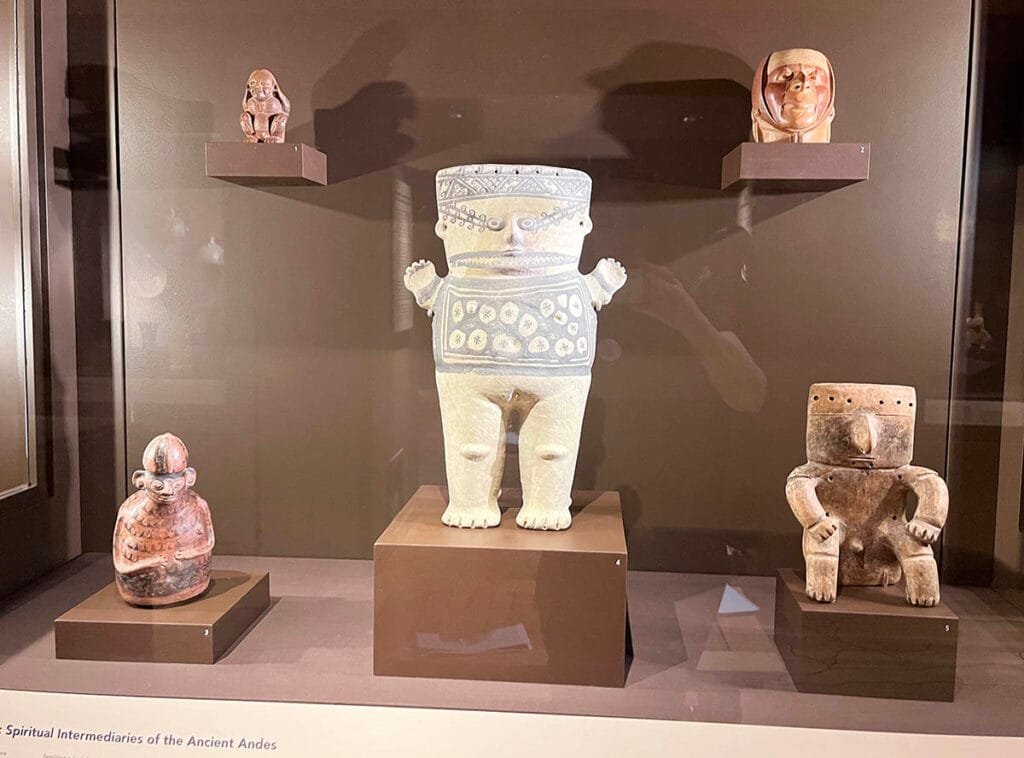
I recommend going to the Art of the Americas gallery first. This is the gallery that was designed to resemble the interior of an Egyptian tomb. You will find it to the left of the main entrance.
A map of the Inca road system is embedded in the floor. The map begins at the southern tip of South America and moves north. The layout of the galleries mirrors this geographic progression.
Here you’ll find artifacts from cultures including the Inca, Maya, and other pre-Columbian civilizations. Ceramics, textiles, and ritual objects provide a glimpse into the daily life and beliefs of ancient societies in the Americas.
Background colors in each room delineated between collections from various civilizations. Burnt Umber cases typically signal that the artifact displayed was researched by Emory students. Turquoise backgrounds indicate that the collection is from the United States.
Greek and Roman Galleries of Classical Art
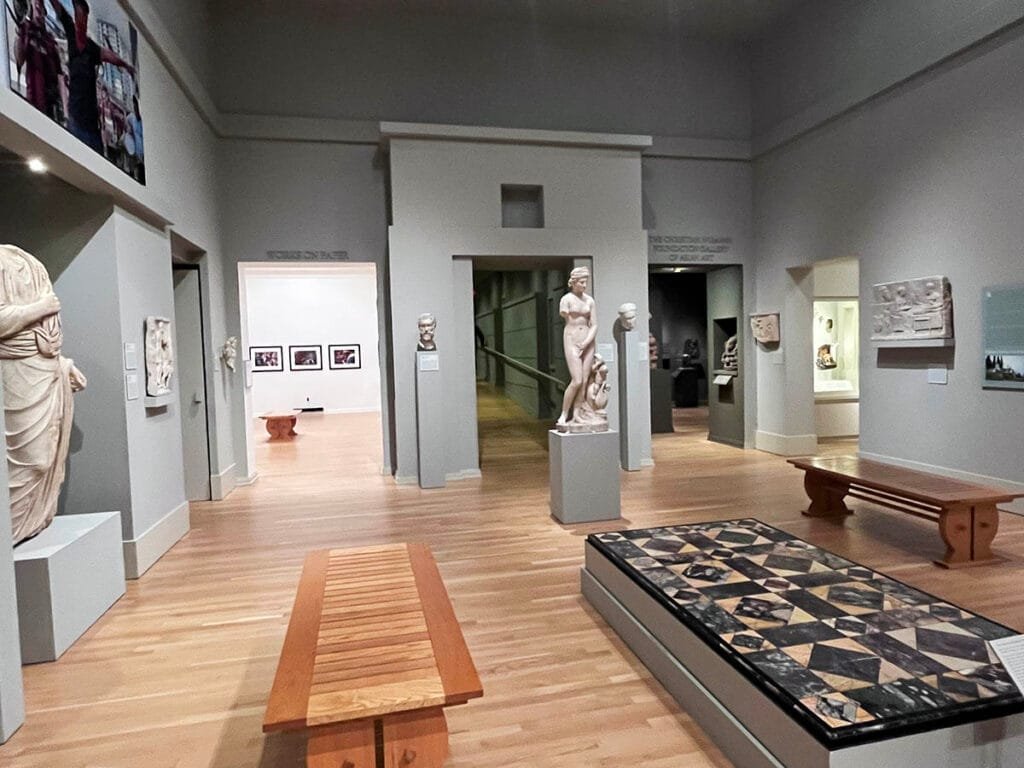
The Greek and Roman Galleries are some of the most visually striking spaces in the museum. The main gallery was designed to feel like the Roman Forum, with tall ceilings and natural light filling the room. The architecture helps recreate the feeling of being surrounded by classical monuments.
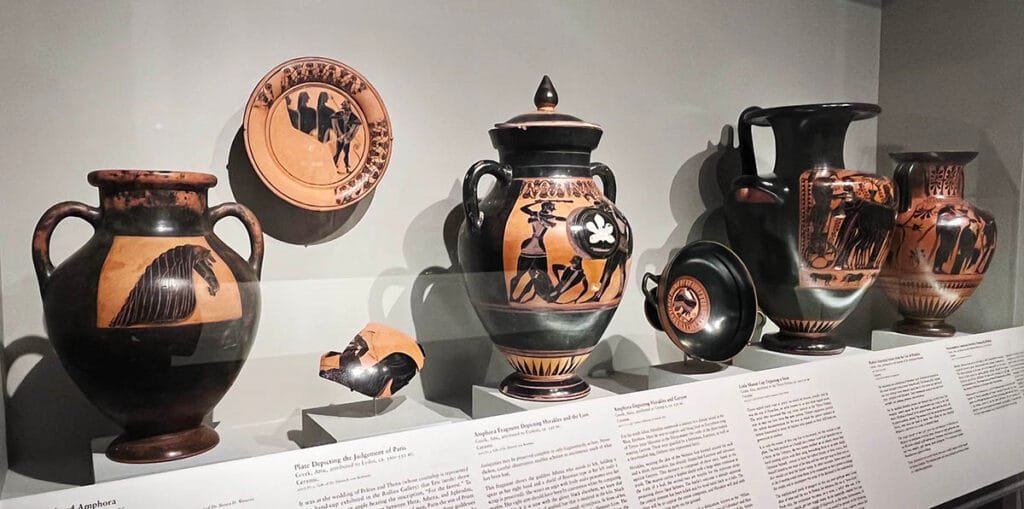
One of the highlights here is the collection of Greek pottery. These beautifully decorated vessels often tell stories from mythology or depict scenes from everyday life in ancient Greece.
Asian Art Gallery
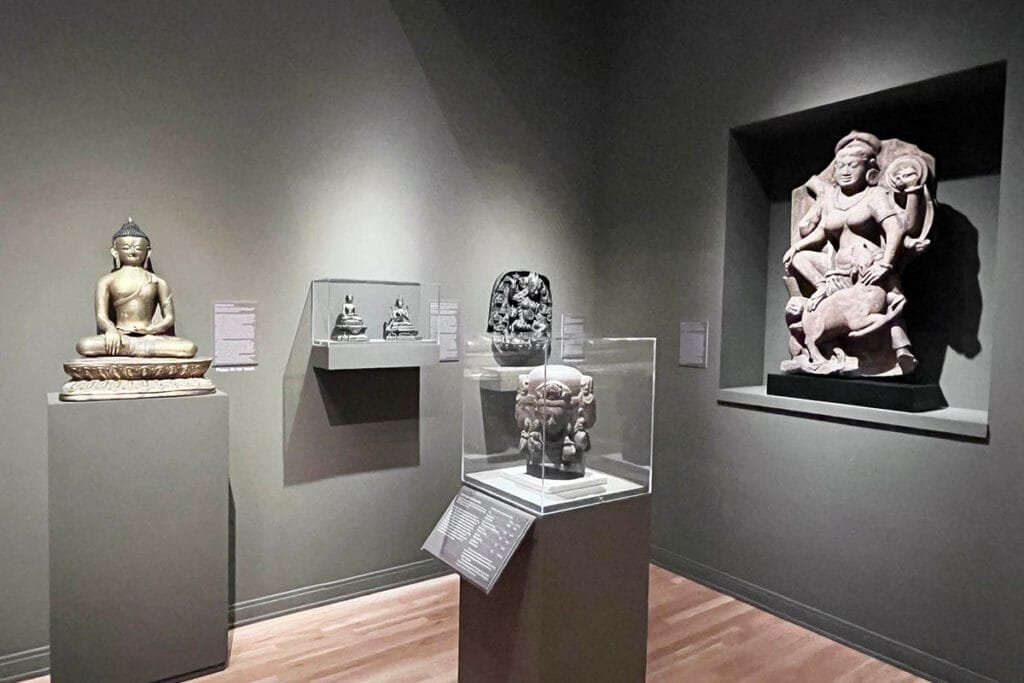
The Asian Art Gallery focuses primarily on religious art from Buddhist, Hindu, and Jain traditions. One of the most interesting features in this gallery is a series of drawers containing illustrated texts from the Ramayana. These drawers allow the museum to keep delicate works protected while still sharing them with visitors.
Pull open the drawers to discover the hidden treasures within Emory’s Michael C. Carlos Musuem.
Ancient Egyptian and Nubian Art
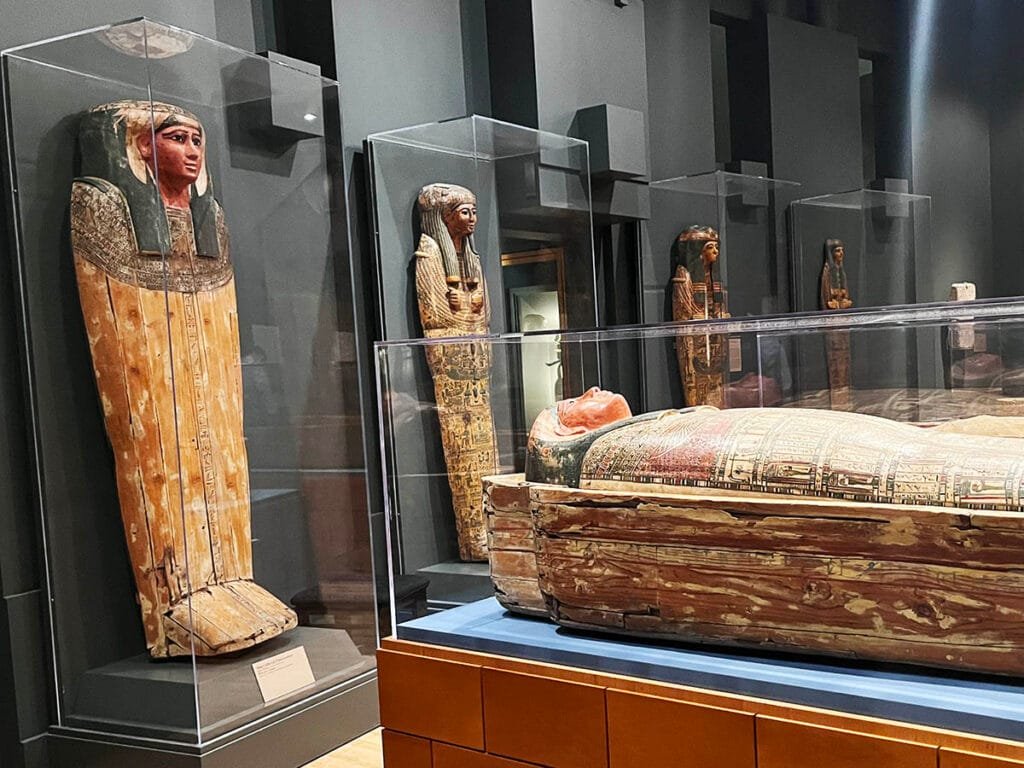
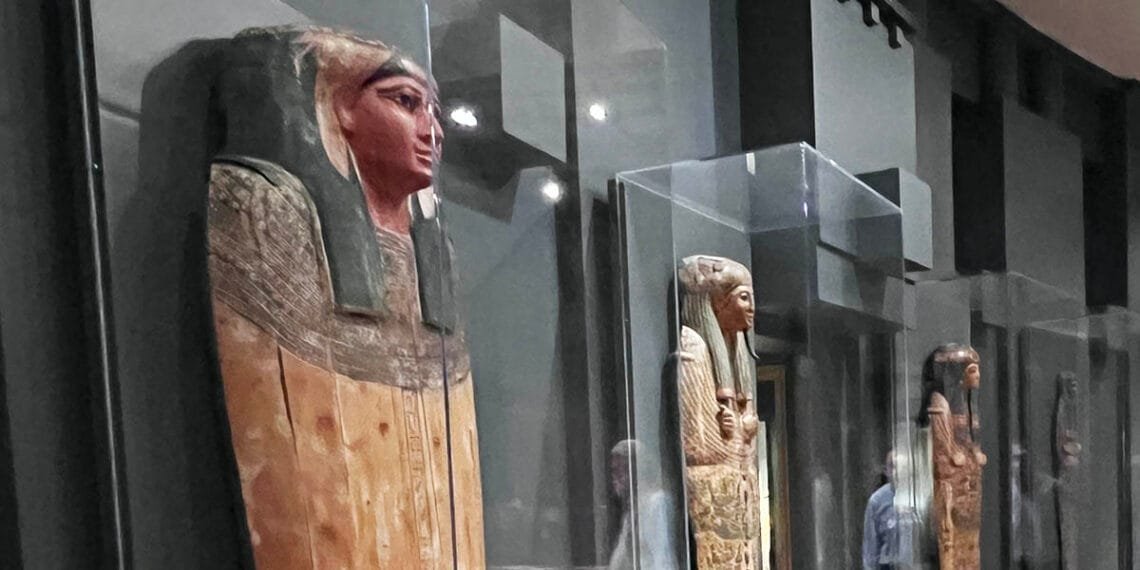
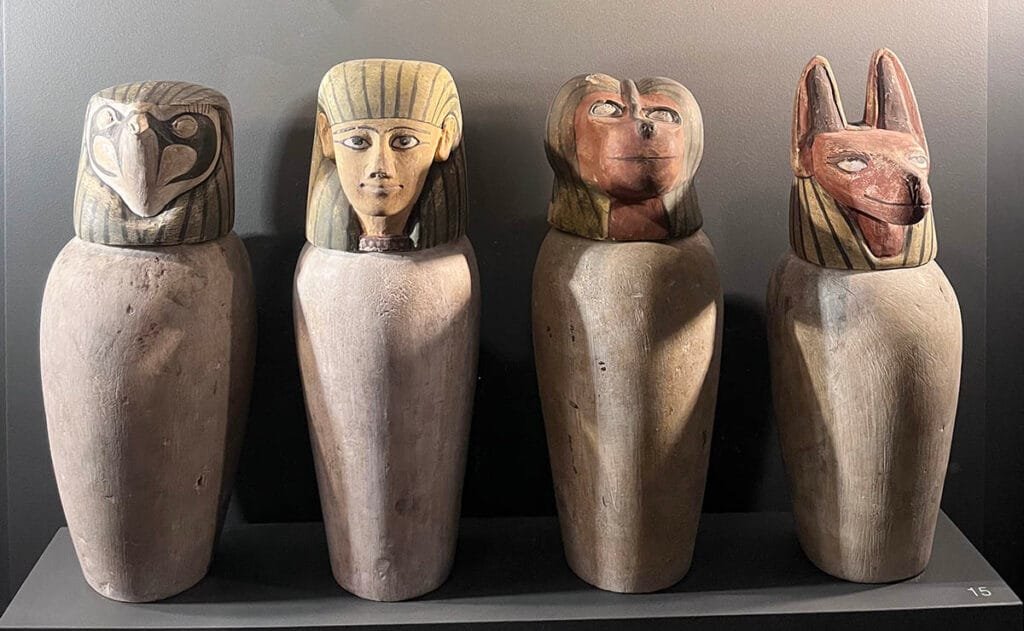
Emory University’s Egyptian and Nubian Art Gallery was my favorite. Here, you’ll find the incredible art of Egyptian tombs. The gallery contains mummified human remains and mummified animals including a fish, a cat, and a falcon. The Michael C. Carolos Museum is home to the oldest Egyptian mummy in the Western Hemisphere. All remains are displayed in accordance with modern guidelines focusing on ethical and respectful representation.
A map of the Nile River runs along the floor of the gallery. It shows how ancient Egyptian civilization developed along the river’s fertile banks.
The objects in this gallery range from everyday tools to elaborate burial artifacts. They provide insights into daily life and religious beliefs in ancient Egypt.
Ancient Near Eastern Art
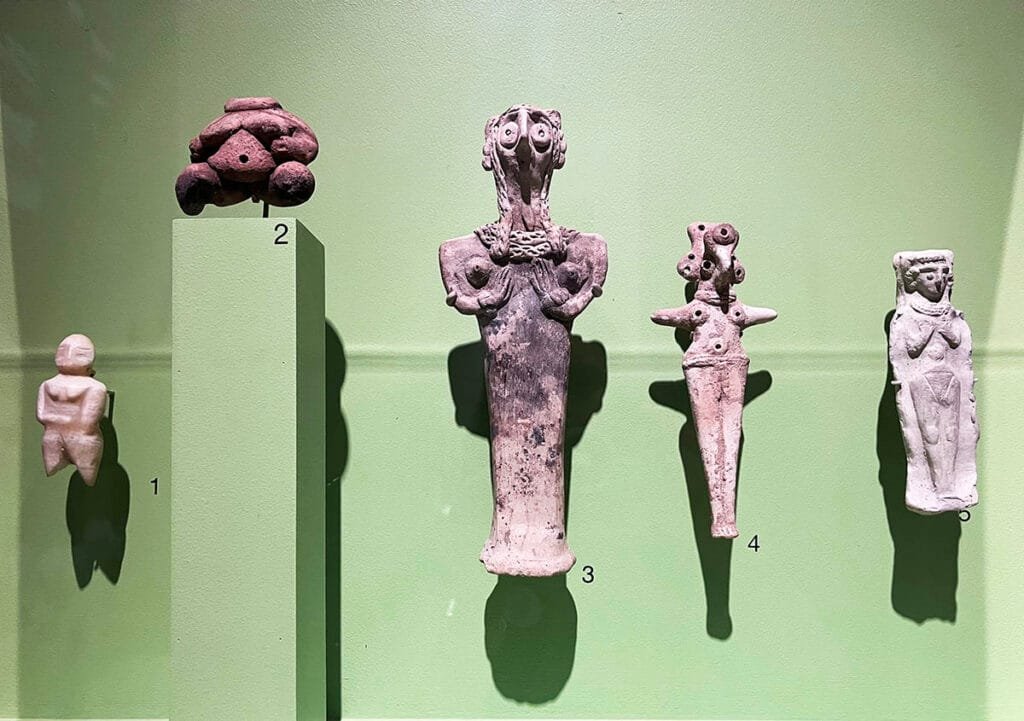
The Ancient Near Eastern Galleries feature artifacts from early civilizations in Mesopotamia and surrounding regions. These objects connect well with the architectural inspiration of the museum itself. Don’t forget that the building’s front façade references the stepped form of Mesopotamian ziggurats.
African Art Galleries
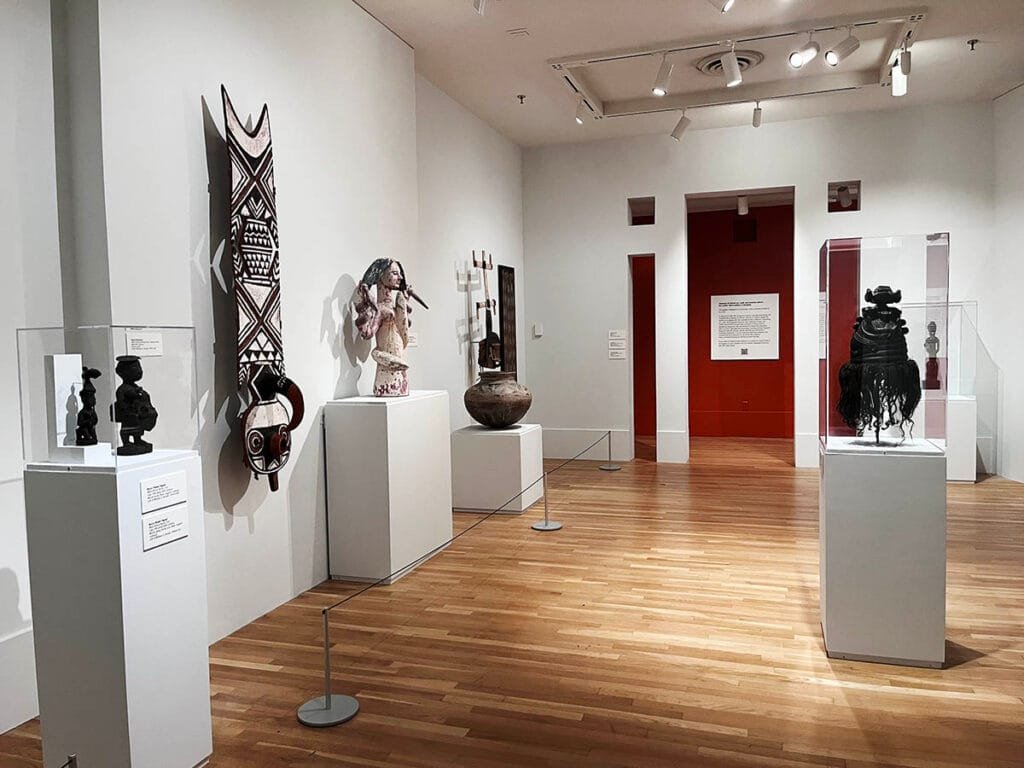
One of the most interesting stories in the museum involves its African Art Collection. Although it is now the largest collection in the museum, it was donated just six weeks before the building opened in 1993.
To make room for the new collection at the last minute, the museum divided a rotating exhibition gallery on the top floor in half to create space for African art. Because the collection is so large, the museum regularly rotates objects on display so you will have the chance to see different pieces over time.
Practical Tips for Visiting the Michael C. Carlos Museum
If you’re planning to visit the Michael C. Carlos Museum while in Atlanta, here are a few practical tips that can make your visit easier.
Where is the Michael C. Carlos Museum?
The museum is located on the campus of Emory University, just northeast of downtown Atlanta. It’s an easy stop if you’re exploring the nearby city of Decatur or spending time on Emory’s beautiful campus.
Parking at Emory University
One of my best tips for you is that parking at Emory is free on weekends.
There are several parking decks near the museum, and from there it’s just a short walk to the entrance. I parked at the Fishburne Deck on Saturday and the gate was open. I used Google Maps to help me walk to the museum. The Oxford Road Visitor’s Deck is a good option for both weekday and weekend visits.
During weekdays parking is available in the Oxford Road Visitor’s Deck for a fee.
How Long to Plan for Your Visit
I spent an hour and a half touring the Michael C. Carlos Museum at Emory. Most visitors spend about 1.5 to 2 hours exploring the museum. If you enjoy reading exhibit labels or taking photos, you may want to allow a little extra time.
The museum even offers folding stools that you can carry with you through the galleries if you want to sit and sketch or sit and spend more time looking at specific works of art.
Photography is allowed in most areas provided that you do not use a flash. This is a great way to capture memories of your visit.
Keep in mind that the museum is closed on Mondays and Emory University holidays.
The Museum Café
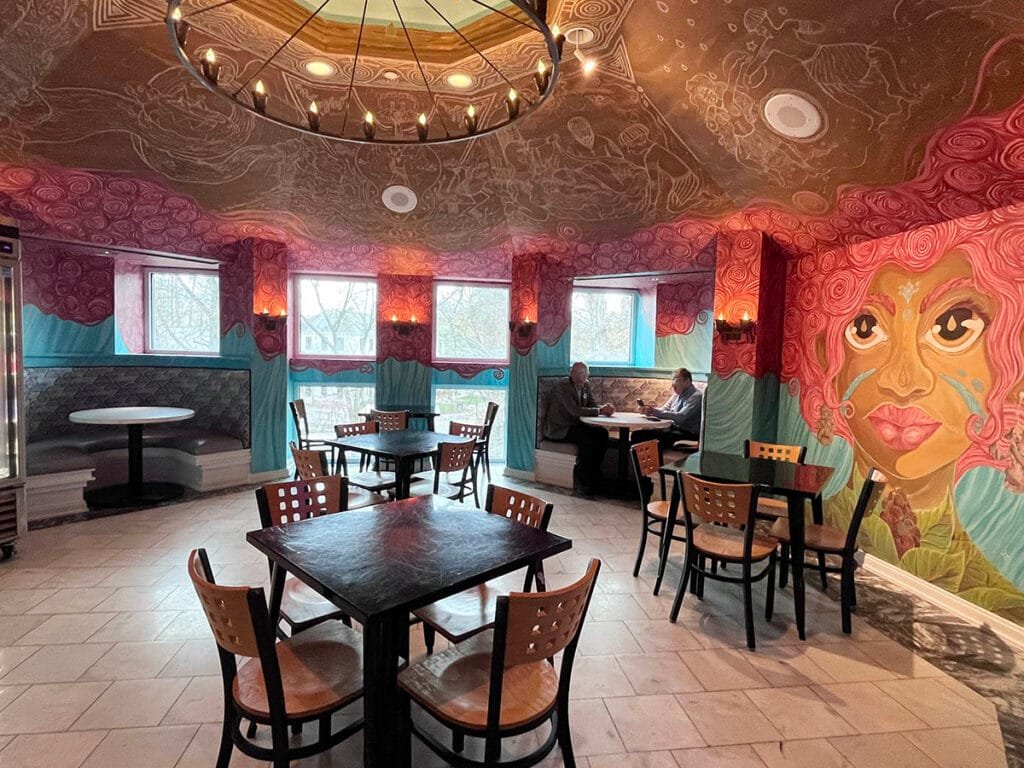
If you need a break, an outpost of Decatur’s Golden Drops Café is located on the top floor of the museum. You can grab coffee or a light meal here. The café is a nice place to take a break during your visit or relax for a bit before heading back out to explore the rest of the Emory campus.
Free and Family-Friendly Ways to Visit
One of the things I love about the Michael C. Carlos Museum is how accessible it is for families and local visitors.
Sunday FUNdays
The Michael C. Carlos Museum hosts free family admission one Sunday each month during the academic year. These events include free admission and drop-in studio activities for families between noon and 4pm. No advanced registration is necessary. These programs are designed to make the museum more accessible and encourage families to experience the collections together.
SmARTy Packs for Kids
If you’re visiting with children, look for the museum’s SmARTy Packs. These activity bags help kids engage with the exhibits through games and activities designed around the collections. The bags are free for families to check out. The packs are frequently updated so if you make a return visit, expect to find something new inside. SmARTy Packs are great way to make the museum experience more interactive for young visitors.
Free Family Guides to the Michael C. Carlos Musuem are also available at the front desk.
Sunday Public Tours
Another great option is the museum’s Sunday Public Tours. These free tours (with museum admission) are led by knowledgeable docents and provide extra context about the architecture, history, and collections in the museum. If it’s your first visit, joining a tour is one of the best ways to learn more about what you’re seeing. There is no advanced registration. The tours are simply first come, first serve. You can schedule docent-led tours at other times for groups with at least 5 people.
Free Admission with a Georgia Library Pass
If you live in Georgia, most libraries across the state participate in the Georgia Library Pass Program, which allows cardholders to check out passes for free admission to participating museums including the Michael C. Carlos Museum.
It’s a fantastic way to explore the museum without worrying about ticket costs.
Free Admission for College Students & Emory Employees
If you are a college student at any University simply show your student ID for free admission to the Michael C. Carlos Museum. The museum also offers free admission to Emory University students, faculty and staff plus Emory Healthcare employees with a valid ID. Admission is also free for children 5 years old and under.
If you walk, bike, or ride public transportation to the museum, then you may be eligible for a 10% discount on admission. Speak to the staff at the admissions desk.
Why the Michael C. Carlos Museum Is One of Atlanta’s Hidden Gems
Atlanta has several excellent museums, but the Michael C. Carlos Museum often flies under the radar compared to the city’s bigger attractions. That’s part of what makes it special. Inside this museum, designed by architect Michael Graves, you will find world-class collections, fascinating architecture, and thoughtful exhibits. All of this without the crowds that you typically encounter at larger museums.
If you’re visiting Atlanta, or even if you’ve lived here for years, add Emory’s Michael C. Carlos Museum to your list of places to discover. Take a Sunday tour, bring the kids for a family day, or simply wander through the galleries and see which ancient civilization captures your imagination. And if you do visit, I’d love to hear what surprised you most about this Atlanta hidden gem. Share your thoughts in the comments or let me know your favorite gallery!
Frequently Asked Questions About the Michael C. Carlos Museum
Where is the Michael C. Carlos Museum located?
The museum is located on the campus of Emory University in Atlanta, Georgia.
Is parking free at Emory’s Michael C. Carlos Museum?
Parking at Emory University is free on weekends. During weekdays, you can park in the Oxford Road Visitor’s Deck for a fee.
How long does it take to visit the museum?
Most people spend 1–2 hours exploring the galleries.
Is the Michael C. Carlos Museum good for kids?
Yes. The museum offers many Children’s and Family Programs including SmARTy Packs and interactive exhibits that make it engaging for younger visitors.
Can you take photos inside the museum?
Yes, photography is generally allowed in the galleries, however you cannot use a flash.
Is there a café at the museum?
Yes, an outpost of Decatur’s Golden Drops Café is located inside the museum. You can grab coffee or a light meal here.
What are the most famous collections at the Michael C. Carlos Museum?
The museum is especially known for its collections of Egyptian, Greek & Roman, African, and Ancient American art.


You May Also Like

Favorite Local Atlanta Chain Restaurants

Ultimate Weekend in Atlanta: 2 Day Itinerary