
Delta Flight Museum Atlanta: A Local’s Guide
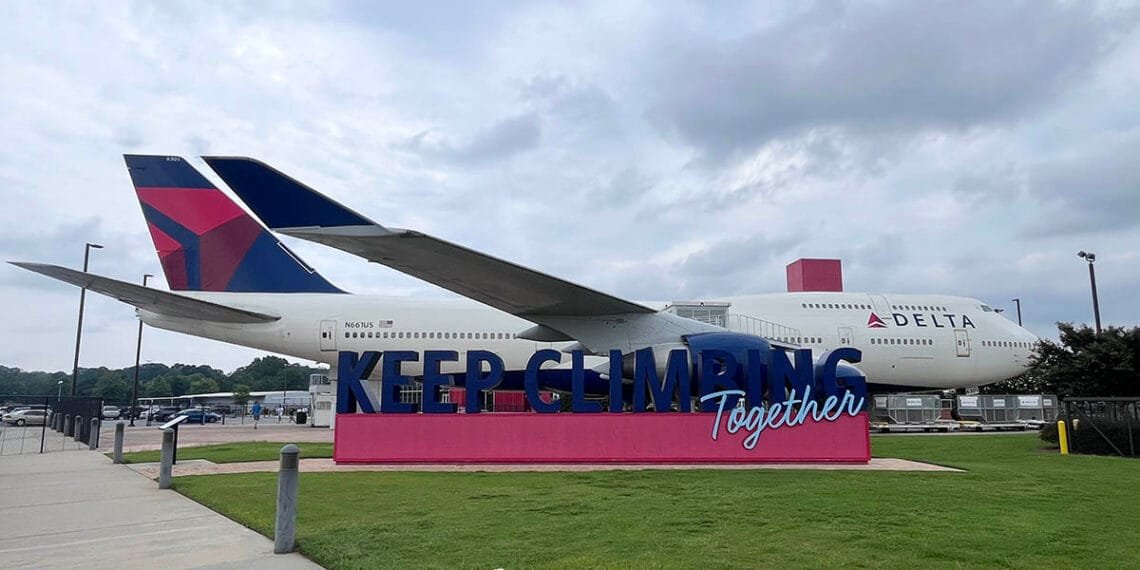
The Delta Flight Museum in Atlanta is a fascinating place to explore the history of Delta Air Lines and the evolution of commercial aviation. Located near Hartsfield-Jackson Atlanta International Airport, the museum is home to historic aircraft, interactive exhibits, vintage travel memorabilia, and the enormous Boeing 747 that you can actually step aboard.
Our family recently visited with my father-in-law, a retired Delta pilot, whose stories and firsthand knowledge added a fun perspective to the planes and exhibits we saw. You certainly don’t need to be an aviation enthusiast – or have a Delta employee in the family – to enjoy the Delta Flight Museum. In this guide I’ll share what we saw, what surprised us, and what you should know before you visit.
Before You Go: Security, Getting There & What to Expect
Getting to the Museum
Driving, a taxi, or a rideshare are your best bets for getting to the Delta Flight Museum. If you’re driving, search for “Delta Visitor Center” or the address, 747 Woolman Place, Atlanta, GA 30354. You’ll know you’ve arrived when you spot the Boeing 747 parked out front – it’s hard to miss! Parking is free. Plus, there’s a dedicated rideshare drop-off and pick-up area right out front, which makes this museum an easy stop even if you don’t have a car.
Going Through Delta Corporate Security
Here’s something worth knowing before you go: the museum sits on Delta’s corporate campus, so you’ll pass through Delta’s general corporate security checkpoint first. It has similar rules to airport security. Be ready to fill out a short questionnaire, agree to Delta’s visitor policies, and show an ID if you’re 18 or older. They will give you a temporary badge to access the museum. If you have luggage (say, if you’re stopping by during a layover), it must go through a scanner. Although you can walk through the metal detector with purses and small bags.
The Planes Outside: A Preview
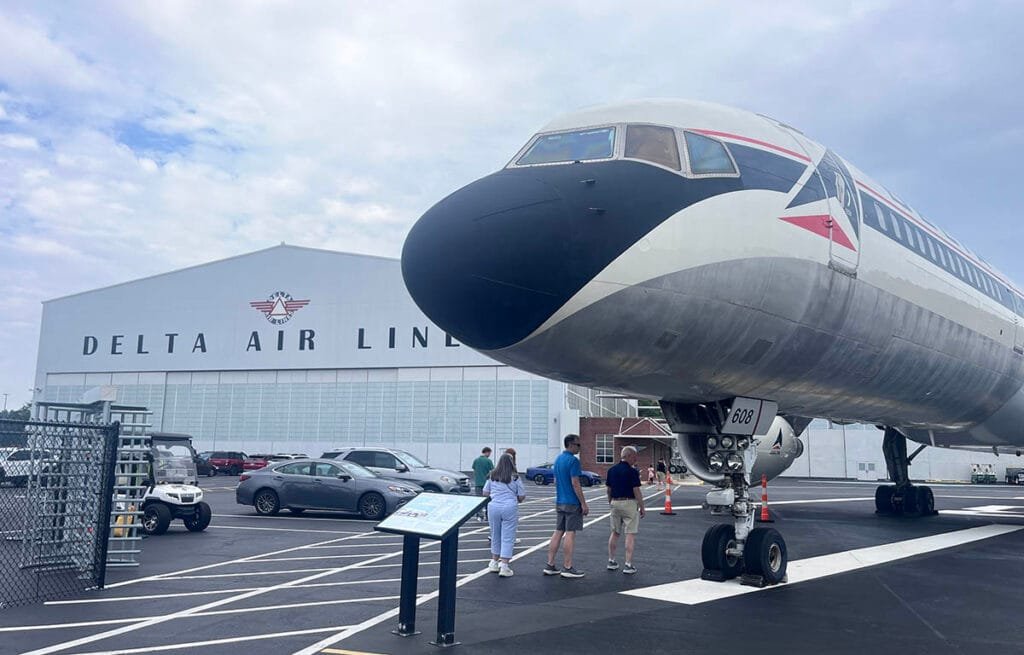
After clearing security, we walked across the parking lot toward the Delta Flight Museum. A few historic aircraft sit outside the museum. You can admire these before you’ve purchased your museum ticket. They include a Boeing 747, a DC-9, a Boeing 757, and a DC-7B.
My father-in-law who is a retired Delta pilot stopped to inspect the DC-9. He could tell by the tail number that this particular jet originally belonged to Northwest Airlines. He flew this model as a brand-new captain. He described it as being “like a little sports car.”
A few steps later, we came upon a Boeing 757, and he was confident he’d flown that exact plane, even without checking the aircraft’s logbooks. He talked us through his pre-flight routine of walking around the aircraft, checking for anything that looked even slightly off. Something all airline captains continue to do today as a safety procedure.
Taking Flight Theater: Setting the Scene
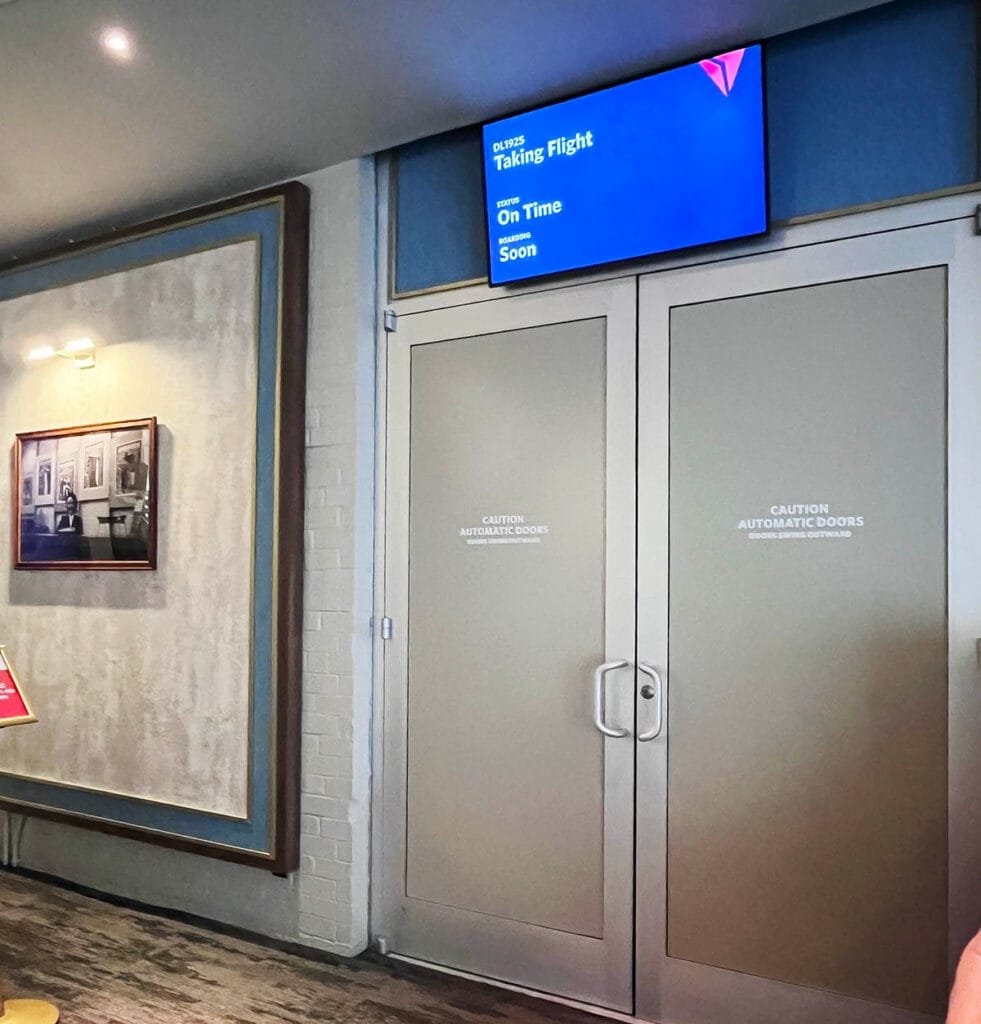
After purchasing our tickets to the Delta Flight Museum, we watched the short film in the Taking Flight Theater, narrated by flight attendant Jeanie Brady, who tells Delta’s story. A fun detail: the theater’s entrance is styled like a Delta gate at Hartsfield-Jackson airport – I thought it was a nice touch.
The museum recently underwent a major renovation to celebrate Delta’s 100th anniversary. Delta was the first US carrier to reach that milestone. The museum celebrates the airline’s history with modern exhibits that preserve the historic aircrafts and memorabilia. Delta’s own Tech Ops team vacated the historic hangars and prepared the historic aircraft to be on display in the museum.
The Legacy Hangar: Where Delta’s Story Begins (1920s–1950s)
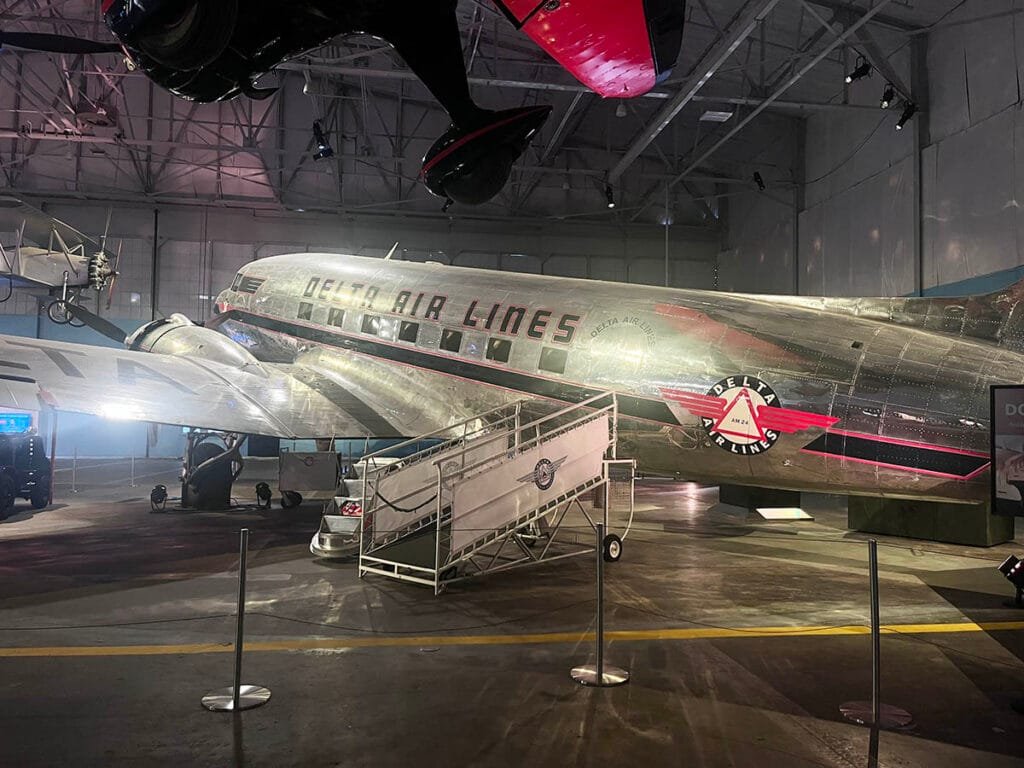
The DC-3 & Delta’s First Route
The Legacy Hangar greets you with a beautifully restored DC-3. This aircraft flew Delta’s first route between Atlanta and Birmingham back in the 1940s. My father-in-law described this plane as a “tail dragger.” He explained why these older planes are genuinely tricky to fly. Pilots must get the tail off the ground before takeoff, and manage that same balancing act again on landing. It’s a completely different skill set compared to flying a modern aircraft.
Captain Dana Lafayette Jones: “Mr. Delta”

A Familiar Face in an Old Photograph
Across from the DC-3, there is a photograph of a captain leaning out the cockpit window. I didn’t notice a caption on the photo, but my father-in-law recognized him instantly: Captain Dana Jones, known throughout the company as “Mr. Delta.”
Captain Jones flew my fathers-in-law to Atlanta when he interviewed with Delta for the pilot position. Captain Jones was once again the pilot for his return flight. My father-in-law remembers everything about it: Captain Jones’s slow southern drawl over the radio and how Captain Jones walked back into the cabin to personally greet passengers.
From B-24 Bomber Pilot to “Mr. Delta”
Captain Jones’s own story is nothing short of remarkable. He grew up in Columbus, Georgia, and entered the US Army as an Air Corps cadet in 1943. Stationed in England, he flew a B-24 bomber with the Eighth Air Force. On D-Day, his bomber group led the mission across the English Channel to strike German positions ahead of the Allied landings. Just a week later, his plane was badly damaged on another mission, forcing his crew to bail out the moment they reached English soil.
After the war, Captain Jones joined Delta as a pilot in 1945. He met his future wife, Delta stewardess Paige Adams, on his very first flight for the airline, from Atlanta to Fort Worth. He flew for Delta for 36 years, starting on the DC-3 and finishing his flying career on the L-1011. He logged over 28,000 hours in the cockpit before retiring in 1981. Even then, he wasn’t done – he spent another 11 years leading Delta’s “In Command” seminars, training the next generation of captains. My father-in-law attended one of Captain Jones’s seminars December 1991.
What an incredible life! I am sure that Captain Jones’ family is proud of him. I never would have come away from the Delta Flight Museum with this story without my father-in-law’s insider Delta knowledge.
Aviation Adventure: The Kids’ Play Space
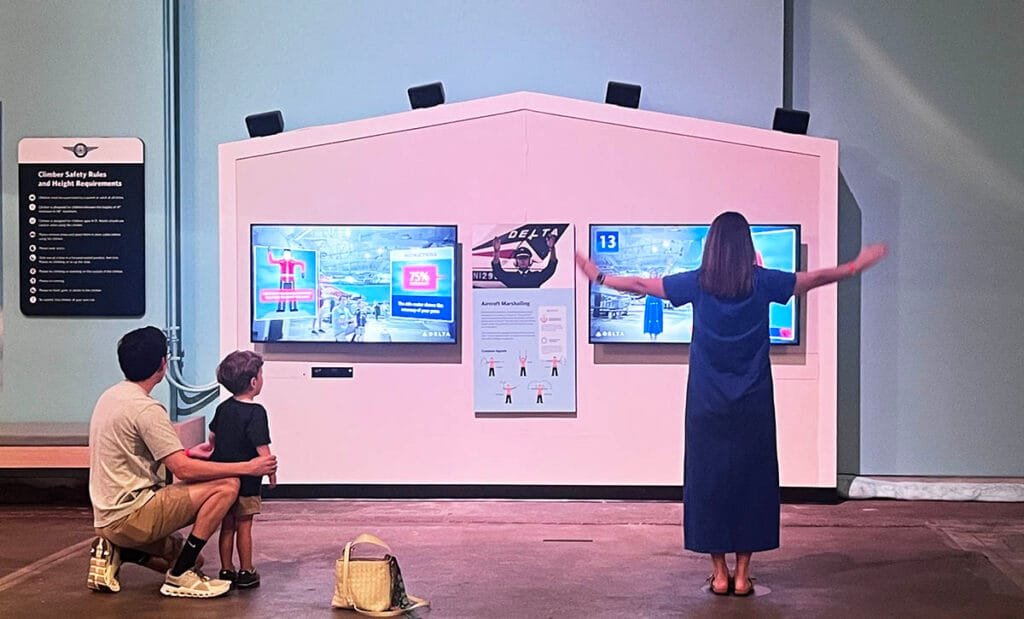
If you’re bringing little ones, don’t skip Aviation Adventure, a play space designed to look like a Delta airport terminal from the 1930s and ’40s. Kids can try their hand at being an aircraft marshaller (directing pilots where to maneuver the aircraft from the ground). Be sure to snap a photo of your child in the mini plane if they’re under 4 feet tall. Plus, play a rivet game that might just spark a future Delta Tech Ops career.
Delta in Motion
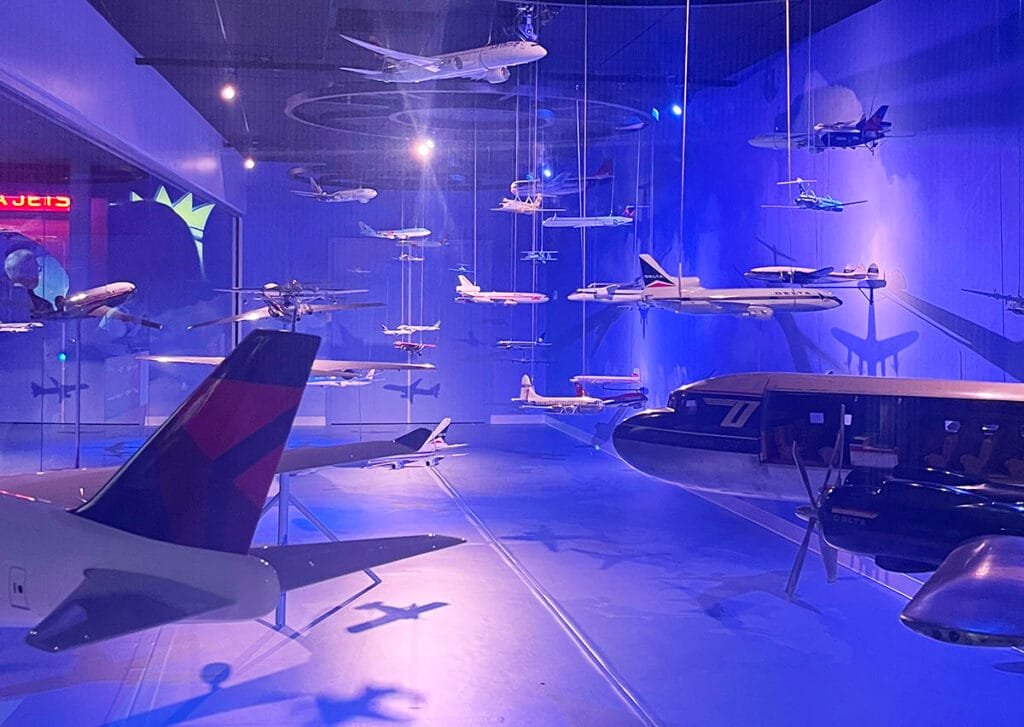
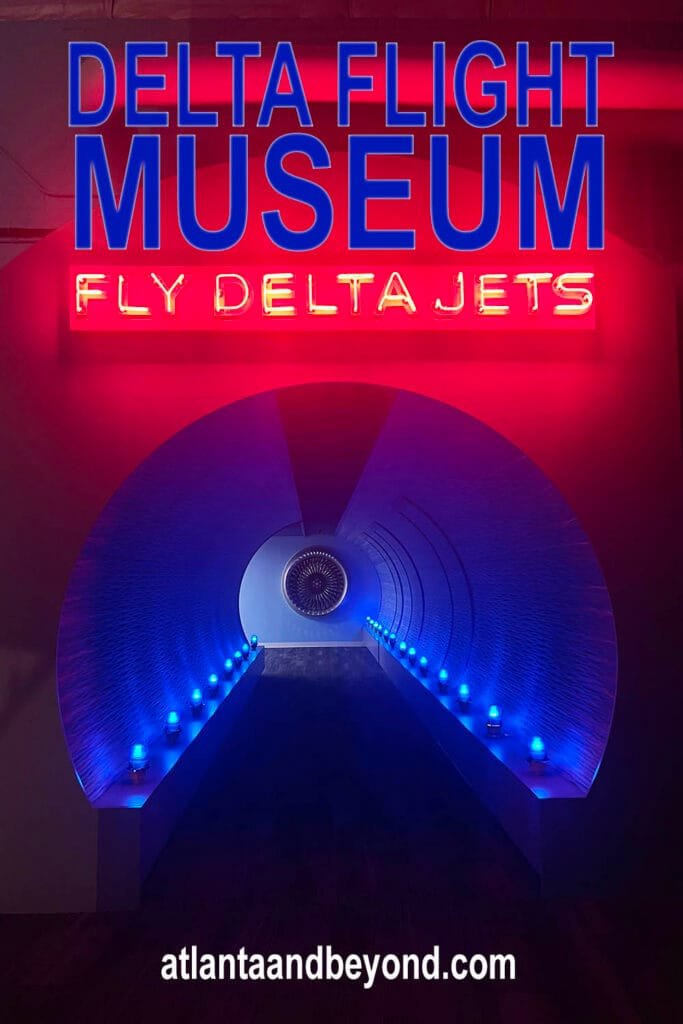
Once you’re ready to move on, don’t miss Delta in Motion, an exhibit that traces the airline’s global expansion through route maps over the decades. On the flip side, model planes – from early biplanes to modern Boeings – move in a slow circular motion that’s genuinely fun to watch, especially with kids. From there, you’ll walk through the Time Tunnel, which transitions you from Delta’s earliest decades into its more modern era.
Time Tunnel
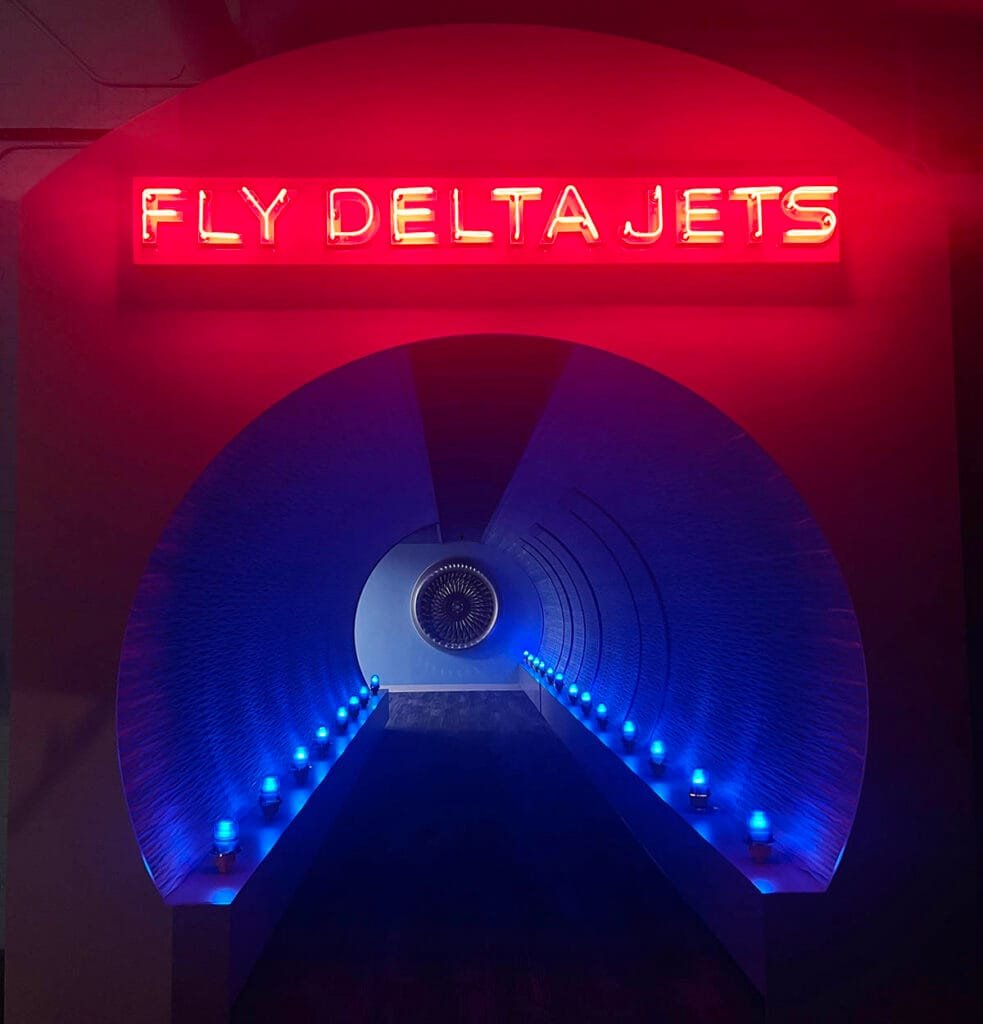
Enter the Time Tunnel in the 1950s and emerge in Delta’s modern Era.
The Spirit Hangar: Delta’s Modern Story (1960s–Present)
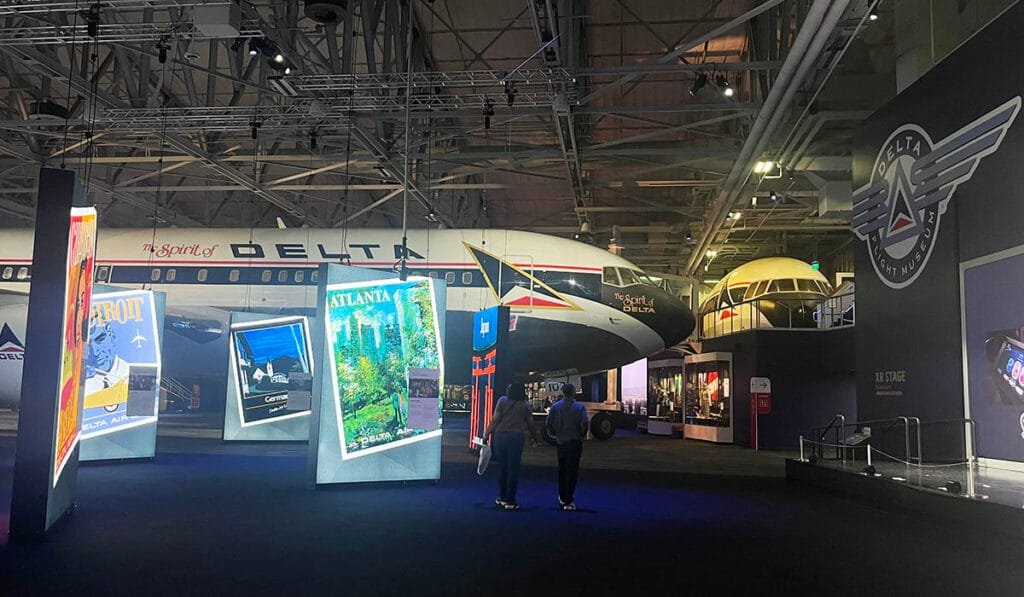
The Spirit of Delta: How Employees Bought Their Own Plane
The centerpiece of the Spirit Hangar is the Boeing 767 known as “The Spirit of Delta.”
A Company in Crisis and an Employee-Led Solution
My father-in-law explained that he was hired as a pilot by Delta in August 1980. Just a year later, air traffic controllers went on strike, fuel prices spiked, and the whole airline industry struggled. Delta was felt the financial pressure too. But instead of furloughing pilots, the company found them other jobs around the airport so they could keep receiving paychecks. In response, a group of Delta flight attendants came up with an extraordinary idea: what if employees pooled their own money to buy the company a brand-new plane?
Flying the Spirit of Delta
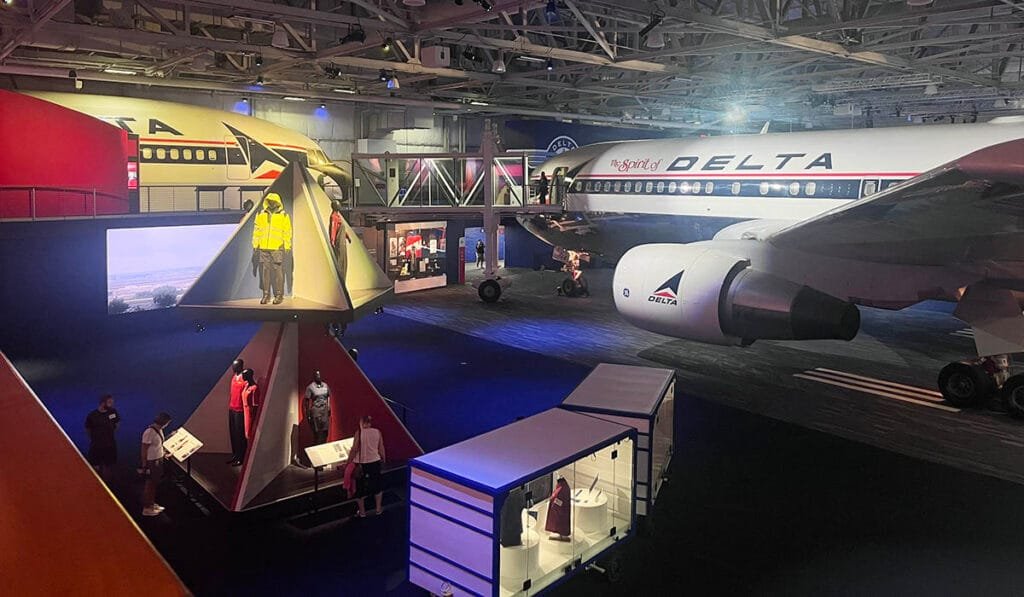
My father-in-law was one of the employees who participated, having a small percentage withheld from his paycheck to help fund the purchase. Delta announced that the $30 million aircraft – state-of-the-art for 1982 – had been purchased by its own employees. He went on to fly “The Spirit of Delta” many times. The plane flew for Delta until 2006. I remember my husband pointing it out to me on the tarmac back when it was still in active service.
Wings, Uniforms & Vintage Travel Posters
Nearby, you’ll find a display of pilot wings spanning decades. It was fun to see samples of the wings my father-in-law wore on his captain’s uniform. There’s also a fascinating collection of uniforms – not just Delta’s, but uniforms from every airline Delta absorbed over the years, including Pan Am and Northwest Airlines.
Scattered throughout the hangar are vintage Delta travel posters that are genuinely gorgeous. My daughter fell completely in love with them, and she brought the London poster home from the gift shop.
Cockpits & Engines
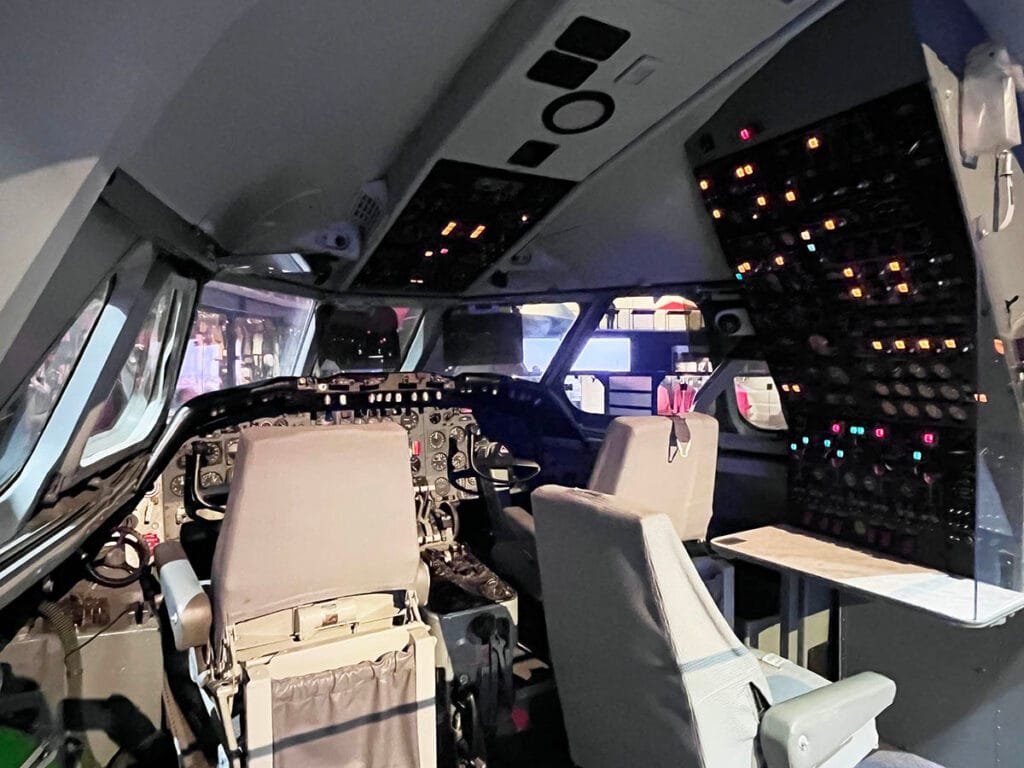
Aviation lovers won’t want to miss the Engine Gallery, featuring a set of Rolls Royce engines up close, or the Convair 880 cockpit, which is fascinating to peek into.
Stepping Aboard “The Spirit of Delta”
Boarding The Spirit of Delta itself was one of the highlights of our visit. We were struck by how spacious and comfortable the old economy seats felt compared to flying today – and we pointed out the phones built into the seatbacks to our kids, who found it hilarious that people used to make actual phone calls from their seats. Funny how now everyone has a phone in their pocket, and voice calls are prohibited on a flight. One practical note: the aisles are wider than they originally were, because Delta Tech Ops updated the aircraft to be ADA compliant, so everyone can explore the plane regardless of ability.
The 747 Experience: Ship 6301
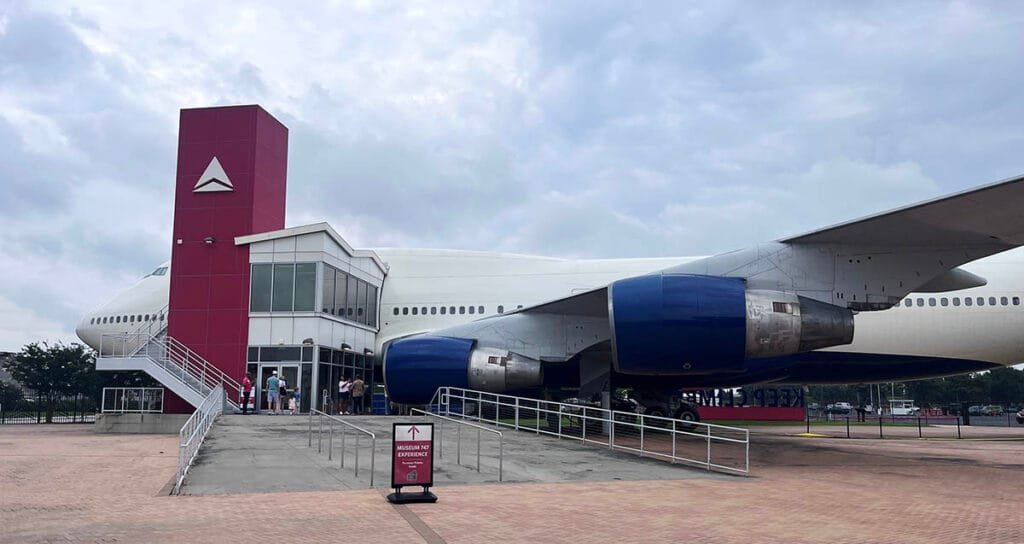
After the hangars, we headed back toward Delta security to visit the museum’s true showstopper: the Boeing 747. There’s simply no way to overstate how enormous this aircraft is in person. The exterior stairs (or an elevator, if you prefer) make that scale even more obvious as you climb up.
Delta’s History with the Boeing 747
Delta first brought Boeing 747-100s into its fleet in 1970, but the “Queen of the Skies” turned out to be too large for Delta’s route network. So, the airline began trading them back to Boeing starting in 1974, retiring its last one by 1977. Delta didn’t fly 747s again until its 2008 merger with Northwest Airlines brought a fleet of 747-400s into the family. Those planes were outfitted with 65 Business Elite seats and 338 economy seats, carrying over 400 passengers at a time. Delta ultimately became the very last U.S. airline to retire the 747, finally doing so in 2017.
Exploring Ship 6301
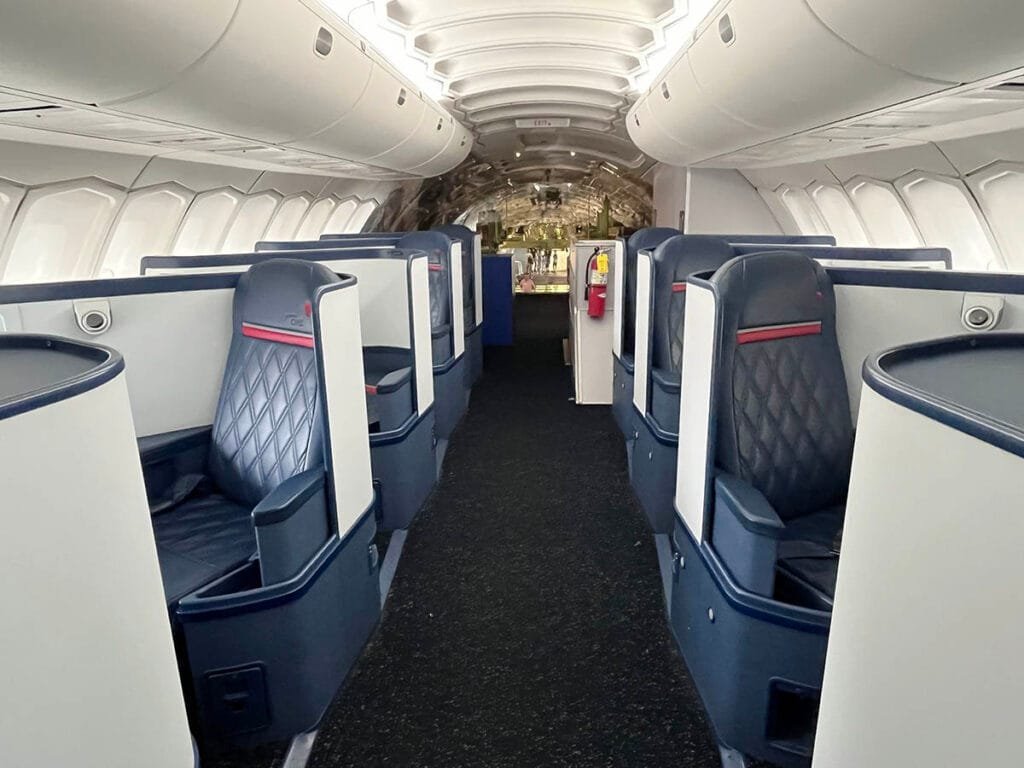
The plane on display, Ship 6301, was the first 747-400 built by Boeing. It’s been partially deconstructed in the rear so you can see the aircraft’s structural engineering up close. There’s a walkway that allows you step outside above the wing. Up front, you can sit in the Business Elite seats and get a real feel for the first-class experience Delta is known for. Upstairs, we found more first-class suite seating and the flight deck (cockpit) itself, which was surprisingly small for such a massive aircraft – just enough room for a captain, first officer, and a third jump seat. Right behind the flight deck (cockpit), there’s a small bunk room where crew members could rest during long flights. I was hoping to stumble on a groovy upper-deck bar like you see in old airline photos – sadly, no such luck.
Boeing 747s
I used to pick my kids up from school in Hapeville right around the time international flights landed. I remember sitting at the red light on Central Avenue, watching 747s in international liveries descend overhead. They always seemed so exotic. Now they’re all retired, and I never got my chance to fly on one. Checking out this 747 at the Delta Flight Museum in Atlanta was an awesome opportunity to explore this aircraft without the commitment of a long-haul flight!
Beyond the Hangars: Experiences to Plan in Advance
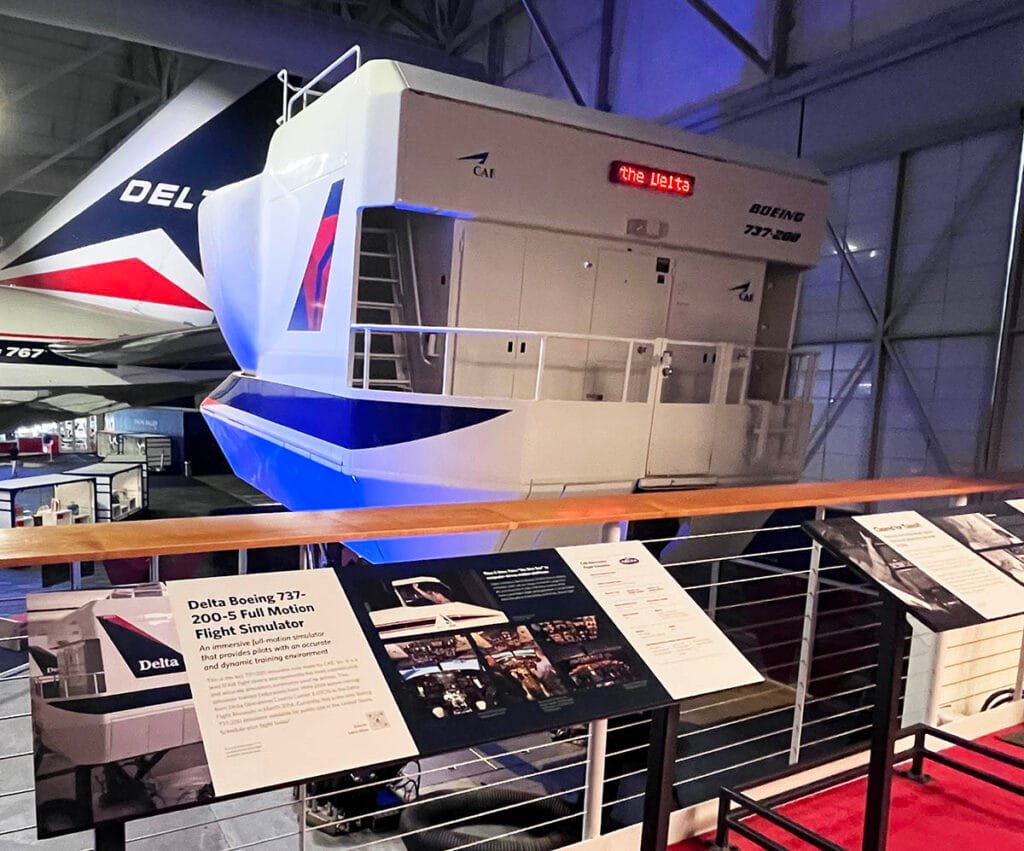
A few museum experiences require planning ahead:
Flight Simulator
The museum’s flight simulator accommodates 1–4 people and carries an additional fee. It is genuinely popular, so I recommend booking your spot in advance through the museum’s calendar. My father-in-law is already talking about coming back to do this with the grandkids.
Airbus Immersive VR Experience
Similarly, the Airbus Immersive VR Experience comes with an added fee and must to be booked ahead of time.
Tuesday Public Tours
If you visit on a Tuesday, don’t miss the free public tour included with admission. It runs at 1pm, lasts about an hour or less, and covers either the Hangars or the 747 Experience. Topics rotate weekly, so check the museum’s website for what’s on the schedule.
First-Sunday DC-3 Tours
On the first Sunday of each month, at 10am and 1pm, you can take a special tour of the very DC-3 that inspired the creation of the Delta Flight Museum. These tours incur an additional fee and need to be booked in advance too.
Practical Tips for Visiting the Delta Flight Museum in Atlanta
- Hours: The museum is typically closed on Wednesdays, so double-check the museum’s calendar before you plan your trip, since it occasionally closes for private events too.
- Tickets: Since pricing can change, I’d rather send you straight to the source: check current ticket prices directly on the Delta Flight Museum’s ticketing page.
- Delta employees & retirees: Current and retired Delta employees visit for free and bring up to three guests, though those tickets need to be purchased in person rather than online.
- Availability: Unlike a lot of Atlanta attractions, this museum doesn’t tend to sell out, which makes it a fantastic last-minute plan if you need an activity on short notice.
- How much time to budget: Our family group included two adults, two teens, and two grandparents. We spent just over two hours exploring the Hangars and the 747 Experience.
- Who it’s perfect for: Families, aviation enthusiasts, gearheads, curious travelers, and locals looking for a great spot to host out-of-town guests. It’s also a wonderful indoor option on a scorching hot or rainy Atlanta day.
- On a layover? This museum is genuinely one of the best ways to spend a long layover at Hartsfield-Jackson. The best way to get here is to take a ride share (Uber or Lyft) to the “Delta Visitor Center” or the address, 747 Woolman Place, Atlanta, GA 30354.
- Guidelines: Visit the Delta Flight Museum’s Visitor Tips & Guidelines for additional information.
The Gift Shop
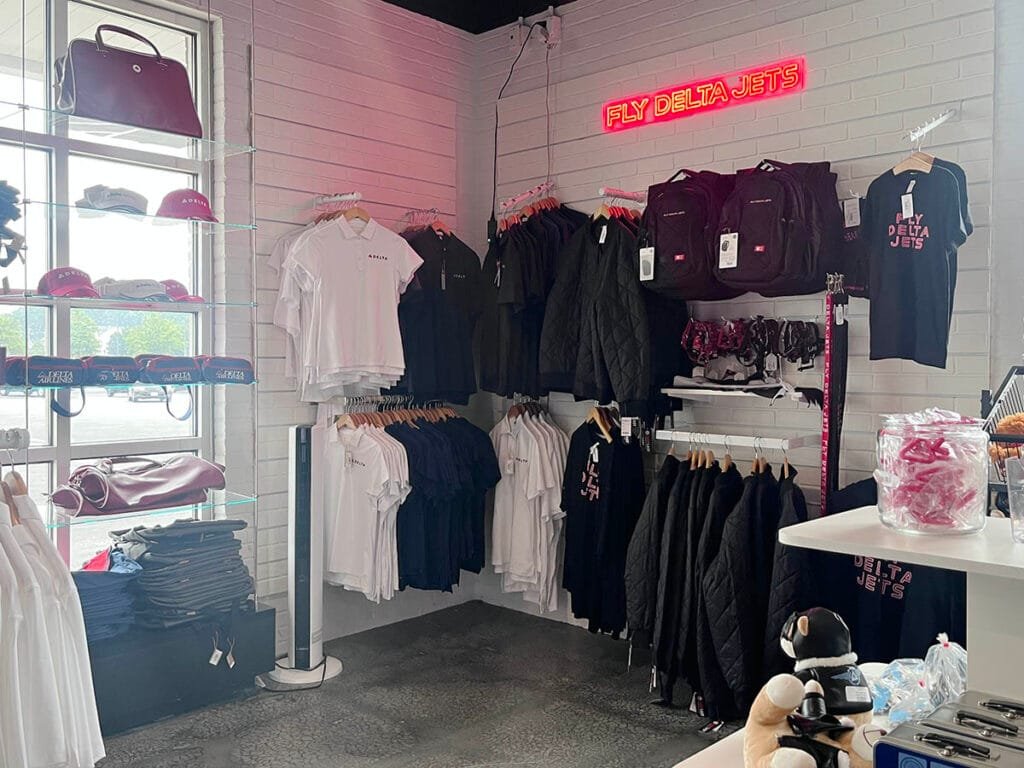
Fell in love with one of those vintage travel posters? You’re in luck – the museum store sells them, along with pretty much anything you can imagine with a Delta logo on it: model airplanes, T-shirts, baseball caps, bags, and keychains. You can also shop the collection online anytime. If you’re looking for something a little more special, the museum sells a beautiful coffee table book, Delta: 100 Years & Climbing by Mark Ellwood, celebrating the airline’s centennial.
Is the Delta Flight Museum in Atlanta Worth Visiting?
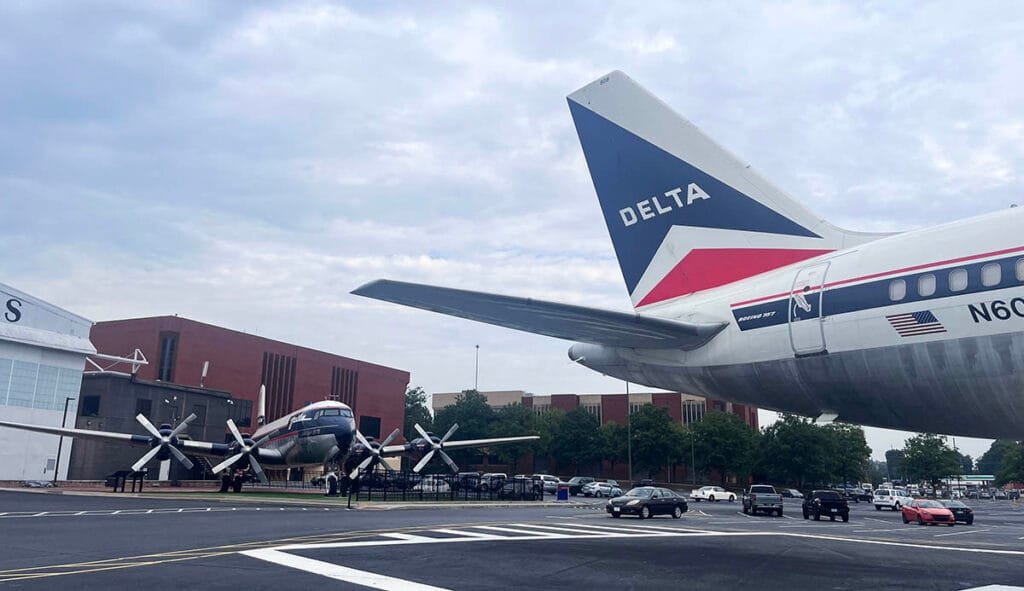
Absolutely. The Delta Flight Museum in Atlanta is a fascinating attraction for aviation enthusiasts, families, curious travelers, and anyone interested in Atlanta’s connection to the history of commercial aviation. From exploring historic aircraft and stepping aboard the Boeing 747 to seeing vintage uniforms, travel posters, aircraft engines, and the famous “Spirit of Delta,” there is much more to see than you might expect.
If you happen to have a pilot, flight attendant, Delta employee or an aviation lover in your circle, I can’t recommend enough making a day of visiting this museum together. My father-in-law’s stories and firsthand knowledge as a retired pilot gave us a different perspective on the aircraft and the people behind Delta’s history. But you certainly don’t need an aviation connection to enjoy the museum. If you’re looking for something interesting to do in Atlanta – especially on a rainy or scorching hot day – the Delta Flight Museum is well worth a visit.
Planning a visit? Check the museum’s current hours, admission prices, and special experiences before you go, and save this guide for your trip. And if you know someone who loves airplanes, Atlanta history, or unique travel experiences, share this post with them!
Delta Flight Museum Atlanta: Frequently Asked Questions
Is the Delta Flight Museum good for kids?
Generally, yes – the museum includes a dedicated kids’ play space (Aviation Adventure), hands-on exhibits, and aircraft you can actually walk through. Teens and younger visitors alike will enjoy the airplanes. That said, it leans more toward an interactive learning experience than a high-energy children’s museum, so it tends to be the best fit for kids roughly school-age and up who can appreciate walking through historic aircraft at a museum pace.
Do I need a reservation to visit?
General admission doesn’t typically sell out, making it a great last-minute activity. However, experiences like the Flight Simulator, the Airbus VR Experience, and the monthly DC-3 Tour should be booked in advance through the museum’s calendar.
Is the flight simulator included in general admission?
No – the flight simulator carries an additional fee and needs to be booked separately.
Is parking free?
Yes, free parking is available on-site, along with a dedicated rideshare drop-off and pick-up area.
How do I get to the museum without a car?
Rideshare is your easiest option if you don’t have a car, with a dedicated drop-off area right at the entrance.
Is the museum ever closed?
The museum is typically closed on Wednesdays and occasionally closes for private events, so it’s worth checking the museum’s hours page before you go.
How long should I plan for my visit?
Plan for roughly two hours if you want to see both hangars and the 747 Experience without feeling rushed. That’s about what our family of six needed to enjoy everything at a comfortable pace.
Pin for Later!




You May Also Like
Michael C. Carlos Museum at Emory: Architecture & Visitor Guide

Favorite Local Atlanta Chain Restaurants
