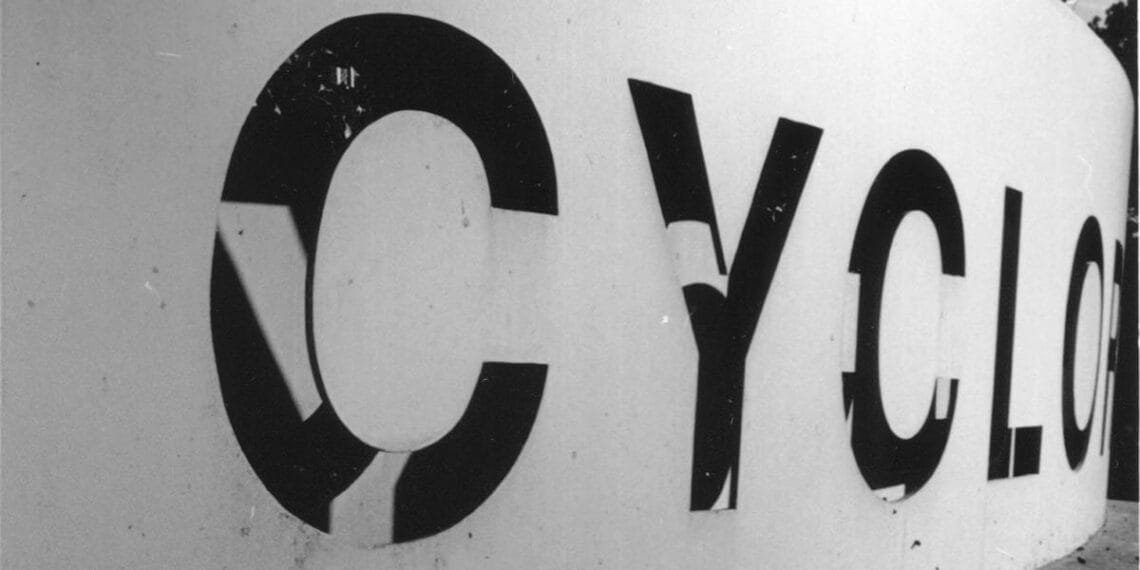
Atlanta Cyclorama: Everything You Need to Know Before You Visit
The Battle of Atlanta Cyclorama is one of the most surprising attractions in Atlanta. At first glance, it looks like a giant Civil War painting, but it’s much more than that. The Cyclorama combines art, history, and storytelling in a 360-degree immersive experience that has fascinated visitors for more than a century. Whether you’re a history enthusiast or simply curious about one of Atlanta’s most unique museums, here’s everything you need to know before you visit.
What is the Cyclorama?
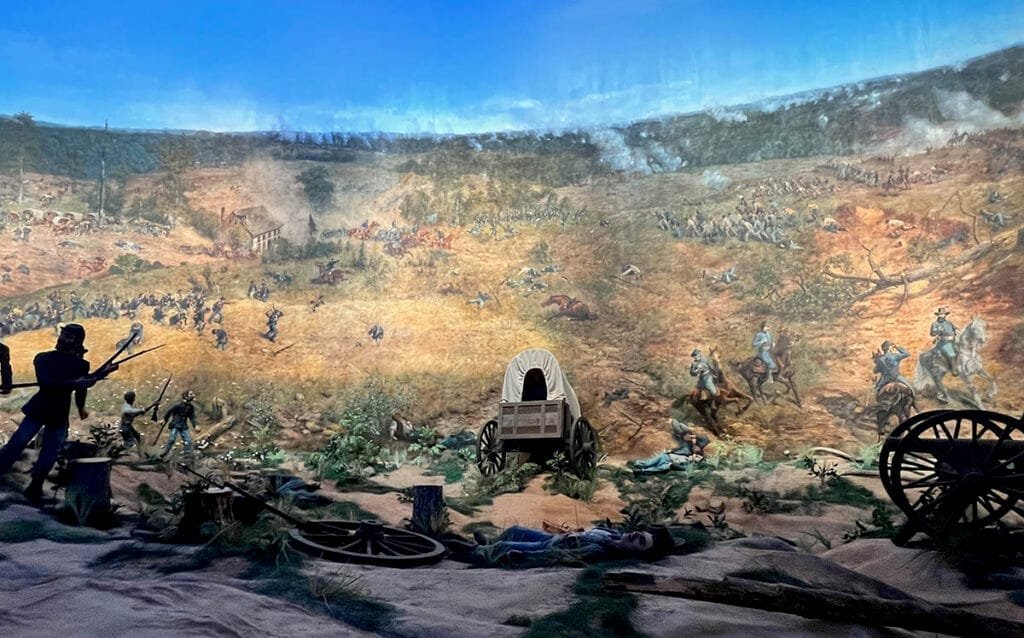
A cyclorama is a large scale painting in the round that is displayed in a cylindric building. A viewer standing in the center of the space will experience a 360 degree view. The goal is for the viewer to feel as if they are standing in the scene. Many cycloramas included dioramas, which are 3D figures and landscaping that blend into the bottom of the painting. These paintings traveled from town to town at the end of the 19th century as entertainment. They were the closest thing to a modern movie that people could experience at that time.
Why Visit the Atlanta Cyclorama?
Of the hundreds of cycloramas created, only a few survive today and one of them is Atlanta’s Cyclorama. This painting tells the story of the US Civil War’s Battle of Atlanta. Today the Cyclorama at its diorama are housed at the Atlanta History Center in an addition built specifically for the painting: the Lloyd and Mary Ann Whitaker Cyclorama Building. The historic Cyclorama building in Grant Park has been repurposed by Zoo Atlanta.
The Atlanta Historic Center restored the Battle of Atlanta Cyclorama to its original appearance. The famous painting also traveled to its new home with the famous locomotive Texas – from the Civil War’s Great Locomotive Chase. The History Center does an excellent job helping visitors to understand how the Cyclorama and history has been interpreted over time.
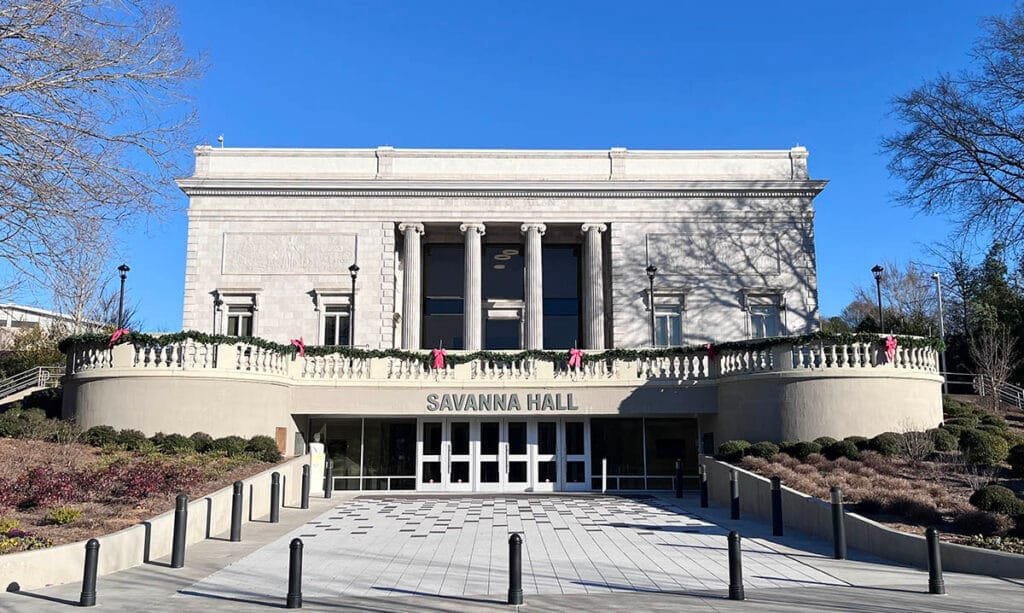
You can see a cyclorama of the US Civil War’s Battle of Gettysburg at Gettysburg National Military Park in Pennsylvania.
My Personal Experience with Atlanta’s Cyclorama
When I came to Atlanta for a summer internship, my mother told me that one of the best things that she had ever seen on her family vacations growing up was a painting of the US Civil War in the round. My mother grew up in Ohio and her father was a Civil War buff. Their family travels often took them to significant sites from the Civil War.
I saw the Cyclorama twice in its historic 1921 building adjacent to Zoo Atlanta. I understand now that the Battle of Atlanta that I saw was an attraction meant to entertain. We sat in risers that rotated as we listened to a narrated story. A spotlight drew our attention to different aspects of the painting. I can see how this immersive experience was easily the most one of the best things that my mother saw as a child when her family primarily toured historic battlefields on their vacations. In the 1880s, the Cyclorama provided a movie theater-like experience.
Now that the painting is on display at the Atlanta History Center, it is presented as an artifact. The exhibit, Cyclorama: the Big Picture, shows the full history of the painting from its inception to how it came to be housed at the Atlanta History Center.
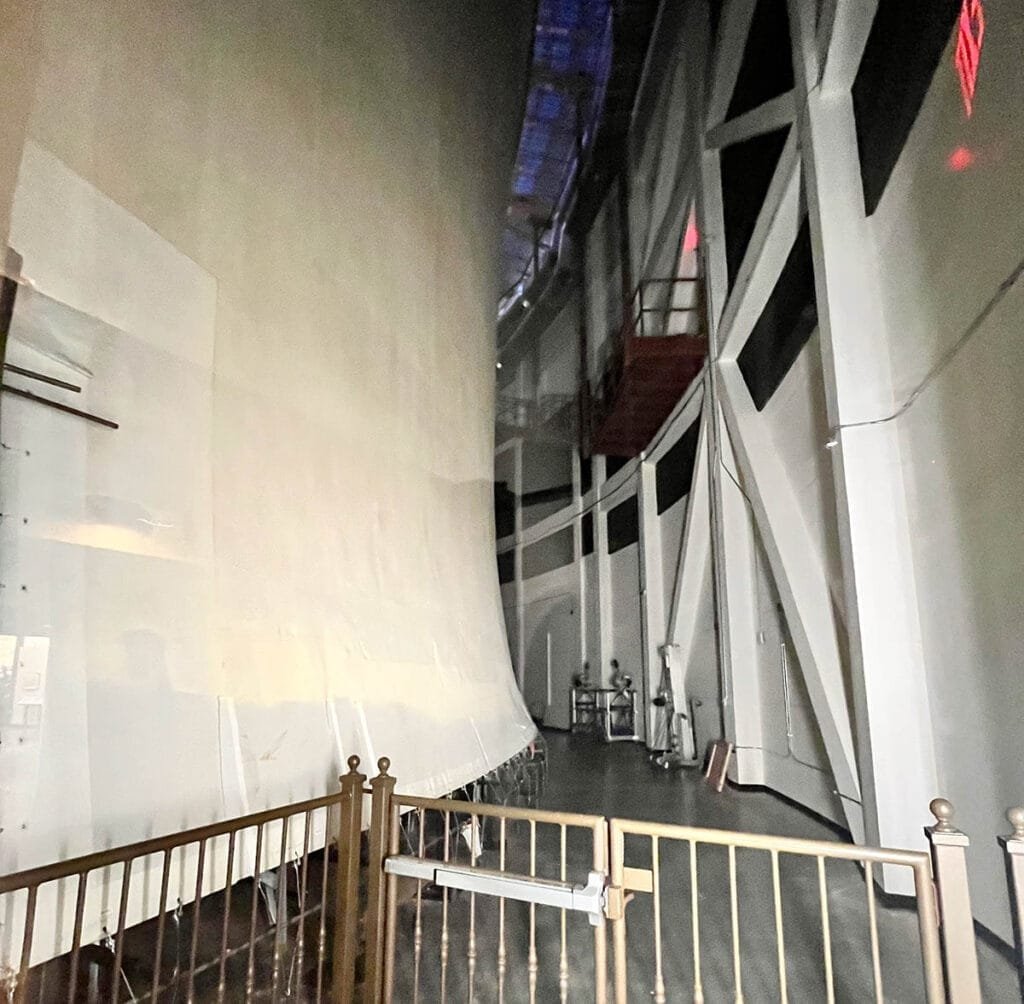
History of Atlanta’s Cyclorama
I was presented with a single presentation of the Battle of Atlanta when I visited the cyclorama attraction in its Grant Park home. The Atlanta History Center documents all the stories that this painting told over the years.
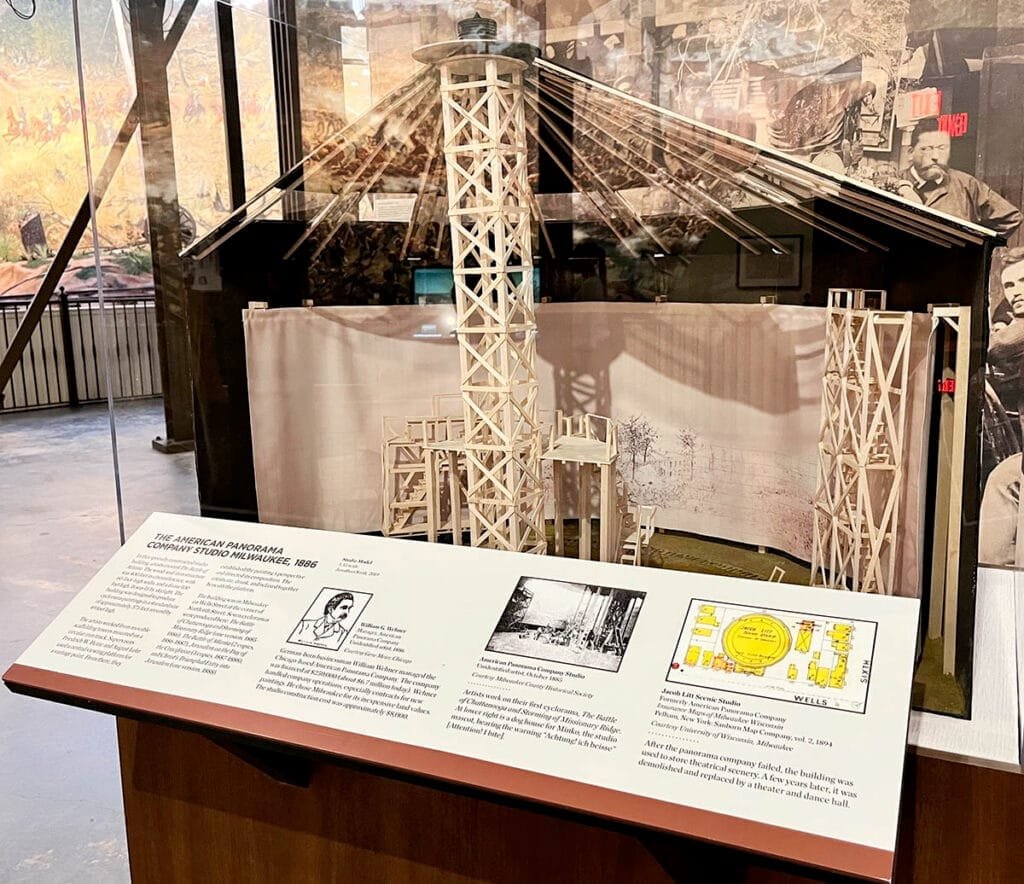
Twenty-two years following the Battle of Atlanta, the cyclorama painting was developed from the Union point of view. It documented an important victory. The American Panorama Company in Milwaukee and a group of 17 German painters created the Cyclorama. The Atlanta History Center exhibit illustrates how the painters came to the site and how they reconstructed the battle scene.
For years, the painting of the Battle of Atlanta traveled around the country before the Cyclorama made its home in Atlanta. While this painting seems like a historic document, it was actually created for entertainment value. The purpose of the painting was to produce an income. The Battle of Atlanta would not sell well to the Atlanta audience as a decisive Union victory.
The Cyclorama in Atlanta
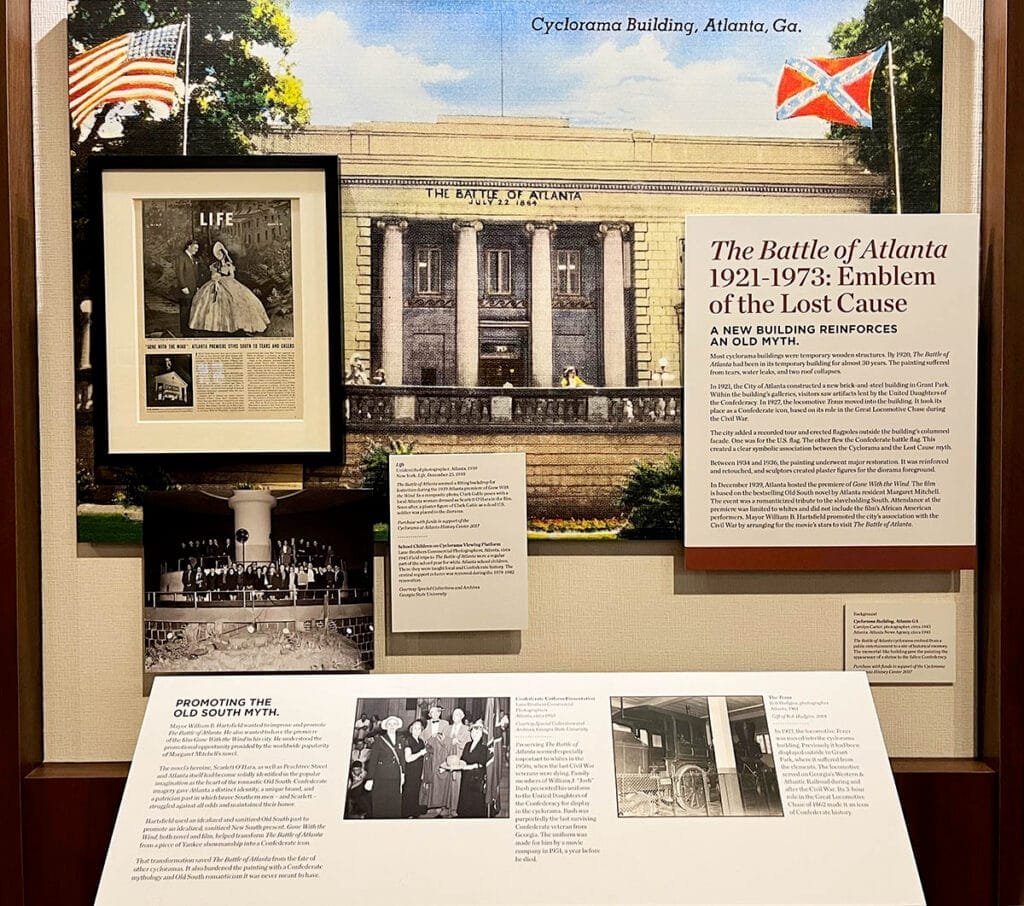
When the painted came to Atlanta in 1892, the proprietors simply modified the narrative. The Cyclorama told the story of “the only Confederate victory ever painted.” As this narrative was not true, they reversed it in the 1930s. An interactive display at the Atlanta History Center explains the audience that the attraction appealed to during various time periods. It includes audio clips from the narratives over the years. These audio clips were fascinating. At the time my mother saw it as a child, I would describe the narrative as having a Gone with the Wind theme.
Although the Cyclorama was an attraction for entertainment, it came across as historical fact to its viewers, who spread these stories as if they were true!
The Restored Painting on Exhibit at the Atlanta History Center
Today the restored Cyclorama painting is featured in the round in a 2-story space. The Atlanta History Center provides a series of interactive exhibits sharing the story behind:
- the place that is represented
- the painting
- the painters who created the work
- the painting’s audience and how it varied through time and place

An escalator takes you to the upper level so that you can look down at the painting. I preferred to see it from the lower level. I think that the diorama in the foreground, which was a later addition, really brings the scene to life. When Clark Gable (the actor who played Rhett Butler in the film, Gone with the Wind) saw the painting, he requested that his likeness be included. You can see him as a fallen figure in the diorama. Many of the artists are who completed the work also have their likenesses on display in the painting itself.
Visiting the Cyclorama Today
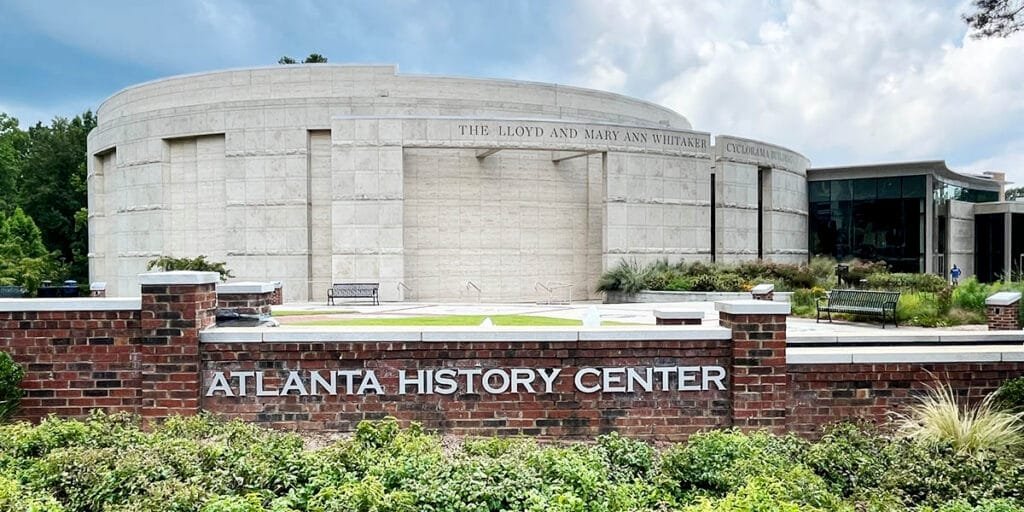
Cyclorama: the Big Picture at the Atlanta History Center is an exhibit not to be missed. Be sure to watch the video documenting the painting’s move from it’s 1921 home in Grant Park to this current location. The repair and restoration work that the Atlanta History Center completed was significant. They even restored a section of the painting that was cut out. They realized upon installation that the previous building was slightly too small for the canvas, so they had to improvise.
Is the Atlanta Cyclorama Worth Visiting?
Absolutely. Whether you’re a Civil War history enthusiast, an art lover, or simply looking for one of Atlanta’s most unique attractions, the Atlanta Cyclorama is well worth a visit. Its massive scale is impressive, but it’s the story behind the painting – its creation, restoration, and evolving interpretation – that makes it one of the most fascinating exhibits at the Atlanta History Center. If you’re planning a trip to Atlanta, be sure to include the Cyclorama in your itinerary and allow time to explore the rest of the Atlanta History Center’s historic homes, gardens, and museum exhibits.
FAQ
What is the Atlanta Cyclorama?
The Atlanta Cyclorama is a 360-degree panoramic painting depicting the Battle of Atlanta during the Civil War. Today it is displayed in a purpose-built gallery at the Atlanta History Center, where visitors can experience the massive artwork alongside exhibits explaining its history and restoration.
Is the Cyclorama worth visiting?
Yes. The Cyclorama is one of Atlanta’s most unique museum experiences. Beyond the impressive artwork itself, the exhibit explores how the painting’s meaning changed over time, making it fascinating for visitors interested in history, art, and storytelling.
How long does it take to see the Cyclorama?
Plan on about 45–60 minutes for the Cyclorama exhibit. If you’re visiting the entire Atlanta History Center, allow at least three to four hours to explore the museum, Swan House, gardens, and Tullie Smith Farm.
Why was the Cyclorama moved?
The painting was moved from Grant Park to the Atlanta History Center so it could undergo extensive conservation and be displayed in a museum-quality environment. The move also allowed curators to present the artwork with more historical context about its creation, alterations, and significance.


You May Also Like

One Day in Midtown Atlanta: Art, Gardens & Dining

Delta Flight Museum Atlanta: A Local’s Guide