
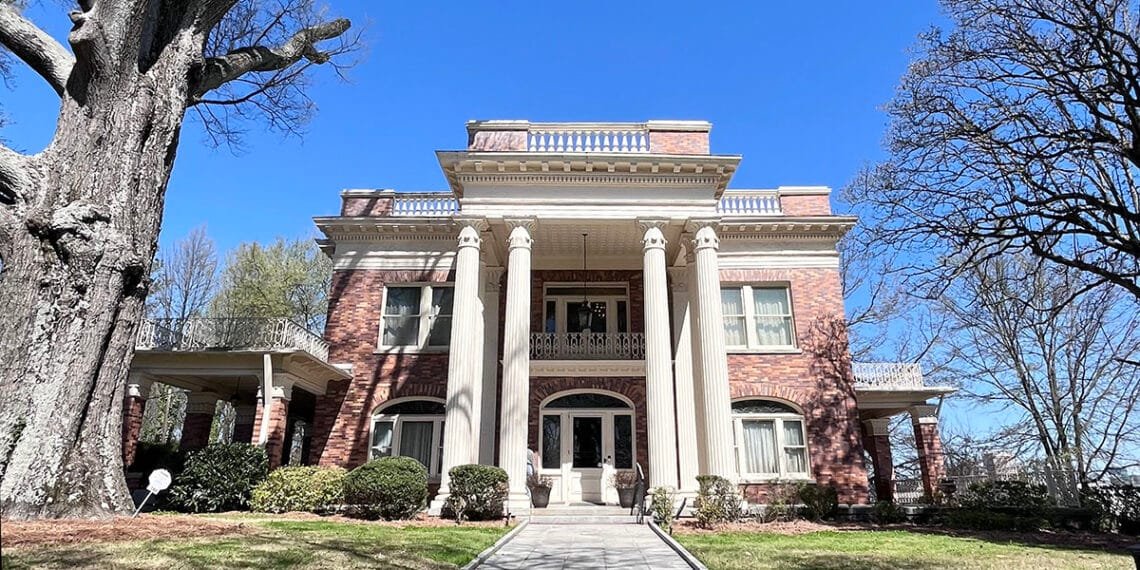
Herndon Home Museum Atlanta: A Legacy of Excellence
I visited the Herndon Home Museum back in March on a tour with the Atlanta Preservation Center, during their Phoenix Flies event. This stunning Beaux Arts mansion was built by Alonzo Herndon, a man born enslaved who rose to become Atlanta’s first Black millionaire, and designed by his wife, Adrienne McNeil Herndon, one of the first Black professors at Atlanta University. Together, they built a home filled with features remarkably ahead of their time – a quiet, deliberate act of defiance against the Jim Crow laws of their era. As an architect, I’m naturally drawn to beautiful buildings, but this house is so much more than its architectural elegance. It is a monument to one of the most extraordinary families in Atlanta’s history, whose story deserves to be shared.
Alonzo Herndon: From Enslaved Child to Atlanta’s First Black Millionaire
Born Enslaved in Social Circle, Georgia
Alonzo Franklin Herndon was born enslaved in Social Circle, Georgia. As a boy, Alonzo, his mother, and his brother lived in a single room of a cabin shared with three other families. They slept in a corner. His mother sometimes worked for food rather than money, just to keep her sons fed. After the Civil War, his family settled in Coweta County, and later Jonesboro, where they had almost nothing to start over with.
Learning the Barber Trade
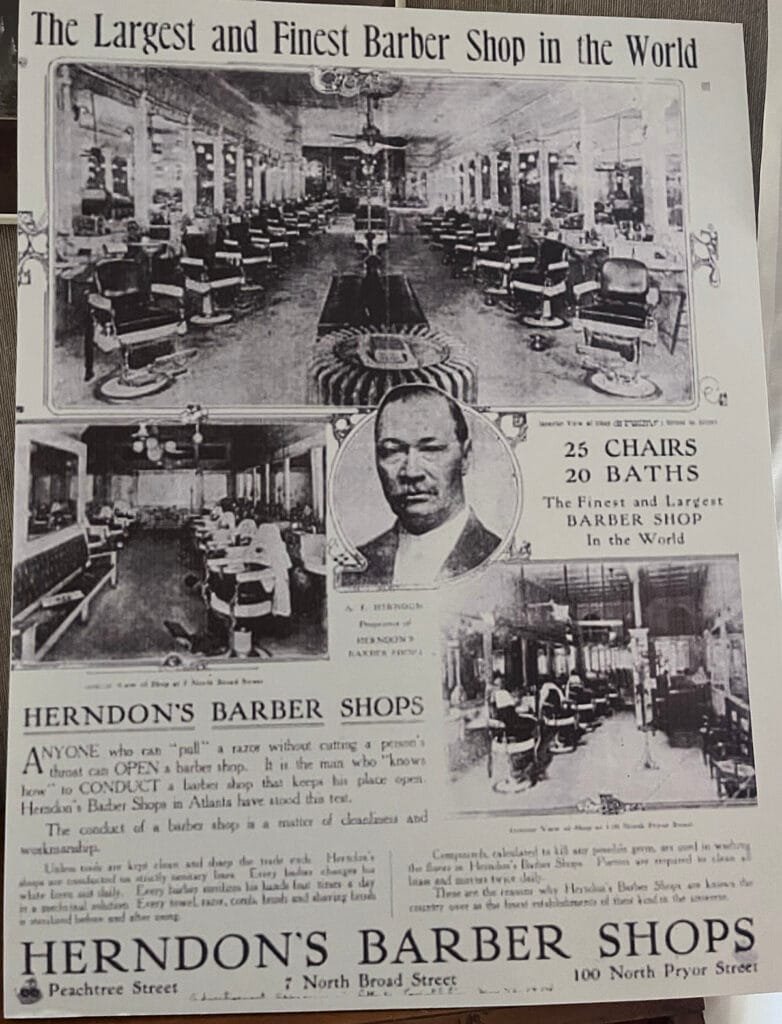
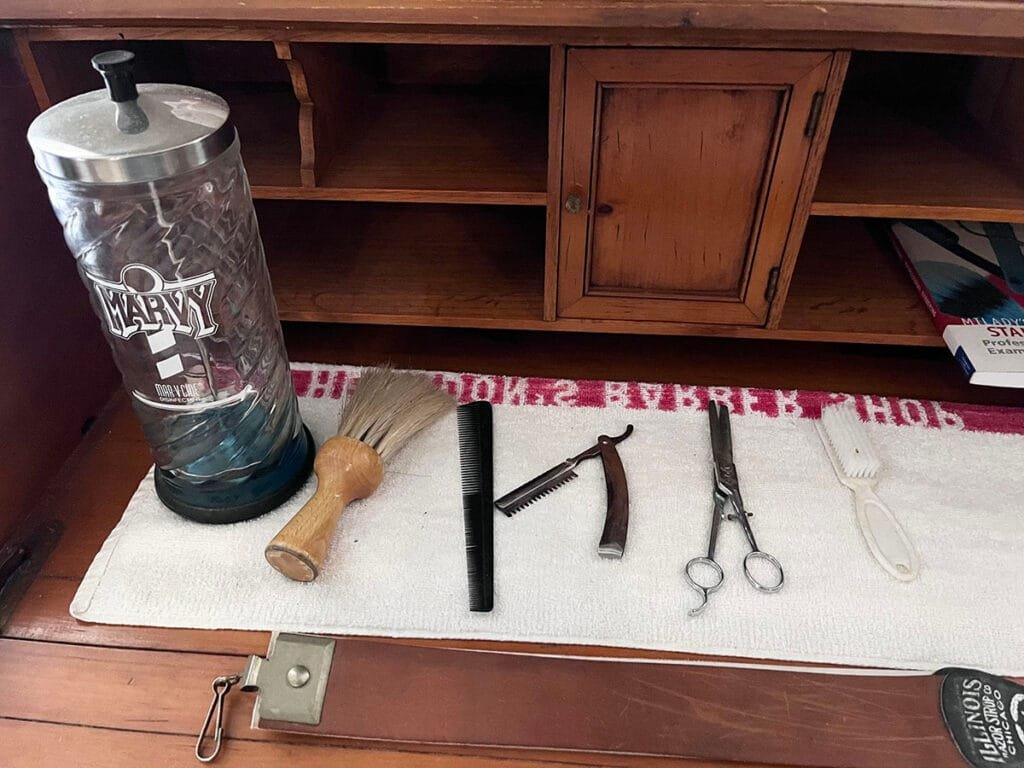
In Jonesboro, Alonzo apprenticed in to barber Anthony Battle and learned to cut hair – specifically, white men’s hair, since that was the barbering business at the time. Eventually made his way to Atlanta where he worked as a barber on Marietta Street. In 1890, he opened his own shop in the Markham House hotel.
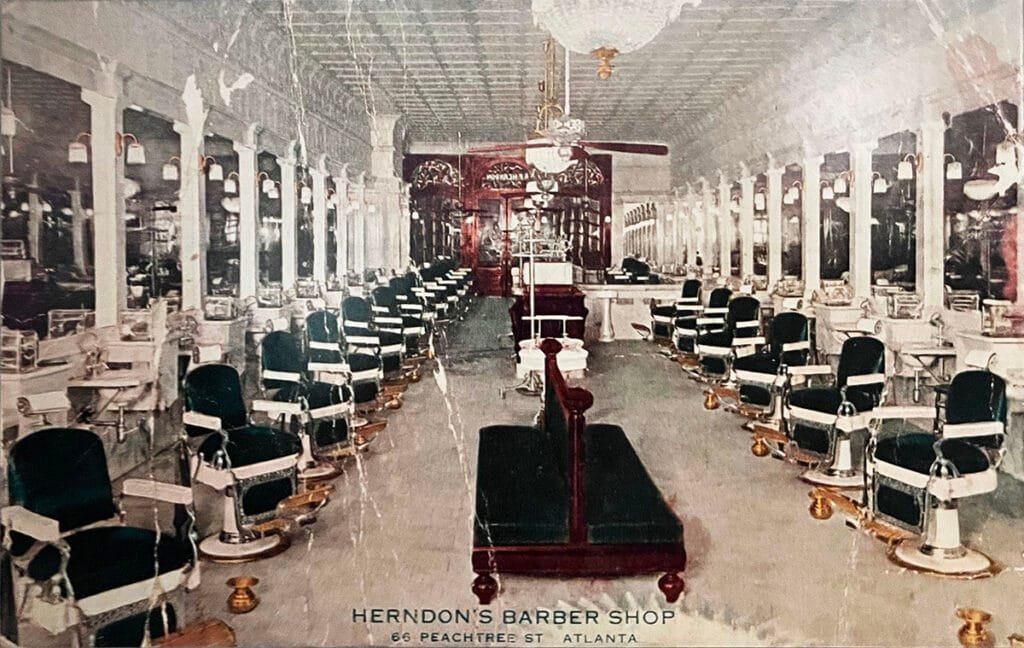
When the hotel burned down, he opened a barbershop at 66 Peachtree Street. Following the 1906 Race Riots he remodeled this location into the Crystal Palace Barber Shop. This space was so elegant it became known as the finest barbershop in the South. There’s a particularly striking, painful detail from this chapter: under Jim Crow laws, Alonzo wasn’t permitted to walk through the front door of the very shop he owned.
His approach to building loyalty was simple and brilliant – he made a habit of cutting children’s hair, knowing those same customers would keep coming back to him for a lifetime.
Building an Empire
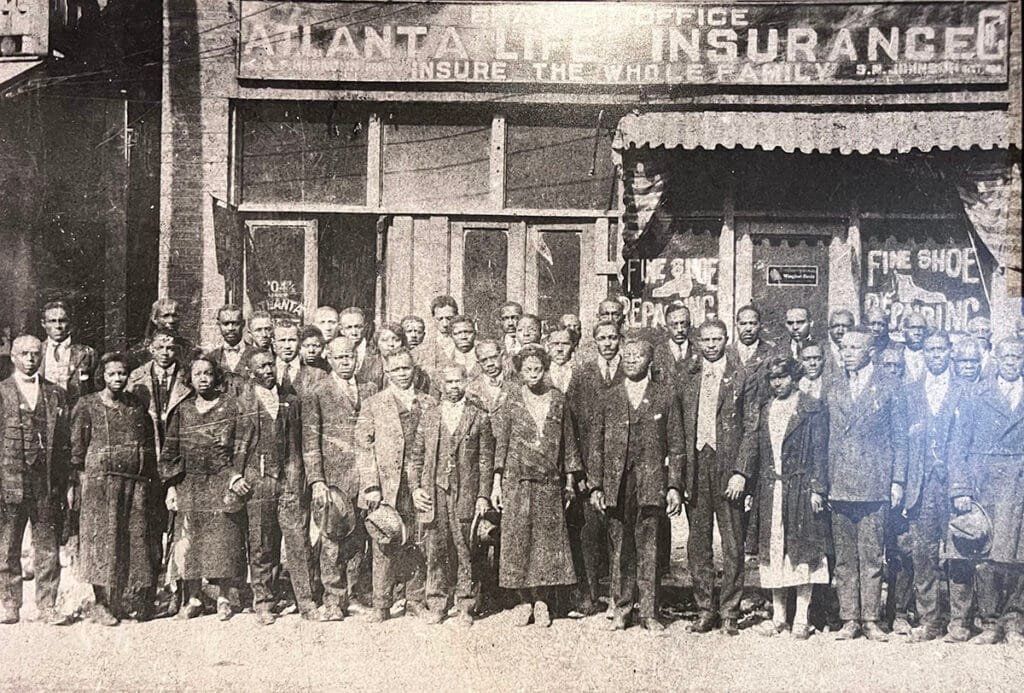
From barbering, Alonzo built a genuine empire. He invested heavily in real estate around Atlanta, including a professional office building on Auburn Avenue. He also founded what began as Atlanta Mutual Insurance Company, which grew into the Atlanta Life Insurance Company. This business provided affordable insurance to the black community, who were typically denied coverage from other insurance companies. This business, which still operates today, remained in the Herndon family’s hands for decades and become one of the most successful Black-owned businesses in the country. By the time he built his home on Diamond Hill, Alonzo Herndon was Atlanta’s first Black millionaire.
Adrienne McNeil Herndon: Professor, Playwright & Visionary
A Trailblazing Career at Atlanta University
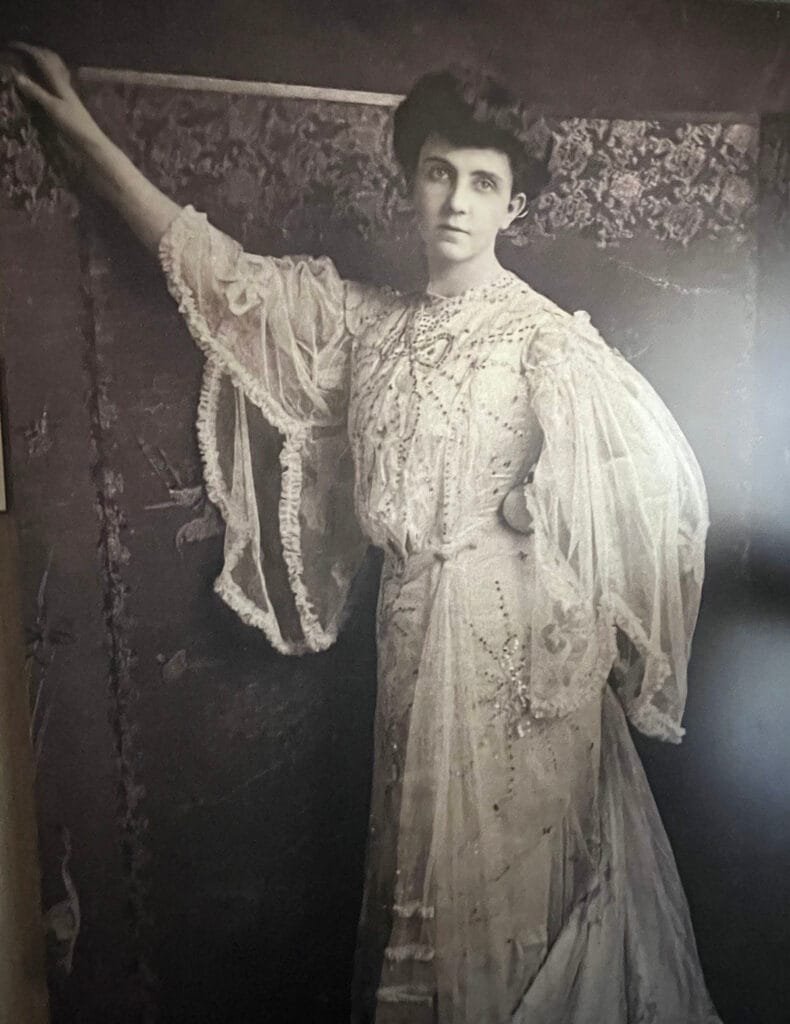
Alonzo’s first wife, Adrienne McNeil Herndon, was every bit his equal in ambition and vision. Born in Augusta and raised in Savannah, she completed her studies at the Normal Department of Atlanta University (now Clark Atlanta University). After she married Alonzo, she continued her studies in Boston and later New York. In 1895, she became one of the first Black professors at Atlanta University, where she served as the university’s first director of dramatics and taught elocution.
A Marriage on Her Own Terms
Here’s what I love most about Adrienne: when Alonzo proposed, she agreed on one condition – that she would continue studying, teaching, and performing drama after they married. In an era with very different expectations for women, that’s a remarkably forward-thinking stance, and Alonzo agreed to it. Their marriage was, by every account, a true partnership. The couple married in 1893.
Designing a Home to Defy Jim Crow
Adrienne designed the Herndon home drawing on architectural inspiration from her extensive travels – especially in Europe. She took careful notes on architectural details and interior features she wanted to bring back and incorporate into her own home. The result was intentional – a triumph of a home that defied the limitations of oppressive Jim Crow laws.
Adrienne’s Untimely Death
Unfortunately, Adrienne suffered from Addison’s disease, which destroyed her health and lead to her death in April 1910. She passed away shortly after construction of the mansion was completed.
Jessie Gillespie Herndon: Style, Strength & the Family Business
Completing the Herndon Home’s Interior
Alonzo married his second wife, Jessie Gillespie Herndon, in 1912. Jessie was a hairdresser born in Milwaukee whose father was deeply involved with the NAACP. She moved into the home that Adrienne had designed and took on the task of completing its interior decoration – bringing her own exquisite taste to a house already rich with intention and detail.
Leading Atlanta Life Insurance Company as Its Vice President
Jessie wasn’t just decorating a beautiful home, though – after serving on the board of directors, she was elected to be a Vice President of Atlanta Life Insurance Company. She was the first woman to serve in this role. It was a genuinely rare position for a woman, regardless of race, to hold a position in a major business at the time. She lived in the Herndon home until her death in 1947. She shared the house with her stepson Norris after Alonzo’s passing. Norris and Jessie got along well together.
Norris Herndon: Quietly Funding a Movement
Educated at Atlanta University and Harvard
Alonzo and Adrienne’s only child, Norris Herndon, was educated at Atlanta University and later Harvard Business School – an extraordinary academic path for anyone in that era, let alone the son of a formerly enslaved man. Upon his graduation from Harvard, Norris became a Vice President of Atlanta Mutual.
Growing Atlanta Life Insurance Company
Alonzo Herndon passes away in 1927. Norris became president of Atlanta Life Insurance Company in 1928. He grew it into the second-largest Black-owned life insurance company in the country. He was famously private – described by those who knew him as a recluse who avoided the spotlight entirely, despite running one of the most successful Black businesses in America. Atlanta Life Insurance Company was the only insurer willing to provide a policy to Martin Luther King, Jr.
The Herndons’ Secret Role in the Civil Rights Movement
Norris quietly backed the US Civil Rights Movement financial, all while staying almost entirely out of public view. He and Martin Luther King Jr. were fraternity brothers during college. Norris used his family’s resources to fund civil rights efforts, including support for the Montgomery Improvement Association. To avoid leaving any kind of paper trail, funds were distributed only in cash. Norris’s bodyguard who lived in the carriage house behind the main home and served as Norris’s go-between for these transactions.
Norris also cared deeply about his community closer to home – he was known for sitting in his breakfast room and watching Morris Brown College’s football team practice on the field near his house. When he noticed the school’s band performing in tattered uniforms, he quietly purchased them new ones.
The Herndon Home Museum in Atlanta: Location, Design & Inspiration
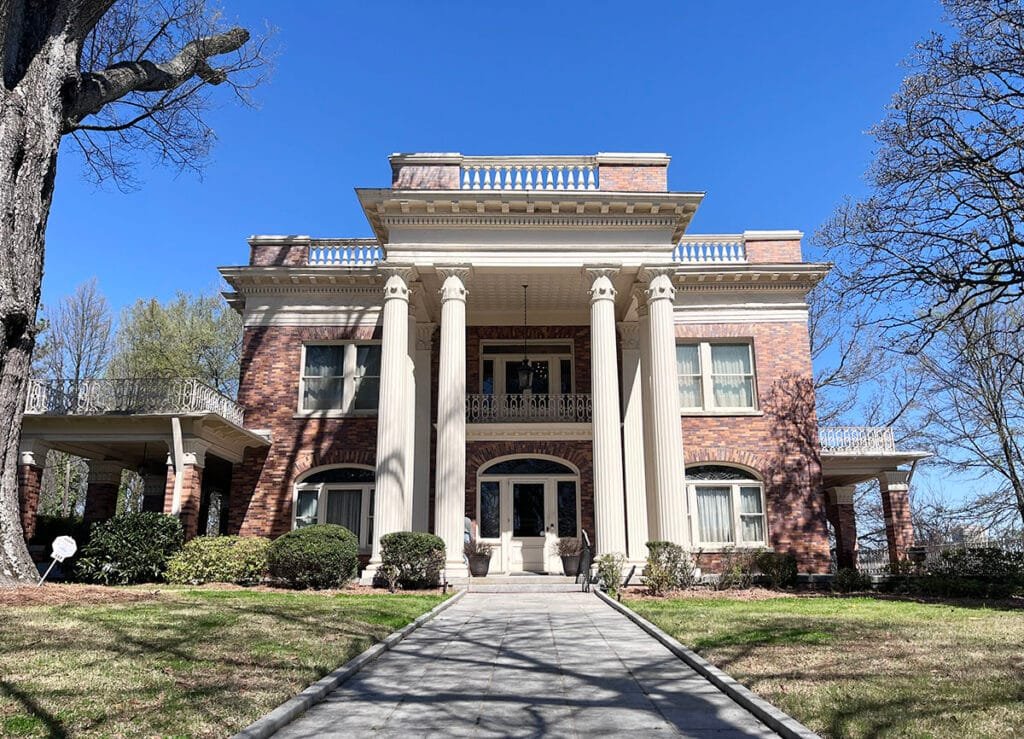
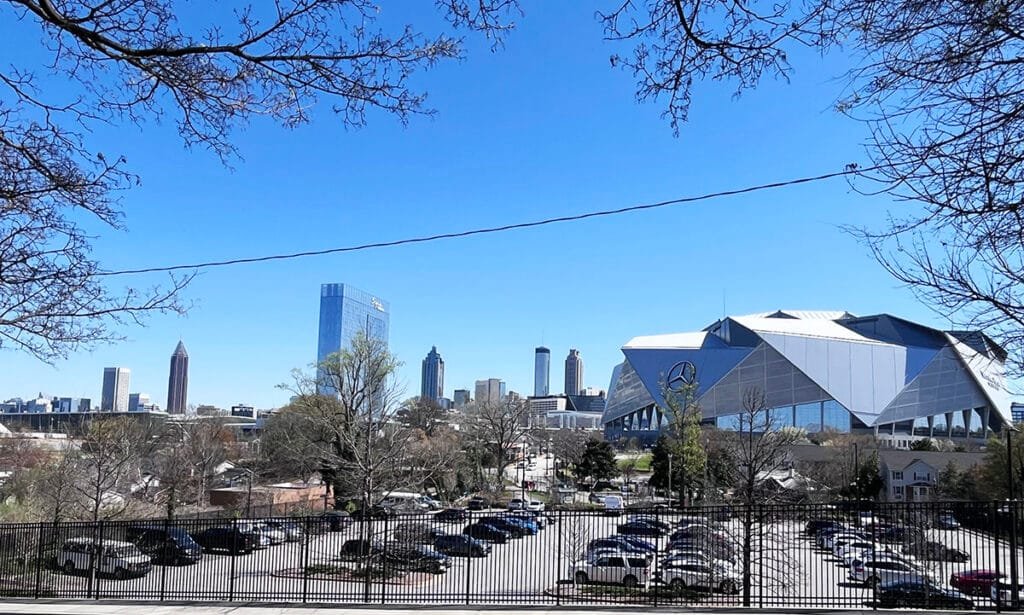
The Herndon home sits atop Diamond Hill in Vine City, which is the highest point in the city of Atlanta. When the house was built, the home had a sweeping, unobstructed view of downtown – a view now dominated by Mercedes-Benz Stadium.
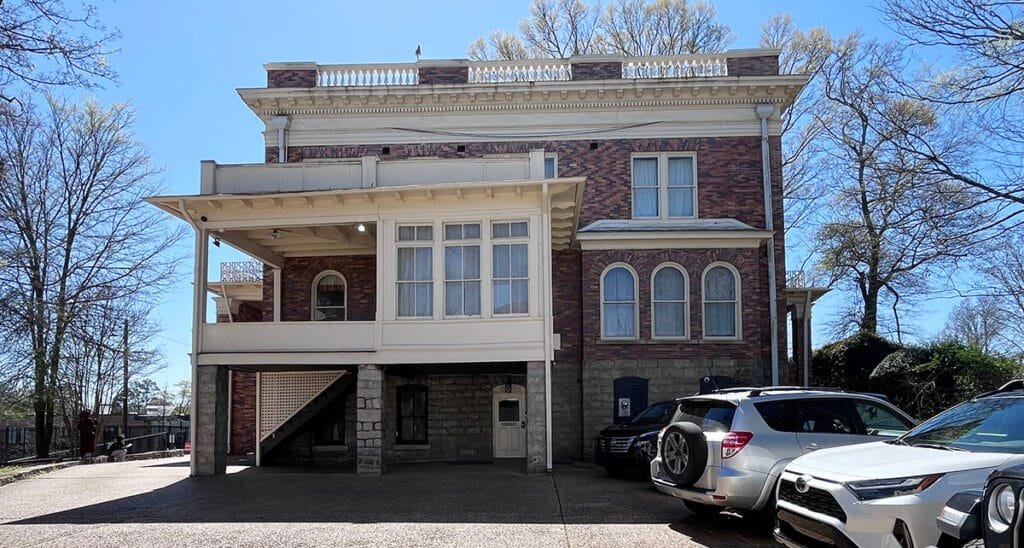
Adrienne designed the home in the Beaux Arts Classical style, and Alonzo, acting as the project’s contractor, made a point of hiring African American craftsmen to build it entirely by hand – including intricate parquet flooring. Construction began in 1908, and the finished home carried a price tag of $10,000 in 1910, an enormous sum for the time. The land itself was purchased from Atlanta University, tying the home directly to the institution where Adrienne taught.
Inside the Herndon Home: The Main Level
The Foyer & Receiving Parlor
Step through the front door, and you’re greeted by a foyer with a fireplace that holds a quietly powerful detail: steel pots placed inside it as a permanent reminder of where Alonzo came from. None of the home’s fireplaces were ever functional – they were always purely decorative. Throughout the house, you’ll notice lion motifs carved into candelabra and stair newel posts, symbols meant to represent Alonzo’s audacity, courage, and sheer force of will.
The Music Room
The Music Room features a stunning crystal chandelier, and it’s easy to imagine Adrienne here – by all accounts, she was always a bit of a performer, even at home. She once said she “belonged to the world,” and this room is a fitting stage for that spirit.
The Rooftop Performance Space
One of my favorite and most bittersweet, details from the tour: the home’s flat rooftop was specifically designed as a performance space for Adrienne. Sadly, she never got the chance to use it.
The Living Room
The Living Room carries the weight of the family’s civil rights legacy. According to our guide, W.E.B. Du Bois, Booker T. Washington, and Martin Luther King Jr. all spent time within these walls. Built-in mahogany bookcases once held the family’s encyclopedias, and a mural on the wall traces the family’s extraordinary journey – from the pyramids of Africa, through slavery and sharecropping, to the Herndon home itself, closing with a tribute to Adrienne as a playwright.
The Dining Room
The Dining Room features gorgeous Venetian glass and a chandelier designed to resemble a grapevine. Bunches of grapes symbolize opulence and wealth. All of the tableware and furniture in this room originally belonged to the Herndon family. Even the room’s fireplace carries the family’s signature lion motif.
Inside the Herndon Home: The Upper Level
Adrienne and Jessie’s Suite
The largest and most impressive bedroom in the house sits at the front, on the left side, with access to balconies on either side of the home. Adrienne, ever the diva in the best possible sense, designed this suite for herself, complete with a large dressing room, walk-in closet, and bathroom. Keep in mind that these were remarkable amenities for a home built in an era when most houses didn’t have indoor plumbing. After Adrienne’s passing, Jessie lived in this suite.
Alonzo’s Bedroom & the Collections Room
Alonzo’s bedroom sits at the back of the house. His personal canes – an essential part of his signature look – are still on display in his bedroom. A portrait of his mother hangs above his bed. His room connected to his wife’s suite and they shared the bathroom. The room next to his bedroom overlooking the back yard served as his personal retreat. The family called it the Collections Room.
Norris’s Bedroom
Norris’s bedroom sits at the rear right of the house. He occupied this room for his entire life. Ultimately passed away here from heart disease in 1977. His personal belongings remain in the room’s drawers to this day, including a 1970s-era television set complete with an antenna. As he aged and lost mobility, he relied on a live-in nurse and call buttons throughout the home.
A Legacy of Generosity
Ties to the NAACP and the Niagara Movement
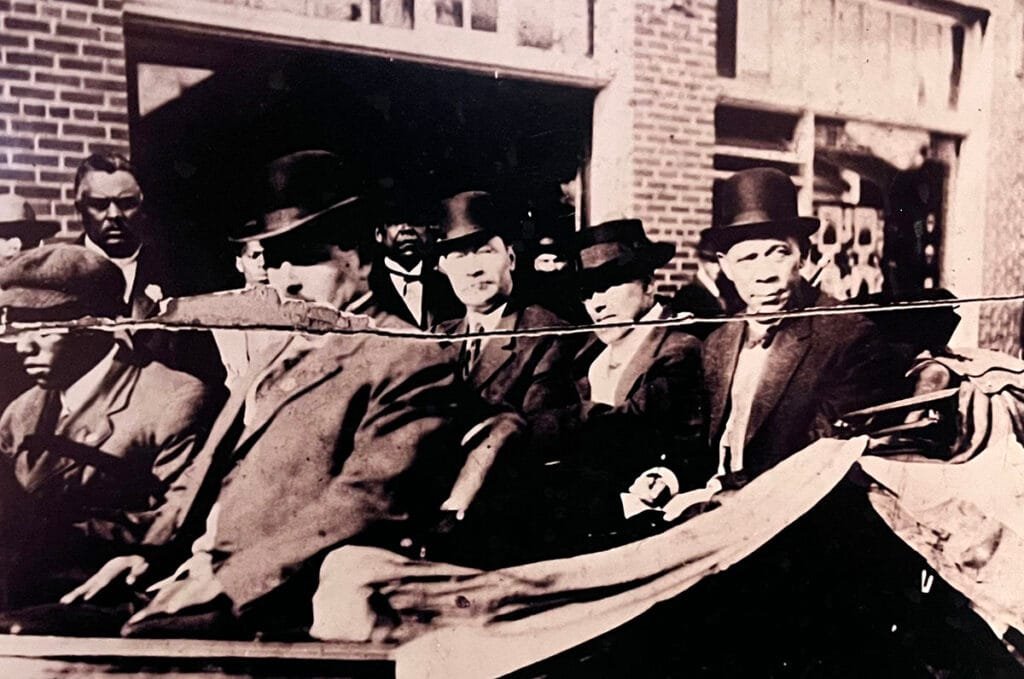
Alonzo was deeply engaged in the fight for civil rights during his own lifetime. He, along with his son Norris, took part in the Niagara Movement alongside W.E.B. Du Bois – a forerunner to the NAACP that eventually gave way to that more inclusive organization.
Investing in Education & Community
The Herndon family’s generosity extended across Atlanta and beyond. Alonzo contributed significantly to the YMCA, YWCA, and local kindergartens. The family’s legacy also includes Herndon Stadium at Morris Brown College and Herndon Elementary School, both named in recognition of their community investment.
What Remains of the Herndon Legacy Today
Atlanta Life Insurance Company, the business Alonzo founded, still exists today. Norris, having no children of his own, made the decision to preserve the family home as a museum, ensuring the Herndon story would live on for future generations to discover – exactly as I did on my visit. This incredible mansion is owned and managed by the Herndon Foundation created by Norris.
Visiting the Herndon Home Museum Today
Location & Getting There
The Herndon Home sits in Atlanta’s historic Vine City neighborhood, within walking distance of the Vine City MARTA station, and looks directly out over Mercedes-Benz Stadium. The house across the street was built by Dr. George Towns, with another built next door for his daughter, and a nearby home once housed the president of Morris Brown College, the first college founded by and for Black Americans.
Tours & What to Expect
As of my visit, public tour availability appears to be somewhat limited and sporadic through the Atlanta Preservation Center. In March during the Phoenix Flies event, the Atlanta Preservation Center offers free guided tours of the Herndon Home, which is how I experienced it myself. I also noticed a small private group touring the home during my visit, which suggests it may be possible to arrange a private tour directly through the Herndon Foundation if you’re interested in visiting at another time.
A few things to know before you go: tours are guided rather than self-directed, and photography isn’t permitted inside the home, with the sole exception of the basement level, where you’ll also find historical displays about the family.
Nearby Historic Sites to Pair with Your Visit
Given its location and significance, the Herndon Home pairs beautifully with a broader day of Atlanta civil rights history. Consider combining your visit with the Martin Luther King Jr. National Historical Park, Ebenezer Baptist Church, and Clark Atlanta University, which was formed through the merger of Atlanta University and Clark College.
Final Thoughts: Why the Herndon Home Museum Matters
I’ve toured plenty of beautiful historic homes in and around Atlanta, but few have moved me quite like the Herndon Home. It’s more than an architectural achievement. It’s the physical embodiment of one family’s refusal to be limited by the world around them. Alonzo built an empire from nothing. Adrienne lived her life on her own terms as a modern woman. She and Alonzo shared a modern marriage ahead of its time. Amongst her other accomplishments, Adrienne designed a home that defied the Jim Crow laws working against her family. Alonzo’s second wife Jessie brought grace and leadership in equal measure. And Norris quietly funded the Civil Rights movement that changed this country, all without ever seeking credit for it.
Save this post before you plan your visit, or share it with a friend who loves Atlanta history as much as I do!
Have you visited the Herndon Home Museum? I’d love to hear about your experience in the comments.
Frequently Asked Questions
Who was Alonzo Herndon?
Alonzo Herndon was born enslaved in Social Circle, Georgia, and went on to become Atlanta’s first Black millionaire, building his fortune through a successful barbering business and founding what became the Atlanta Life Insurance Company.
What happened to Adrienne Herndon?
Adrienne passed away in April 1910 from Addison’s disease, shortly after construction of the mansion was completed. She designed the home but never had the opportunity to enjoy it.
Did Atlanta Life Insurance Company have a connection to Martin Luther King Jr.?
Yes – Atlanta Life Insurance Company, founded by Alonzo Herndon and later run by his son Norris, was the only insurance company willing to provide Martin Luther King Jr. with a life insurance policy.
Do I need a reservation to visit?
Tour availability currently appears limited, so I’d recommend contacting the Atlanta Preservation Center or the Herndon Foundation directly to check on current tour options, including the possibility of a private tour.
Can I take photos inside?
Photography isn’t permitted inside the home, with the exception of the basement level, where historical displays are on view.
How long does a tour take?
Plan for roughly an hour to fully take in the home and its story.
Is the Herndon Home Museum a National Historic Landmark?
Yes, the home holds National Historic Landmark status in recognition of its architectural and historical significance.
What other historic sites are nearby?
The Herndon Home pairs well with a visit to the Martin Luther King Jr. National Historical Park, Ebenezer Baptist Church, and Clark Atlanta University.

You May Also Like

Cator Woolford Gardens Atlanta: How to Visit this Hidden Gem

Atlanta: Cabbagetown Neighborhood Guide
